July 8
I want to say something ironical today in case Justin or some of his many followers from The Concept of Irony drop by. I’ve been sharpening my ironical skills by reading his blog and trying to think of a clever post that will appeal to his readers so that they will follow me over here like rats nipping at the heels of a piper.
I once took an acting class with an English actor, Simon Williams, who said, among other things, that Americans lacked a sense of irony. When he explained exactly what he meant, I came to see he was right about that. The Brits think it quite clever to make somewhat insulting statements in jest but with perfectly straight faces – upper lips quite stiff, chins forward ever so slightly. They are so used to putting a good face on that they just keep that face and don’t react. Americans tend to demand an emotional reaction, and just a whiff of an insult can send us into a snit. That will never do if one is being ironical. One must be ironical back.
Simon was appearing in a play with an actor he had grown to like, so he and his wife invited the actor and his current mate to dinner at their home. They turned out to be a congenial foursome, and the next evening backstage Simon remarked on how pleasant it had been, and said they really should all get together again soon. The new friend said disdainfully, “Yes, the evening wasn’t half as boring as I expected it to be.” This was a intended as a charming thing to say, and Simon laughed, totally won over by his new friend. He pointed out that an American might not have had this reaction.
The insight opened up a great deal about English dramaturgy to us in the class. We were studying Oscar Wilde’s An Ideal Husband, one of the playwright’s many excursions into comedy of ironical manners. In an early scene the young man is having a bit of a scrap with his father, and the father seems – on the page at least – distraught about his son’s lack of character. Then I saw the scene in the film with C. Aubrey Smith playing the father and it was clearly a love scene between father and son. Only the Brits would have carried that off so naturally – and had I not seen it played I would never have understood that subtext.
I don’t seem to be being ironical so much as telling you that I know what it is. While I’m at it I’ll use another example of the use of the word, also a reference to something I read. This time it’s Ernest Hemingway’s The Sun Also Rises, when Jake Barnes is visited by Bill Gorton, a decidedly New York –type American. Bill is urging Jake to play what he calls the latest game, “Irony and Pity.” First, you say something ironical. Then, you say something pitiful. “Don’t you know about Irony and Pity?” he asks Jake.
“No. Who got it up?”
“Everybody. They’re mad about it in New York. It’s just like the Fratellinis used to be.”
This cracked me up. I was living in Geneva at the time that I read the book, removed from the world of instant fads, trends, and attempts to be clever by batting the same joke or phrase about – the world I’d left behind in New York. And here was Hemingway reminding me that such things had been going on in the 1920’s and long before that, and would be going on after I’d come and gone in New York again. And so, surely, they have.
More from the book:
The girl came in with the coffee and buttered toast. Or rather it was bread toasted and buttered.
“Ask her if she’s got any jam,” Bill said. “Be ironical with her.”
“Have you got any jam?”
“That’s not ironical. I wish I could talk Spanish.”
The coffee was good and we drank it out of big bowls. The girl brought in a glass dish of raspberry jam.
“Thank you.”
“Hey! That’s not the way,” Bill said. “Say something ironical. Make some crack about Primo de Rivera.”
“I could ask her what kind of a jam they think they’ve gotten into in the Riff.”
“Poor,” said Bill. “Very poor. You can’t do it. That’s all. You don’t understand irony. You have no pity. Say something pitiful.”
“Robert Cohn.”
“Not so bad. That’s better. Now why is Cohn pitiful? Be ironic.”
He took a big gulp of coffee.
“Aw, hell!” I said. “It’s too early in the morning.”
“There you go. And you claim you want to be a writer, too. You’re only a newspaper man. An expatriated newspaper man. You ought to be ironical the minute you get out of bed. You ought to wake up with your mouth full of pity.”
“Go on,” I said. “Who did you get this stuff from?”
“Everybody. Don’t you read? Don’t you ever see anybody? You know what you are? You’re an expatriate. Why don’t you live in New York? Then you’d know these things. What do you want me to do? Come over here and tell you every year?”
Ah, the irony of the New York sophisticate of 1926! Can I achieve this in Fairhope in 2006? Follow this blog. Not only will I seek irony, perhaps I'll find fair hope.
Saturday, July 08, 2006


Friday, July 07, 2006
Dry Spell Followed by Showers
July 7
Probably have to change that title; I have an oafish friend who takes things literally and will assume this one is nothing but a weather report from Lower Alabama. Sometimes I think he doesn't read beyond the first line anyway; but I shouldn't complain because he's a faithful reader, and I do appreciate those.
Looks like I'm a little dry today, no real inspiration, and here it is a rather sleep-deprived morning so I just thought I'd sit down and see what I could come up with. If you don't post on your blog daily, you might as well not post at all. But things are beginning to happen here in this little parched corner of the South; I met a new lady a couple day before yesterday when sharing a glass of wine with some friends who moved here about a year ago from California. I've said before that the old Fairho's are moving out in droves and I'm coming up short on friends these days. Also that I'm going to have to occupy myself with projects aside from the revival of my old school. I never was a one-trick pony...got to learn a few new tricks.
These new friends have a son who is totally disabled, in a wheelchair observing life very sweetly and requiring constant care. Actually he's her son; the couple have not been married that long; but the husband is very attentive and helpful with the boy.
Well, I'm sitting there with my glass of red wine while Terri is helping Danny to eat and the new lady comes in. Somehow the topic of amateur theatre comes up and I find out that she used to be a choreographer and director of plays at the university level. She is very sophisticated and has a wonderful personality. The four of us start talking about getting involved in theatre and I tell her about my days as founder of the Little Theatre of Geneva and later as the founder of the Equity theatre, Jubilee Fish, locally. I tell her that I hear Theatre 98 will do Hamlet next season and maybe I'll audition for Gertrude. It's all very heady stuff; you get excited when you think about the theatre and you find friends who want to put on a show. I must call my friend Jon and get the three of us together; he's technical and we're not. Her husband, who died just a few months ago, was a set designer.
As I leave I am invited to return Saturday night for Danny's birthday party. He will be 16. I am trying to think of something to bring him.
Then when I get home there is an email from a new reader of the blog asking me if I would be interested in ghost-writing a book for a friend of his who is 88 years old and has a lot of great stories to tell. I email him back yes.
I'm still awaiting response on my second book and it's time to do something different. When We Had the Sky has been submitted to the University of Alabama Press and to River City Publishing in Montgomery. Both wrote nice rejection letters, saying it was an entertaining read, but that its specific focus on Fairhope meant it was not marketable for a commercial or academic publisher. Stuff like that, I don't know exactly why. A rejection is a rejection. Then I called Randall Williams of New South Books, a third publisher in the state. He knew who I was and said he would be interested in reading it, but there was a long line ahead of me. He promised to get to it in "two months or two years." It's been over two months, and since my expectations are low I don't mind him holding onto it while I hold onto hope. If it is rejected a third time I'll have the option of continuing to submit it to other publishers and biding my time with a cat on my head while I wait for an answer -- or publishing it myself for about $5,000. It is money I would probably never make back. I only had to pay about $1,000 for the reprint of Meet Me at the Butterfly Tree, and haven't made that back in the six months it's been in print.
I'm still surprised that my books are just about Fairhope. I thought they were universal social commentaries on the changes in the mid to late 20th Century, reflections on the small town individuality that has been replaced by a corporate, homogenized sterility. I thought that by telling stories of local characters and ideals, I had put my finger on some part of the big picture.
Soon I'll hear about the acceptance or rejection of When We Had the Sky. In the meantime, maybe I'll be in a play or two, or start a new theatre company, or write a book for someone else. The 88-year-old guy called me yesterday and we had a ripping good time on the phone.
You may have heard that we're experiencing a drought in this part of the country. There have been some rumors that it was breaking and that we'd get those famous widely scattered afternoon thunderstorms of Lower Alabama dog days next. Rain has been predicted every day for a week, but all we've had in Fairhope is clouds and one or two droplets. But everything has a way of changing.
Probably have to change that title; I have an oafish friend who takes things literally and will assume this one is nothing but a weather report from Lower Alabama. Sometimes I think he doesn't read beyond the first line anyway; but I shouldn't complain because he's a faithful reader, and I do appreciate those.
Looks like I'm a little dry today, no real inspiration, and here it is a rather sleep-deprived morning so I just thought I'd sit down and see what I could come up with. If you don't post on your blog daily, you might as well not post at all. But things are beginning to happen here in this little parched corner of the South; I met a new lady a couple day before yesterday when sharing a glass of wine with some friends who moved here about a year ago from California. I've said before that the old Fairho's are moving out in droves and I'm coming up short on friends these days. Also that I'm going to have to occupy myself with projects aside from the revival of my old school. I never was a one-trick pony...got to learn a few new tricks.
These new friends have a son who is totally disabled, in a wheelchair observing life very sweetly and requiring constant care. Actually he's her son; the couple have not been married that long; but the husband is very attentive and helpful with the boy.
Well, I'm sitting there with my glass of red wine while Terri is helping Danny to eat and the new lady comes in. Somehow the topic of amateur theatre comes up and I find out that she used to be a choreographer and director of plays at the university level. She is very sophisticated and has a wonderful personality. The four of us start talking about getting involved in theatre and I tell her about my days as founder of the Little Theatre of Geneva and later as the founder of the Equity theatre, Jubilee Fish, locally. I tell her that I hear Theatre 98 will do Hamlet next season and maybe I'll audition for Gertrude. It's all very heady stuff; you get excited when you think about the theatre and you find friends who want to put on a show. I must call my friend Jon and get the three of us together; he's technical and we're not. Her husband, who died just a few months ago, was a set designer.
As I leave I am invited to return Saturday night for Danny's birthday party. He will be 16. I am trying to think of something to bring him.
Then when I get home there is an email from a new reader of the blog asking me if I would be interested in ghost-writing a book for a friend of his who is 88 years old and has a lot of great stories to tell. I email him back yes.
I'm still awaiting response on my second book and it's time to do something different. When We Had the Sky has been submitted to the University of Alabama Press and to River City Publishing in Montgomery. Both wrote nice rejection letters, saying it was an entertaining read, but that its specific focus on Fairhope meant it was not marketable for a commercial or academic publisher. Stuff like that, I don't know exactly why. A rejection is a rejection. Then I called Randall Williams of New South Books, a third publisher in the state. He knew who I was and said he would be interested in reading it, but there was a long line ahead of me. He promised to get to it in "two months or two years." It's been over two months, and since my expectations are low I don't mind him holding onto it while I hold onto hope. If it is rejected a third time I'll have the option of continuing to submit it to other publishers and biding my time with a cat on my head while I wait for an answer -- or publishing it myself for about $5,000. It is money I would probably never make back. I only had to pay about $1,000 for the reprint of Meet Me at the Butterfly Tree, and haven't made that back in the six months it's been in print.
I'm still surprised that my books are just about Fairhope. I thought they were universal social commentaries on the changes in the mid to late 20th Century, reflections on the small town individuality that has been replaced by a corporate, homogenized sterility. I thought that by telling stories of local characters and ideals, I had put my finger on some part of the big picture.
Soon I'll hear about the acceptance or rejection of When We Had the Sky. In the meantime, maybe I'll be in a play or two, or start a new theatre company, or write a book for someone else. The 88-year-old guy called me yesterday and we had a ripping good time on the phone.
You may have heard that we're experiencing a drought in this part of the country. There have been some rumors that it was breaking and that we'd get those famous widely scattered afternoon thunderstorms of Lower Alabama dog days next. Rain has been predicted every day for a week, but all we've had in Fairhope is clouds and one or two droplets. But everything has a way of changing.
Wednesday, July 05, 2006
Was de Vere Da Bard?
July 6
This is a post I accidentally deleted when I was having problems with the technicalities of the blog. I want it out there, so I’m re-posting.
I’ve finished reading "Shakespeare" By Another Name, the biography of Edward de Vere. Even though no one who reads this blog seems to care much about either the book or the controversy about the works of Shakespeare -- and it’s unlikely I'll have any converts -- I’m going to write a review.
Edward de Vere lived a life worth reading about. An aristocrat in Elizabethan England, he was a child prodigy, a poet courtier, an adventurer, and an all-around son of a bitch who made a ton of mistakes in his life. He was profligate with money, a great drinker and storyteller, a juror in such trials as that of Mary Queen of Scots, Robert Devereaux, the earl of Essex; and Philip Howard, who was found guilty of treason in plotting the victory of the Spanish Armada against England in 1589.
As a child, de Vere was the ward of William Cecil, principal advisor to Queen Elizabeth. He was tutored by the best educators in England of that day, having the following curriculum:
7-7:30 Dancing
7:30-8 Breakfast
8-9:00 French
9-10 Latin
10-10:30 Writing and Drawing
1-2:00 Cosmography
2-3:00 Latin
3-4:00 French
4-4:30 Exercises with his Pen
A rather impressive course of study for a boy, isn’t it? What is “cosmography,” you might well ask. As a matter of fact it was geography, history, physical science, astronomy, sociology, English, comparative literature, linguistics, and more. Basically it was everything known in the Elizabethan world. And de Vere had the finest teachers in England as his private tutors. On holy days (holidays) he was expected to “read before dinner the Epistle and Gospel in his own tongue and the other tongue [Greek] after dinner. All the rest of the day to be spent in riding, shooting, dancing, walking, and other commendable exercises, saving the time for prayer."
His intense education included the reading of Beowulf and Ovid’s Metamorphoses and detailed study of the Bible, as noted. That he was surrounded by the greatest personal libraries in England was a boon to him all his life, as he was a voracious reader and could write beautiful prose and poetry. He read the law and received a Master of Arts degree from St. John’s College at Cambridge.
De Vere grew up from a prodigy to be a brilliant if contentious and conflicted man. He was expert at squandering the funds and lands he’d inherited, and he was never entirely comfortable with William Cecil, his guardian. Cecil was an eminent Elizabethan favored as a trusted advisor to the Queen herself.
In one of the few missteps of his life, William Cecil arranged a marriage between his daughter Anne and de Vere in 1571. In 1575, de Vere took off for Italy for a year, claiming that his marriage had never been consummated. He spent some time in Venice, Florence, Sienna. On his journey he traveled to Greece, Croatia – then known as Illyria – and back to England to meet his first daughter and reconcile with his wife. Although he accepted the marriage he never really participated in it. He was rumored to have had an affair with Queen Elizabeth, and he fathered a child by his mistress Anna Vavasour. He got into many a scrap, including political ones. He was known as a poet and writer, a dandy, a great drinker and storyteller and a tempestuous poet possessed of a tormented soul.
He had a sister who may have been cut of the same cloth. When she set out to marry she would have none of the suitors William Cecil had chosen for her, preferring the hothead Peregrine Bertie. De Vere despised Peregrine Bertie and did what he could to block the marriage, but after it happened he accepted the couple and even became a good friend to his volatile brother in law. The couple provided quite a display of temperament and the constant drama of power struggles as they settled into married life.
This is only a fraction of the story, but even in this brief, partial re-telling, one can see not only the makings of an extraordinary life in one of the most compelling times and places in the history of the world but also quite possibly the seeds of some of the greatest theatrical writing ever to have been produced. Where many have doubted the possibility that the isolated actor-turned-merchant of remote Stratford could have had the education and the grace to have written the monumental works of Shakespeare, no one has come up with a better candidate for the real author than Edward de Vere.
Whether or not you think it is possible that the man whose name was always signed Shakspeare (who is not known for certain to have been able to write, and signed his documents with a "X") actually didn't write the plays, it is interesting to study the biography of the aristocrat whose life is related in Mark Anderson's book "Shakespeare" by Another Name. It reveals a great deal about the historical period, explaining that, for one thing, unlike today, playwrights weren't celebrities – and the theatre itself was more of a platform for veiled political statements than a source of a night's diversion.
I can't say that I am positive that de Vere was da Bard, but I know there's a T-shirt I could buy proclaiming that on Anderson's website. Whether or not you buy the premise (or the premium), I suggest you read da book.
This is a post I accidentally deleted when I was having problems with the technicalities of the blog. I want it out there, so I’m re-posting.
I’ve finished reading "Shakespeare" By Another Name, the biography of Edward de Vere. Even though no one who reads this blog seems to care much about either the book or the controversy about the works of Shakespeare -- and it’s unlikely I'll have any converts -- I’m going to write a review.
Edward de Vere lived a life worth reading about. An aristocrat in Elizabethan England, he was a child prodigy, a poet courtier, an adventurer, and an all-around son of a bitch who made a ton of mistakes in his life. He was profligate with money, a great drinker and storyteller, a juror in such trials as that of Mary Queen of Scots, Robert Devereaux, the earl of Essex; and Philip Howard, who was found guilty of treason in plotting the victory of the Spanish Armada against England in 1589.
As a child, de Vere was the ward of William Cecil, principal advisor to Queen Elizabeth. He was tutored by the best educators in England of that day, having the following curriculum:
7-7:30 Dancing
7:30-8 Breakfast
8-9:00 French
9-10 Latin
10-10:30 Writing and Drawing
1-2:00 Cosmography
2-3:00 Latin
3-4:00 French
4-4:30 Exercises with his Pen
A rather impressive course of study for a boy, isn’t it? What is “cosmography,” you might well ask. As a matter of fact it was geography, history, physical science, astronomy, sociology, English, comparative literature, linguistics, and more. Basically it was everything known in the Elizabethan world. And de Vere had the finest teachers in England as his private tutors. On holy days (holidays) he was expected to “read before dinner the Epistle and Gospel in his own tongue and the other tongue [Greek] after dinner. All the rest of the day to be spent in riding, shooting, dancing, walking, and other commendable exercises, saving the time for prayer."
His intense education included the reading of Beowulf and Ovid’s Metamorphoses and detailed study of the Bible, as noted. That he was surrounded by the greatest personal libraries in England was a boon to him all his life, as he was a voracious reader and could write beautiful prose and poetry. He read the law and received a Master of Arts degree from St. John’s College at Cambridge.
De Vere grew up from a prodigy to be a brilliant if contentious and conflicted man. He was expert at squandering the funds and lands he’d inherited, and he was never entirely comfortable with William Cecil, his guardian. Cecil was an eminent Elizabethan favored as a trusted advisor to the Queen herself.
In one of the few missteps of his life, William Cecil arranged a marriage between his daughter Anne and de Vere in 1571. In 1575, de Vere took off for Italy for a year, claiming that his marriage had never been consummated. He spent some time in Venice, Florence, Sienna. On his journey he traveled to Greece, Croatia – then known as Illyria – and back to England to meet his first daughter and reconcile with his wife. Although he accepted the marriage he never really participated in it. He was rumored to have had an affair with Queen Elizabeth, and he fathered a child by his mistress Anna Vavasour. He got into many a scrap, including political ones. He was known as a poet and writer, a dandy, a great drinker and storyteller and a tempestuous poet possessed of a tormented soul.
He had a sister who may have been cut of the same cloth. When she set out to marry she would have none of the suitors William Cecil had chosen for her, preferring the hothead Peregrine Bertie. De Vere despised Peregrine Bertie and did what he could to block the marriage, but after it happened he accepted the couple and even became a good friend to his volatile brother in law. The couple provided quite a display of temperament and the constant drama of power struggles as they settled into married life.
This is only a fraction of the story, but even in this brief, partial re-telling, one can see not only the makings of an extraordinary life in one of the most compelling times and places in the history of the world but also quite possibly the seeds of some of the greatest theatrical writing ever to have been produced. Where many have doubted the possibility that the isolated actor-turned-merchant of remote Stratford could have had the education and the grace to have written the monumental works of Shakespeare, no one has come up with a better candidate for the real author than Edward de Vere.
Whether or not you think it is possible that the man whose name was always signed Shakspeare (who is not known for certain to have been able to write, and signed his documents with a "X") actually didn't write the plays, it is interesting to study the biography of the aristocrat whose life is related in Mark Anderson's book "Shakespeare" by Another Name. It reveals a great deal about the historical period, explaining that, for one thing, unlike today, playwrights weren't celebrities – and the theatre itself was more of a platform for veiled political statements than a source of a night's diversion.
I can't say that I am positive that de Vere was da Bard, but I know there's a T-shirt I could buy proclaiming that on Anderson's website. Whether or not you buy the premise (or the premium), I suggest you read da book.
Tuesday, July 04, 2006
Shakespeare and Me
July 5
Shakespeare and I go back a long way. He goes back farther than I do, of course, but I have had a nodding acquaintance with the Bard since my Aunt Gladys drove me to witness the graduation of her son Adair from Bob Jones College when I was about four and the school did a scene from Macbeth as part of the graduation exercise. I was in awe of it, I remember that, but I'm pretty sure I missed the point. Get this: I do remember that it was the scene with Lady Macduff and the children when they find out that daddy is in big trouble.
Maybe that vignette scarred me for life. But for some reason I have been dancing with the works of Shakespeare on and off ever since. Maybe everybody who speaks English has, but I feel a more compelling connection than most.
I was always taken with the fact that from 1920 until 1929 Fairhope had had a Shakespeare Festival. In those days there was a woman from Chicago named Sarah Willard Hiestand, a scholar of some note, living here. She founded the yearly festival, using townspeople in the roles, rehearsing them in her front yard on Bay View, and producing the plays on the beach with the gully as backdrop. When a cub reporter for the Mobile Press Register, I did some research talking to old-timers who had participated in the productions, and wrote a story for the Sunday edition of the paper. Then in college I had Walter Coppedge, just back from studies in Oxford, for Freshman English, and we did the most thorough study of Romeo and Juliet I have ever known of. Mr. Coppedge also brought the exquisite Henry V of Laurence Olivier to the local Strand Theater for our delectation, after the class had pored over its poetry and imagery.
When I moved back to Fairhope I watched a PBS Special -- Frontline, I believe it was, entitled something like "Who Wrote Shakespeare?" which posited the name of Edward de Vere as a possible author of the works known as Shakespeare's plays. For centuries it has been debated whether a bland tradesman and sometime poacher of game could actually have written the oeuvre of the greatest poet in the English language. On the face of it, it just isn't logical. I had taken a course in acting Shakespeare in Oxford several years before, when the "new" sonnet had been discovered, and English scholars were proud to disclaim it as "not Shakespeare."
But the PBS piece convinced me of what most Shakespeare fans surely suspect. Whoever wrote those plays and poems had to be classically educated, well traveled, at home in court, and an extraordinary, larger than life man who had had numerous adventures and was friendly with the riff-raff as well as the mighty. This does not seem possible for the little small-time businessman living in the isolated town of Stratford, days away from London. Try as the Stratfordians might to link their man Shakspeare [sic] to the works of this Mr. Shakespeare of London, nobody in his lifetime ever commented on the Stratford man's writing talent.
I did some research on this when an article appeared in Harper's Magazine a few years ago, and made a talk at the Fairhope library debunking the old myth that the writer of the plays was Shakspeare of Stratford. I all but stated as fact my belief, based on the research, that the man known as Shakespeare was actually Edward de Vere, the earl of Oxford.
Edward de Vere lived the life the writer of the plays would have almost had to have lived. He spent some time in Italy, had been on a boat that was attacked by pirates, had a good friend said to have been the model for Falstaff, was a cousin to Queen Elizabeth, and had practiced law. I will have to go back to my notes for the speech for other details, except that now I don't have to rehash my own work. Mark Anderson has written a book called "Shakespeare" By Another Name which may do the job for me. I can't wait to read it, although clearly I am already convinced. I'm just happy that this is at last coming to light and hope that before I die the case will be settled.
It won't be easy convincing the English. It will be rather like Patricia Cornwell finding DNA to prove that Walter Sickert was Jack the Ripper. You'd have to exhume the bodies and get them to answer the questions to convince his countrymen that history had not been served up to now.
Anderson and I have a lot of talking to do. In the meantime, go to his website and read what you can find there -- and buy his book if you need further corroboration. The time has come to set the record straight.
Shakespeare and I go back a long way. He goes back farther than I do, of course, but I have had a nodding acquaintance with the Bard since my Aunt Gladys drove me to witness the graduation of her son Adair from Bob Jones College when I was about four and the school did a scene from Macbeth as part of the graduation exercise. I was in awe of it, I remember that, but I'm pretty sure I missed the point. Get this: I do remember that it was the scene with Lady Macduff and the children when they find out that daddy is in big trouble.
Maybe that vignette scarred me for life. But for some reason I have been dancing with the works of Shakespeare on and off ever since. Maybe everybody who speaks English has, but I feel a more compelling connection than most.
I was always taken with the fact that from 1920 until 1929 Fairhope had had a Shakespeare Festival. In those days there was a woman from Chicago named Sarah Willard Hiestand, a scholar of some note, living here. She founded the yearly festival, using townspeople in the roles, rehearsing them in her front yard on Bay View, and producing the plays on the beach with the gully as backdrop. When a cub reporter for the Mobile Press Register, I did some research talking to old-timers who had participated in the productions, and wrote a story for the Sunday edition of the paper. Then in college I had Walter Coppedge, just back from studies in Oxford, for Freshman English, and we did the most thorough study of Romeo and Juliet I have ever known of. Mr. Coppedge also brought the exquisite Henry V of Laurence Olivier to the local Strand Theater for our delectation, after the class had pored over its poetry and imagery.
When I moved back to Fairhope I watched a PBS Special -- Frontline, I believe it was, entitled something like "Who Wrote Shakespeare?" which posited the name of Edward de Vere as a possible author of the works known as Shakespeare's plays. For centuries it has been debated whether a bland tradesman and sometime poacher of game could actually have written the oeuvre of the greatest poet in the English language. On the face of it, it just isn't logical. I had taken a course in acting Shakespeare in Oxford several years before, when the "new" sonnet had been discovered, and English scholars were proud to disclaim it as "not Shakespeare."
But the PBS piece convinced me of what most Shakespeare fans surely suspect. Whoever wrote those plays and poems had to be classically educated, well traveled, at home in court, and an extraordinary, larger than life man who had had numerous adventures and was friendly with the riff-raff as well as the mighty. This does not seem possible for the little small-time businessman living in the isolated town of Stratford, days away from London. Try as the Stratfordians might to link their man Shakspeare [sic] to the works of this Mr. Shakespeare of London, nobody in his lifetime ever commented on the Stratford man's writing talent.
I did some research on this when an article appeared in Harper's Magazine a few years ago, and made a talk at the Fairhope library debunking the old myth that the writer of the plays was Shakspeare of Stratford. I all but stated as fact my belief, based on the research, that the man known as Shakespeare was actually Edward de Vere, the earl of Oxford.
Edward de Vere lived the life the writer of the plays would have almost had to have lived. He spent some time in Italy, had been on a boat that was attacked by pirates, had a good friend said to have been the model for Falstaff, was a cousin to Queen Elizabeth, and had practiced law. I will have to go back to my notes for the speech for other details, except that now I don't have to rehash my own work. Mark Anderson has written a book called "Shakespeare" By Another Name which may do the job for me. I can't wait to read it, although clearly I am already convinced. I'm just happy that this is at last coming to light and hope that before I die the case will be settled.
It won't be easy convincing the English. It will be rather like Patricia Cornwell finding DNA to prove that Walter Sickert was Jack the Ripper. You'd have to exhume the bodies and get them to answer the questions to convince his countrymen that history had not been served up to now.
Anderson and I have a lot of talking to do. In the meantime, go to his website and read what you can find there -- and buy his book if you need further corroboration. The time has come to set the record straight.
Independence and All That
July 4
Fairhope was always pretty famous for its fireworks display on the 4th of July. It enjoys an ideal location for it -- the heart of the town is a long pier, which used to be the center of summer activity, with steamers plying the bay, filled with daytrippers and people moving their families to their summer homes. There was a huge bath house, the Fairhope Casino (no gambling, of course), with changing rooms, showers, and a big dance floor.
The fireworks display would emanate from the end of the pier, and people could see them from the beach, the bluff, and their own piers if they were lucky enough to have them. The town celebration of Independence Day was the high point of the year. Some things have changed in Fairhope, as you have noted if you read this blog regularly, but there is still a display of fireworks on the 4th. The boats were eliminated when the causeway was completed in 1929 and the casino was condemned and demolished in the early 1950's. But the atmosphere of the 4th will always rely on a fireworks display.
This part of the state has always been vacationland. If you didn't live in Fairhope you drove through it on your way to the gulf beaches, and on your way home you'd bring the family to see the fireworks. My father used to have a barbecue pit, and there'd be some family members and friends from Mobile over every year on the 4th for food and fun with the Timbes kids -- and then we'd pile into cars and drive into town to await the fireworks. Daddy made a "thing" about how the display would always be late in starting, but that milling around in the crowd, seeing people you knew, anticipating, was part of the party. There was something about those old displays that seems to be fading now, if not completely gone -- the sound of the crowd. Each skyrocket would take a little time to assemble, apparently, and there would be a longish pause between shots. After each burst a sound would automatically come from the crowd, a gasp, followed by a sigh of appreciation. It was an intrinsic part of the event.
I've experienced the 4th in many places, in many ways. I was in New York City with the Tall Ships display in 1976; with my sister and friends we viewed it from a rooftop at Westbeth. I lived in Geneva, which has as big a celebration of the 4th of July as anywhere in Europe (and maybe the world), and for six years I watched hang gliders jump off the Salève, ate hot dogs made of Swiss sausage stuffed into rolls pierced on the spot with a special appliance just for the purpose, and met vacationing backpackers from the States who had come to the event because they read about it in Let's Go Europe. All kinds of unorthodox things happened at that fireworks display.
Whenever the day rolls around, I think of my country and what has become of it. I love to acknowledge what it was, and what it was meant to be, and I am proud to have that as a part of my own history. I even think of old Fairhope, really a young town, built as our country was, on an ideal. Never mind that both are pretty much a shambles now, overrun by the same marauders: Personal greed and immorality of the heart. I cannot dwell on the negative today, because it's a celebration of what we should be; but in order to make things better I must be able to see what I know they can be and remember what they have been.
So I think I'll go back to John Adams, who predicted the future 4ths of July in a rather nice letter to his wife: "I believe that it will be celebrated by succeeding generations as the great anniversary festival," he wrote, "It ought to be celebrated by pomp and parade, with shows, games, sports, guns, bells, bonfires, and illuminations from one end of this continent to the other..."
It is that and more, Mr. Adams. And in Fairhope, there will be a fireworks display tonight.
Fairhope was always pretty famous for its fireworks display on the 4th of July. It enjoys an ideal location for it -- the heart of the town is a long pier, which used to be the center of summer activity, with steamers plying the bay, filled with daytrippers and people moving their families to their summer homes. There was a huge bath house, the Fairhope Casino (no gambling, of course), with changing rooms, showers, and a big dance floor.
The fireworks display would emanate from the end of the pier, and people could see them from the beach, the bluff, and their own piers if they were lucky enough to have them. The town celebration of Independence Day was the high point of the year. Some things have changed in Fairhope, as you have noted if you read this blog regularly, but there is still a display of fireworks on the 4th. The boats were eliminated when the causeway was completed in 1929 and the casino was condemned and demolished in the early 1950's. But the atmosphere of the 4th will always rely on a fireworks display.
This part of the state has always been vacationland. If you didn't live in Fairhope you drove through it on your way to the gulf beaches, and on your way home you'd bring the family to see the fireworks. My father used to have a barbecue pit, and there'd be some family members and friends from Mobile over every year on the 4th for food and fun with the Timbes kids -- and then we'd pile into cars and drive into town to await the fireworks. Daddy made a "thing" about how the display would always be late in starting, but that milling around in the crowd, seeing people you knew, anticipating, was part of the party. There was something about those old displays that seems to be fading now, if not completely gone -- the sound of the crowd. Each skyrocket would take a little time to assemble, apparently, and there would be a longish pause between shots. After each burst a sound would automatically come from the crowd, a gasp, followed by a sigh of appreciation. It was an intrinsic part of the event.
I've experienced the 4th in many places, in many ways. I was in New York City with the Tall Ships display in 1976; with my sister and friends we viewed it from a rooftop at Westbeth. I lived in Geneva, which has as big a celebration of the 4th of July as anywhere in Europe (and maybe the world), and for six years I watched hang gliders jump off the Salève, ate hot dogs made of Swiss sausage stuffed into rolls pierced on the spot with a special appliance just for the purpose, and met vacationing backpackers from the States who had come to the event because they read about it in Let's Go Europe. All kinds of unorthodox things happened at that fireworks display.
Whenever the day rolls around, I think of my country and what has become of it. I love to acknowledge what it was, and what it was meant to be, and I am proud to have that as a part of my own history. I even think of old Fairhope, really a young town, built as our country was, on an ideal. Never mind that both are pretty much a shambles now, overrun by the same marauders: Personal greed and immorality of the heart. I cannot dwell on the negative today, because it's a celebration of what we should be; but in order to make things better I must be able to see what I know they can be and remember what they have been.
So I think I'll go back to John Adams, who predicted the future 4ths of July in a rather nice letter to his wife: "I believe that it will be celebrated by succeeding generations as the great anniversary festival," he wrote, "It ought to be celebrated by pomp and parade, with shows, games, sports, guns, bells, bonfires, and illuminations from one end of this continent to the other..."
It is that and more, Mr. Adams. And in Fairhope, there will be a fireworks display tonight.
Monday, July 03, 2006
Born To Blog
July 3
As soon as I learned there was a site called Blogspot that allowed people to post their own opinion columns on the Internet as often as they liked, I knew it was for me. Blogging is my life.
Not quite. But I never found it difficult to come up with something to place on the information superhighway every morning, first thing. My idea was that it would be a way to boost sales of my book, Meet Me at the Butterfly Tree, and maybe establish myself as a writer so that the second book would be published. Neither goal has been accomplished, but I don't consider them out of the question. Butterfly Tree has not sold one copy in the month of April, and only about four in the month of May, which is the last reporting period. Chances are if you are reading this, you already have your copy, so there is little you can do. I did peddle the Upton Sinclair chapter of When We Had the Sky to Alabama Heritage and they are considering it. So one of my goals, that of establishing myself as a writer, is at least still a possibility, although writing the blog probably has little to do with it. I've sold stuff to that periodical before.
And I've written compulsively all my life. Letters, journals, and God knows emails, stories, books, essays. The land of blogs was just another step. What does it all mean? Is it progress? If I wrote a weekly column in the Fairhope Courier I would have a larger readership. My average is about 34 readers a day, and that doesn't account for the few who check in more than once a day. Now that John Sweden writes that he's going on an enforced vacation, away from his keyboard, my numbers will drop noticeably. I know of five people, and I know them personally, who drop by my blog, some more than once a day to troll for old treasures in the archive. Ten people happen on the blog by accident and don't stay long enough to read one post. Three or four a day come through a search engine, looking for a specific mention, say Wyatt Cooper or Upton Sinclair or Henry George. Once someone at a search engine typed in "Swedish is a beautiful language" and was sent to my blog, because I had used that sentence ironically in my post about John's May Day experience.
Some posts draw a lot of comments, some none. I had labored over the one I posted for Father's Day, and it didn't get any response. By emailing people privately I was told that it was so good it stood alone and required no comment, and one person felt it was so personal that there was nothing anyone could say even if they wanted to. Not what I expected, but strangely gratifying. After that I tend to assume that the ones that don't draw comments may be my best. Where at one point I wanted to stir up a lot of comments, generally when I do it's the same two people batting the ball back and forth over the net with an occasional holler from me on the sidelines.
The "alpha male" comment I originated in the comment section of the post on Fair Politics was deliberately placed there in order to get a response from a certain reader. Being an alpha male, he didn't respond because he didn't need to, but two other readers took it very personally and the discussion grew to lively proportions in subsequent comment sections and a post of its own. It's off message for the blog, but very much a part of the action here -- because a blog is anything its writer wants it to be.
The really big shews are the political blogs, with new posts appearing often during one day. They can have hundreds of thousands of readers every day. What would I want with that? I like the idea that someone might just happen here and like what he or she finds, rather like Salomé Jones, and come back time after time. She tells me that one way to build readership is to troll other blogs and introduce yourself. I've tried that and it works to some degree. But the blogs I enjoy reading aren't much like this one, so when they come by they don't necessarily revisit.
This, from a regular reader:
You probably have noticed that when you write something controversial you get commentaries. Fluff sometimes doesn't even arouse John Sweden and Benedict to write. It all really doesn't matter. What matters is that you enjoy it and it is a useful mechanism to get the brain focused. In the pre-computer days of your mother , a cup of coffee used to do the same. Of course, after the coffee was gone, nothing remained but a focused mind; now you have a written copy of the transition between blur and sharpness.
I don't know what I've ever written that was controversial, but I have been known to provoke a little dialogue, even with myself writing as the commenters Tangerine and Oldphilosopher. Now that could be a sign that I'm losing perspective on my blog and my life. But it's harmless enough. Or is it? Better focus by going to have a cup of Joe.
As soon as I learned there was a site called Blogspot that allowed people to post their own opinion columns on the Internet as often as they liked, I knew it was for me. Blogging is my life.
Not quite. But I never found it difficult to come up with something to place on the information superhighway every morning, first thing. My idea was that it would be a way to boost sales of my book, Meet Me at the Butterfly Tree, and maybe establish myself as a writer so that the second book would be published.
 Neither goal has been accomplished, but I don't consider them out of the question. Butterfly Tree has not sold one copy in the month of April, and only about four in the month of May, which is the last reporting period. Chances are if you are reading this, you already have your copy, so there is little you can do. I did peddle the Upton Sinclair chapter of When We Had the Sky to Alabama Heritage and they are considering it. So one of my goals, that of establishing myself as a writer, is at least still a possibility, although writing the blog probably has little to do with it. I've sold stuff to that periodical before.
And I've written compulsively all my life. Letters, journals, and God knows emails, stories, books, essays. The land of blogs was just another step. What does it all mean? Is it progress? If I wrote a weekly column in the Fairhope Courier I would have a larger readership. My average is about 34 readers a day, and that doesn't account for the few who check in more than once a day. Now that John Sweden writes that he's going on an enforced vacation, away from his keyboard, my numbers will drop noticeably. I know of five people, and I know them personally, who drop by my blog, some more than once a day to troll for old treasures in the archive. Ten people happen on the blog by accident and don't stay long enough to read one post. Three or four a day come through a search engine, looking for a specific mention, say Wyatt Cooper or Upton Sinclair or Henry George. Once someone at a search engine typed in "Swedish is a beautiful language" and was sent to my blog, because I had used that sentence ironically in my post about John's May Day experience.
Some posts draw a lot of comments, some none. I had labored over the one I posted for Father's Day, and it didn't get any response. By emailing people privately I was told that it was so good it stood alone and required no comment, and one person felt it was so personal that there was nothing anyone could say even if they wanted to. Not what I expected, but strangely gratifying. After that I tend to assume that the ones that don't draw comments may be my best. Where at one point I wanted to stir up a lot of comments, generally when I do it's the same two people batting the ball back and forth over the net with an occasional holler from me on the sidelines.
The "alpha male" comment I originated in the comment section of the post on Fair Politics was deliberately placed there in order to get a response from a certain reader. Being an alpha male, he didn't respond because he didn't need to, but two other readers took it very personally and the discussion grew to lively proportions in subsequent comment sections and a post of its own. It's off message for the blog, but very much a part of the action here -- because a blog is anything its writer wants it to be.
The really big shews are the political blogs, with new posts appearing often during one day. They can have hundreds of thousands of readers every day. What would I want with that? I like the idea that someone might just happen here and like what he or she finds, rather like Salomé Jones, and come back time after time. She tells me that one way to build readership is to troll other blogs and introduce yourself. I've tried that and it works to some degree. But the blogs I enjoy reading aren't much like this one, so when they come by they don't necessarily revisit.
This, from a regular reader:
You probably have noticed that when you write something controversial you get commentaries. Fluff sometimes doesn't even arouse John Sweden and Benedict to write. It all really doesn't matter. What matters is that you enjoy it and it is a useful mechanism to get the brain focused. In the pre-computer days of your mother , a cup of coffee used to do the same. Of course, after the coffee was gone, nothing remained but a focused mind; now you have a written copy of the transition between blur and sharpness.
I don't know what I've ever written that was controversial, but I have been known to provoke a little dialogue, even with myself writing as the commenters Tangerine and Oldphilosopher. Now that could be a sign that I'm losing perspective on my blog and my life. But it's harmless enough. Or is it? Better focus by going to have a cup of Joe.
Sunday, July 02, 2006
Looking Into Movies
July 2
I'm reading a book called The Power of Movies by British philosophy professor Colin McGinn. The subtitle is "How Screen and Mind Interact," and I think it's high time somebody explained this to me. As a somewhat compulsive moviegoer since childhood, I have long been aware that something was going on here that I didn't quite understand.
The book equates viewing movies to the dream state, and, although I haven't gotten to that part yet, I can see it. McGinn says that when a movie is shown, the audience looks into it, rather like looking into a window, or a hole, a roaring fire, a mirror -- or into someone's eyes. We don't just look at a screen with pictures moving across it. We don't just watch actors playing roles, we are absorbed into the story in a way that is unique to the art of film.
Often after seeing a particularly effective film, I will have difficulty going to sleep, and sometimes I will dream myself into the story of the movie. I'll let you know how the book comes out when I finish it, but at this point, I'm expecting to have this phenomenon cleared up, or at least I know someone brilliant has put his mind to making this connection.
Yesterday I went with a couple of women friends to see the new chick flick The Devil Wears Prada. We noted that the theatre was much fuller than it was for the type of film we usually attended (which in Lower Alabama almost amounts to a private screening at times), and that it was a predominately female crowd. I would say there were about 100 people there, of which two were male, and they did not appear to be alphas. The movie was about working women in New York, and it features what looks like another Oscar-winning performance by Meryl Streep as the all-powerful editor of the most powerful fashion magazine in the world. Having worked on the fringes of that world thirty years ago, I expected, and got, a trip back to locales and situations I had long put behind me. The New York of the movie is glittering, glamorous, peopled with the beautiful and chic -- and there is a side trip to Paris, romantic, eternal and astonishing. At the beginning, a neophyte journalist is hired as the assistant to the assistant to the all-powerful Streep; she is not unlike I was in the halls of Fairchild Publications in the mid-1960's. However, she is transformed into a fashionista herself, and becomes embroiled in the behind-the-scenes politics in ways I never did.
Not to give a review of the movie here -- I enjoyed it for its ability to transport, more than anything, and the spot-on character work by Streep -- but I found it likable on several levels even though I had expected it to be more of a satire of the world it portrayed. (Let's just say I would have enjoyed a more of a romp through that space where fashion is taken so seriously, with laughs at the expense of the clearly villianous. But maybe that's just me; the movie works pretty well on its own terms.)
I went back to read a review -- I never do that until after I've seen a film -- and I recommend reading this one, because I think he nails the film beautifully. It's by Stephen Whitty of Newhouse News Service, and I'm sure you can find it online. When I'm deciding whether to go to a movie, wait to rent it, or skip it altogether, I'll first skim a review to see it the movie is recommended, press the mute button on tv when they're showing clips, and rent if I know and admire the actors and the case cover says "Two Thumbs Up!" In general I agree more with Ebert than Roeper, but for this movie, Ebert gave surprisingly thumbs down, and Roeper, thumbs up. Now I think I'll go read what Ebert said in his written review.
Then, after the Sunday papers, I'll get back to my book about how watching movies engages the conscious as well and the unconscious, and looking into a movie has the power to touch the soul.
I'm reading a book called The Power of Movies by British philosophy professor Colin McGinn. The subtitle is "How Screen and Mind Interact," and I think it's high time somebody explained this to me. As a somewhat compulsive moviegoer since childhood, I have long been aware that something was going on here that I didn't quite understand.
The book equates viewing movies to the dream state, and, although I haven't gotten to that part yet, I can see it. McGinn says that when a movie is shown, the audience looks into it, rather like looking into a window, or a hole, a roaring fire, a mirror -- or into someone's eyes. We don't just look at a screen with pictures moving across it. We don't just watch actors playing roles, we are absorbed into the story in a way that is unique to the art of film.
Often after seeing a particularly effective film, I will have difficulty going to sleep, and sometimes I will dream myself into the story of the movie. I'll let you know how the book comes out when I finish it, but at this point, I'm expecting to have this phenomenon cleared up, or at least I know someone brilliant has put his mind to making this connection.
Yesterday I went with a couple of women friends to see the new chick flick The Devil Wears Prada. We noted that the theatre was much fuller than it was for the type of film we usually attended (which in Lower Alabama almost amounts to a private screening at times), and that it was a predominately female crowd. I would say there were about 100 people there, of which two were male, and they did not appear to be alphas. The movie was about working women in New York, and it features what looks like another Oscar-winning performance by Meryl Streep as the all-powerful editor of the most powerful fashion magazine in the world. Having worked on the fringes of that world thirty years ago, I expected, and got, a trip back to locales and situations I had long put behind me. The New York of the movie is glittering, glamorous, peopled with the beautiful and chic -- and there is a side trip to Paris, romantic, eternal and astonishing. At the beginning, a neophyte journalist is hired as the assistant to the assistant to the all-powerful Streep; she is not unlike I was in the halls of Fairchild Publications in the mid-1960's. However, she is transformed into a fashionista herself, and becomes embroiled in the behind-the-scenes politics in ways I never did.
Not to give a review of the movie here -- I enjoyed it for its ability to transport, more than anything, and the spot-on character work by Streep -- but I found it likable on several levels even though I had expected it to be more of a satire of the world it portrayed. (Let's just say I would have enjoyed a more of a romp through that space where fashion is taken so seriously, with laughs at the expense of the clearly villianous. But maybe that's just me; the movie works pretty well on its own terms.)
I went back to read a review -- I never do that until after I've seen a film -- and I recommend reading this one, because I think he nails the film beautifully. It's by Stephen Whitty of Newhouse News Service, and I'm sure you can find it online. When I'm deciding whether to go to a movie, wait to rent it, or skip it altogether, I'll first skim a review to see it the movie is recommended, press the mute button on tv when they're showing clips, and rent if I know and admire the actors and the case cover says "Two Thumbs Up!" In general I agree more with Ebert than Roeper, but for this movie, Ebert gave surprisingly thumbs down, and Roeper, thumbs up. Now I think I'll go read what Ebert said in his written review.
Then, after the Sunday papers, I'll get back to my book about how watching movies engages the conscious as well and the unconscious, and looking into a movie has the power to touch the soul.
Saturday, July 01, 2006
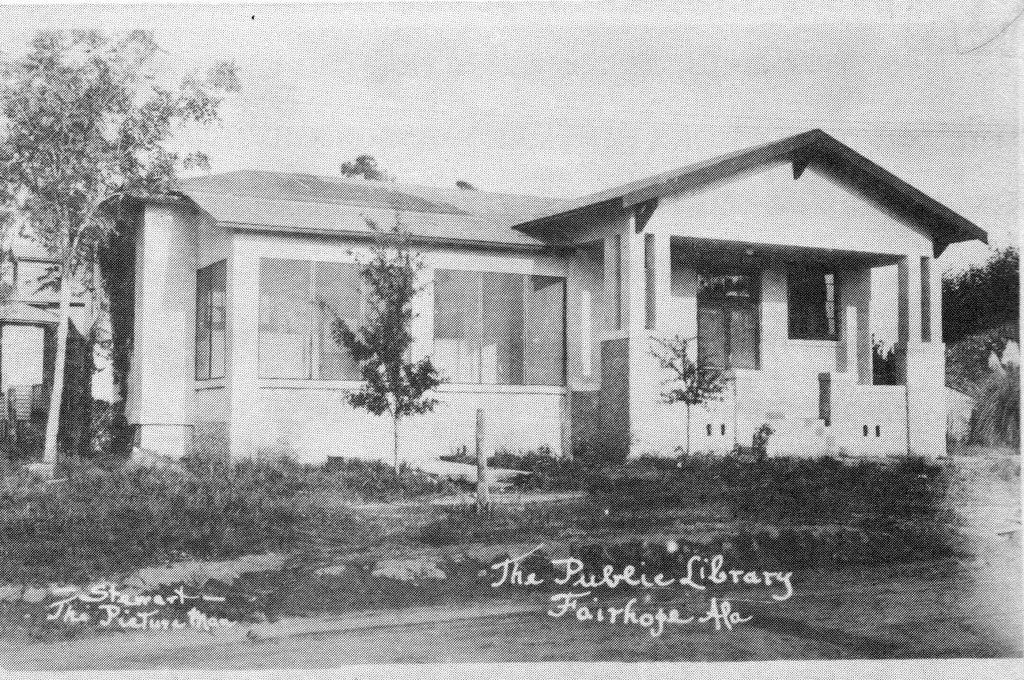
Homage to Old Libraries
July 1
I have wonderful memories of libraries. As a child in Mobile -- we moved over the bay when I was nine -- my sister and I went every Saturday to hear Miss Kertsiek read to the assembled children of Mobile. We called her "Miss Curtsey;" I never knew that wasn't her name until Bob Bell, who was probably dating her at the time she was doing those readings, wrote about her in a letter to me. Miss Curtsey was lovely (in my memory most of the young women were pretty) and had that elegant, expository style of reading to children, stopping to explain or ask questions from time to time, that we found riveting.
I loved going to the library and exploring the shelves, picking out a book just for myself. The smell of a roomful of books was intoxicating. (It still is, in the right environment, not only a refreshing glimpse of the past but also a promise of excitement to be had being transported to another time and place through the act of reading.)
The big library in Mobile was a ticket to the whole world. The little library in Fairhope, on the other hand, was woefully ill-equipped for children, with old first editions and out of print books and very few of the shiny new books designed for beginning readers and rugrats of the day. But it had something else -- a librarian even more wonderful that Miss Curtsey, the gentle and brilliant if sometimes caustic Anna Braune. Miss Braune was naturally as quiet as a library herself, and as full of knowledge and promise. She was somebody you aspired to know better.
All the bookish kids in Fairhope, including my older sister, adored Miss Braune. She knew how to relate to them and to provide them with the kind of books that would inspire them. She once said that she related best to bad children. Found them congenial, she said. My sister once encountered a young man who was definitely in that category, one of her contemporaries whom we would identify today as an at-risk kid because he smoked and had a reputation as delinquent (if not actively, at least potentially). They were both walking in Fairhope and she asked him where he was going. "To visit Anna," he said.
"Anna Braune?"
"Yeah. She's a friend of mine."
This was a shock. Jealousy and outrage bubbled up as my sister huffily declared, "She's a friend of mine too!"
The atmosphere of the little Fairhope library was homey and musty. There was a fireplace in the front room, with a circle of chairs in front of it. There was an odd "museum" in one room off to the left, with glass cases of arrowheads and artifacts, and stuffed natural-history items such as owls. All this was dismantled later when a new librarian took over, and it was years before another Fairhope Museum was established.
And when a new library went up where Delchamps had built a modern building in the 1970's, there was tremendous controversy that this new librarian had had the bad judgment to put a copy of The Joy of Sex on the shelves. The librarian was fired and the mayor refused from then on to put any city funds into the maintenance of the library. Calvin Trillin came to Fairhope to write an article about the incident for The New Yorker. Our local library lost its innocence.
We are about to get a new library, over where the nut processing plant used to be. It is overwhelmingly huge; in fact, it will be considered a media center, and is said to fill a need for meeting spaces, a concert hall (I think) and all kinds of technological geegaws so necessary for modern life. I'm sure you knew this was coming: I'll miss the old wooden card catalog.
Even at the library today, if you're looking for an old book, you're apt to find it's been what they call deleted because it hasn't been checked out for its proscribed number of times. Not popular enough. There are just so many new books out there we have to make room for. Never mind those old first editions that earlier Fairhope women purchased to enrich the life of the townspeople.
My sister recently checked out a novel by Ellen Glasgow. She saw in it an inscription, "Presented by Marietta Johnson, Ada Womble, Shelby Holbrook." I told her this is a book that would be deleted soon because it isn't likely to be checked out often in the future, and that whoever works at the library wouldn't know the significance of the donors. I felt certain that the book should go to the local Marietta Johnson Museum.
That book never made it back to the library. The necessary fee of $10 was paid. I have it in my possession. It will soon be at the Museum.
Friday, June 30, 2006
Edifice Complexes (and Complex Edifices)
June 30
There was actually a story in the paper a few days ago about the possibility of the fund-raising group falling short of their goal to build a $15.5 million performing arts center out near the new high school. You see, the first plan was for a $4 million building, which soon was doubled to be priced at $8 million. As the plans for the building grew, of course the building itself would have to grow, and by now, four years later, construction prices along with redesign for more amenities have bloated the budget so that the low bid of $15.5 million is $2 million more than it was two weeks ago.
The County School Board, never too comfortable with this project, is scheduling meetings to determine whether the cost can be reduced. Everyone is in a quandary.
Why would the school board not be comfortable with the project? For one thing, there is no drama department at Fairhope High School. The new performing arts center would house a 2,000 seat theatre, a number of arts classrooms, a ton of expensive technical equipment – but no resident theater or dance company. To justify the expense of utilities and maintenance, I can see only one way for this to go: A concert space for traveling showbiz acts, like Jeff Foxworthy and the Blue Collar Comedy Tour, that sort of cultural thing.
When communities get excited about getting a new building, a new building gets built. I have little doubt that the extraordinarily talented fundraising members of the Fairhope Educational Enrichment Foundation will be able to come up with money to get the building finished. But as for now, as a city council member told me yesterday, "It's off the table."
In the meantime, all over Fairhope big buildings are springing up. A new library of mammoth proportions for such a small village has risen where the potato shed used to be. It will fill the block, but for a tiny niche that was cut into the property a few years ago for a little historic preservation -- the saving of a shabby old cottage, now known as the Fairhope Center for the Writing Arts. The house is used for a temporary home for local and visiting writers -- I've never been clear on what the mission of that particular project was. It's possible it will be declared a success and the cottage razed for some new addition to the library at some time in the not-so-distant future.
There is hue and cry about the new library, too. The project started when a committee made it clear that the Fairhope library would be inadequate for the coming needs of the growing town, and money began to be raised. An architect came on board. Designs, reflecting the historic period of Spanish revival championed in the 1920's by a couple of local contractors spotted the trend in Florida and decided to build similar abodes in Fairhope. The original Spanish style was applied to boxy little bungalows, including Craftsman details such as built-in bookcases and inglenooks. The new library looks like the City Hall of Madrid, except that it's probably bigger.
All this prompted an extremely ingenious suggestion yesterday in "Sound Off," the local newspaper column that allows a voice to the people. The column runs short, anonymous comments about the local situation. I swear I didn't phone this one in, but I almost wish I had. The suggestion was, since they can't get money to build the new performing arts center at the high school (and new classrooms are needed there, which should be a priority), and everybody hates the new library (and the old one is still functioning quite well), why not revamp the building, before it's finished, and turn it into a performing arts center instead? It is full of meeting rooms, media centers, computer rooms, etc., where all a library basically needs is books.
The idea is so simple, of course, that it will never work. It would require the superimposition of common sense over committee. All that pre-planning would be overruled by the reality that this is a better idea.
It would require facing the fact that you're not going to turn Fairhope High into a School of the Arts by building a huge auditorium next to it -- we're in Baldwin County, in Alabama, and there just isn't a need for a huge performing arts high school. We could, on the other hand, benefit by a multi-use arts facility -- and it would be great to have it right in town instead of out by the highway near the new school.
As for the library, what's wrong with one half the size? How about working with the existing space, or even demolishing that building (a converted supermarket, not a historic structure) and replacing it with a more appropriate structure of a somewhat smaller size than the thing sitting over where the potato shed was?
The performing arts center has enough money to buy out the library building, redesign it into performance spaces, and come out with some pocket change. I wish I knew who called "Sound Off." I'd sign up to be on that committee.
There was actually a story in the paper a few days ago about the possibility of the fund-raising group falling short of their goal to build a $15.5 million performing arts center out near the new high school. You see, the first plan was for a $4 million building, which soon was doubled to be priced at $8 million. As the plans for the building grew, of course the building itself would have to grow, and by now, four years later, construction prices along with redesign for more amenities have bloated the budget so that the low bid of $15.5 million is $2 million more than it was two weeks ago.
The County School Board, never too comfortable with this project, is scheduling meetings to determine whether the cost can be reduced. Everyone is in a quandary.
Why would the school board not be comfortable with the project? For one thing, there is no drama department at Fairhope High School. The new performing arts center would house a 2,000 seat theatre, a number of arts classrooms, a ton of expensive technical equipment – but no resident theater or dance company. To justify the expense of utilities and maintenance, I can see only one way for this to go: A concert space for traveling showbiz acts, like Jeff Foxworthy and the Blue Collar Comedy Tour, that sort of cultural thing.
When communities get excited about getting a new building, a new building gets built. I have little doubt that the extraordinarily talented fundraising members of the Fairhope Educational Enrichment Foundation will be able to come up with money to get the building finished. But as for now, as a city council member told me yesterday, "It's off the table."
In the meantime, all over Fairhope big buildings are springing up. A new library of mammoth proportions for such a small village has risen where the potato shed used to be. It will fill the block, but for a tiny niche that was cut into the property a few years ago for a little historic preservation -- the saving of a shabby old cottage, now known as the Fairhope Center for the Writing Arts. The house is used for a temporary home for local and visiting writers -- I've never been clear on what the mission of that particular project was. It's possible it will be declared a success and the cottage razed for some new addition to the library at some time in the not-so-distant future.
There is hue and cry about the new library, too. The project started when a committee made it clear that the Fairhope library would be inadequate for the coming needs of the growing town, and money began to be raised. An architect came on board. Designs, reflecting the historic period of Spanish revival championed in the 1920's by a couple of local contractors spotted the trend in Florida and decided to build similar abodes in Fairhope. The original Spanish style was applied to boxy little bungalows, including Craftsman details such as built-in bookcases and inglenooks. The new library looks like the City Hall of Madrid, except that it's probably bigger.
All this prompted an extremely ingenious suggestion yesterday in "Sound Off," the local newspaper column that allows a voice to the people. The column runs short, anonymous comments about the local situation. I swear I didn't phone this one in, but I almost wish I had. The suggestion was, since they can't get money to build the new performing arts center at the high school (and new classrooms are needed there, which should be a priority), and everybody hates the new library (and the old one is still functioning quite well), why not revamp the building, before it's finished, and turn it into a performing arts center instead? It is full of meeting rooms, media centers, computer rooms, etc., where all a library basically needs is books.
The idea is so simple, of course, that it will never work. It would require the superimposition of common sense over committee. All that pre-planning would be overruled by the reality that this is a better idea.
It would require facing the fact that you're not going to turn Fairhope High into a School of the Arts by building a huge auditorium next to it -- we're in Baldwin County, in Alabama, and there just isn't a need for a huge performing arts high school. We could, on the other hand, benefit by a multi-use arts facility -- and it would be great to have it right in town instead of out by the highway near the new school.
As for the library, what's wrong with one half the size? How about working with the existing space, or even demolishing that building (a converted supermarket, not a historic structure) and replacing it with a more appropriate structure of a somewhat smaller size than the thing sitting over where the potato shed was?
The performing arts center has enough money to buy out the library building, redesign it into performance spaces, and come out with some pocket change. I wish I knew who called "Sound Off." I'd sign up to be on that committee.
Thursday, June 29, 2006
Those Miscellaneous Alpha Males
June 29
Sometimes (but not often) I’m wrong about things. In my comment on the post “In Hopes of Fair Politics,” when I called some of my friends who post comments alpha males, I thought I knew what I was talking about, but I felt I really should go to the Internet and research the alpha male before I expound on the expression. I found out that my take on the expression was quite wrong.
I thought the Alpha male meant the kind of guy who thought of himself as the center of things and wanted to be seen that way. I thought it was something that could transfer into many areas of expertise. You might say I thought that all men are alpha males.
I checked it out on Wikipedia, which told me in our brethren primates, the alpha is the male in the pack whom all the others defer to. He is the acknowledged leader, and as a result, takes all the risks in moving the pack forward.
I went to another site, fastseduction.com, which contends that alpha is the guy who gets all the sexual action. The other males defer to him either until he dies of natural causes or one of them knocks him off. The writer went so far as to say, Being the alpha male is all about attitude and projecting the image that you are fun to be with and the woman should want to be with you. The writer’s mission is to help his readers become the alpha by acting the part.
Nothing basically wrong with that, but if that’s what alpha is, I had it wrong. This was not what I was getting at. I was trying to pinpoint the male behavior of trying to change people (women) into their own image of themselves – “Why can’t a woman be more like a man?” – through the repeated and hammered suggestions that they do so. Talk about beating your head against the wall! But I’ve known very few men who don’t do that; I can’t think of one, as a matter of fact.
If the alpha is the male whom all the others naturally defer to, then it doesn’t exist in the human male. In the human male there is a constant battle for first place, even when it’s been won. It’s Al Gore hiring a consultant to tell him to let his shirt-tail out once in a while and grow a beard in pursuit of the alpha image. It’s Russell Crowe throwing a telephone at a desk clerk when the connection to Australia fails. It’s Anderson Cooper in Prada sportswear (as alpha-female comedian Kathy Griffin says) up to his ankles in mud from Katrina, confronting the governor of Louisiana. It’s every man doing that guy thing – whether he’s terrified of women, passive-aggressive and proud of it, cerebral and soft spoken, sensitive and sexy, or combative and brutal. I am wracking my brain to think of a situation in which a whole group of males just naturally defers to the leader. I’m sure my readers will help me out here. I just can’t say I’ve ever seen it, except in temporary circumstances as when the election results are just in. To defer just because they’re not alpha and some other guy is is something I’ve never run into.
There’s another thing I noted from my blog comments. The guys, while protesting wildly, clearly like being considered alpha. Who wouldn’t? And I reserve the right to stick to my definition. Either no man is an alpha, or all of them are.
Sometimes (but not often) I’m wrong about things. In my comment on the post “In Hopes of Fair Politics,” when I called some of my friends who post comments alpha males, I thought I knew what I was talking about, but I felt I really should go to the Internet and research the alpha male before I expound on the expression. I found out that my take on the expression was quite wrong.
I thought the Alpha male meant the kind of guy who thought of himself as the center of things and wanted to be seen that way. I thought it was something that could transfer into many areas of expertise. You might say I thought that all men are alpha males.
I checked it out on Wikipedia, which told me in our brethren primates, the alpha is the male in the pack whom all the others defer to. He is the acknowledged leader, and as a result, takes all the risks in moving the pack forward.
I went to another site, fastseduction.com, which contends that alpha is the guy who gets all the sexual action. The other males defer to him either until he dies of natural causes or one of them knocks him off. The writer went so far as to say, Being the alpha male is all about attitude and projecting the image that you are fun to be with and the woman should want to be with you. The writer’s mission is to help his readers become the alpha by acting the part.
Nothing basically wrong with that, but if that’s what alpha is, I had it wrong. This was not what I was getting at. I was trying to pinpoint the male behavior of trying to change people (women) into their own image of themselves – “Why can’t a woman be more like a man?” – through the repeated and hammered suggestions that they do so. Talk about beating your head against the wall! But I’ve known very few men who don’t do that; I can’t think of one, as a matter of fact.
If the alpha is the male whom all the others naturally defer to, then it doesn’t exist in the human male. In the human male there is a constant battle for first place, even when it’s been won. It’s Al Gore hiring a consultant to tell him to let his shirt-tail out once in a while and grow a beard in pursuit of the alpha image. It’s Russell Crowe throwing a telephone at a desk clerk when the connection to Australia fails. It’s Anderson Cooper in Prada sportswear (as alpha-female comedian Kathy Griffin says) up to his ankles in mud from Katrina, confronting the governor of Louisiana. It’s every man doing that guy thing – whether he’s terrified of women, passive-aggressive and proud of it, cerebral and soft spoken, sensitive and sexy, or combative and brutal. I am wracking my brain to think of a situation in which a whole group of males just naturally defers to the leader. I’m sure my readers will help me out here. I just can’t say I’ve ever seen it, except in temporary circumstances as when the election results are just in. To defer just because they’re not alpha and some other guy is is something I’ve never run into.
There’s another thing I noted from my blog comments. The guys, while protesting wildly, clearly like being considered alpha. Who wouldn’t? And I reserve the right to stick to my definition. Either no man is an alpha, or all of them are.
Wednesday, June 28, 2006
Melatonin and Me
June 28
Over the years I've gone from being the sleepiest child in the neighborhood (the lady next door once found me asleep under a bed in her house in the middle of the day) to having occasional bouts with insomnia, to a regular pattern of waking up at about 3 A.M. and not being able to fall asleep again. Probably the pattern was made worse by having a remote control at my fingertips and the switchable presence of Jay Leno, ABC World News Now, a couple of movies all the time, followed by Dr. Phil and Conan O'Brian, and an official wake-up in the locker room with Don Imus and his gang of Alpha males.
However that was, I learned to take a Benadryl once a week so I'd have one solid night of sleep. I woke up with a feeling of heaviness which was best alleviated with a cup or two of Joe, but had had my 7 1/2 hours, at least once in awhile.
About ten years ago, it was discovered that the hormone melatonin was nature's way of regulating the circadian rhythms, especially for long airplane trips across time lines. Everybody reached for the melatonin supplement as a way to induce sleep. We loved the idea of it, but it didn't work. So eventually we relapsed to the once-a-week Benadryl, at least I did, and occasionally reflected on that sleepy, nap-starved little girl. Where did she go? Where did her melatonin go, and why?
A new study was done recently, a long-range one, on the effects of melatonin. It revealed that it does work, in doses of 3 mg., taken at bedtime. Wanting a quick fix (and a magic pill), I decided to give it another try. I ordered some melatonin from my mail-order vitamin, mineral and magic supplier, and received the order about two weeks ago.
The first night I took a pill it seemed to work. I slept better, waking an hour later than usual, but able to go back to sleep and avoid the late-late tv stuff. My plan was to take it every night until the supply ran out if all went fairly well. Sometimes these things take a while to get in your system. For me, it got more effective in the first week, sometimes allowing an actual full night's sleep, but into the second week it seems to me the body is reverting to its old pattern. I wake up about 3, and am awake for about an hour. The difference is, with the melatonin in place, I can fall asleep again. The difference about that is I'll sleep three or four more hours, getting up about 8 A.M., making a total of about nine hours. I sometimes feel the need of a nap during the day. Melatonin is taking over my life. I live to sleep.
This reminds me of the days when I was in my 30's, before the insomnia became part of my routine, when I used to say that I thought maybe sleep was the natural state, and everything that happened when you were awake was just marking time until the next dream. Maybe I'll get back to that -- but the melatonin dreams are of being lost in airports, being lost in strange cities, seeing loved ones who don't recognize me, being in love with people who in my waking life I can't stand, that sort of thing. I think they're called nightmares.
I'm going to give it a long-term try. I'm sure the bad dreams will be replaced when the life situation settles down a bit and fun things are on the horizon (aren't fun things always on the horizon?). I'll let you know how it works out in a few months.
And by the way, I just made that up about dreaming I was in love with people I can't stand. That is one dream I've never had. Just trying to make this more interesting.
Over the years I've gone from being the sleepiest child in the neighborhood (the lady next door once found me asleep under a bed in her house in the middle of the day) to having occasional bouts with insomnia, to a regular pattern of waking up at about 3 A.M. and not being able to fall asleep again. Probably the pattern was made worse by having a remote control at my fingertips and the switchable presence of Jay Leno, ABC World News Now, a couple of movies all the time, followed by Dr. Phil and Conan O'Brian, and an official wake-up in the locker room with Don Imus and his gang of Alpha males.
However that was, I learned to take a Benadryl once a week so I'd have one solid night of sleep. I woke up with a feeling of heaviness which was best alleviated with a cup or two of Joe, but had had my 7 1/2 hours, at least once in awhile.
About ten years ago, it was discovered that the hormone melatonin was nature's way of regulating the circadian rhythms, especially for long airplane trips across time lines. Everybody reached for the melatonin supplement as a way to induce sleep. We loved the idea of it, but it didn't work. So eventually we relapsed to the once-a-week Benadryl, at least I did, and occasionally reflected on that sleepy, nap-starved little girl. Where did she go? Where did her melatonin go, and why?
A new study was done recently, a long-range one, on the effects of melatonin. It revealed that it does work, in doses of 3 mg., taken at bedtime. Wanting a quick fix (and a magic pill), I decided to give it another try. I ordered some melatonin from my mail-order vitamin, mineral and magic supplier, and received the order about two weeks ago.
The first night I took a pill it seemed to work. I slept better, waking an hour later than usual, but able to go back to sleep and avoid the late-late tv stuff. My plan was to take it every night until the supply ran out if all went fairly well. Sometimes these things take a while to get in your system. For me, it got more effective in the first week, sometimes allowing an actual full night's sleep, but into the second week it seems to me the body is reverting to its old pattern. I wake up about 3, and am awake for about an hour. The difference is, with the melatonin in place, I can fall asleep again. The difference about that is I'll sleep three or four more hours, getting up about 8 A.M., making a total of about nine hours. I sometimes feel the need of a nap during the day. Melatonin is taking over my life. I live to sleep.
This reminds me of the days when I was in my 30's, before the insomnia became part of my routine, when I used to say that I thought maybe sleep was the natural state, and everything that happened when you were awake was just marking time until the next dream. Maybe I'll get back to that -- but the melatonin dreams are of being lost in airports, being lost in strange cities, seeing loved ones who don't recognize me, being in love with people who in my waking life I can't stand, that sort of thing. I think they're called nightmares.
I'm going to give it a long-term try. I'm sure the bad dreams will be replaced when the life situation settles down a bit and fun things are on the horizon (aren't fun things always on the horizon?). I'll let you know how it works out in a few months.
And by the way, I just made that up about dreaming I was in love with people I can't stand. That is one dream I've never had. Just trying to make this more interesting.
Tuesday, June 27, 2006
In Hopes of Fair Politics
June 27
Local questions rage about zoning here in the little woebegone burg that once held fair hopes of fair politics. It seems that in 2001 a comprehensive plan was hammered out that would control growth, and then nobody paid a bit of attention to it until a couple of months ago when Wal-Mart, quite within the limits of the plan, announced it would build a mile or so outside the city limits.
At the time the comprehensive plan was put in place, I was on the then-active Historic Preservation Committee, which got up in arms about there being no consideration of historic buildings within the plan. The basic bones of the plan, as I understood it, was to encourage "a village concept," meaning to zone for mixed residence and business within neighborhoods. I thought at the time it all sounded fine, but it's one thing to zone for a small neighborhood grocery and another thing to find the sweet mom-and-pop willing to sacrifice everything (like an income) in order to operate one. It struck me as doomed to fail from the outset.
What certainly did fail was any attempt at preservation of Fairhope's historic cottages and buildings. They've just about all been replaced now, only five years later, and the town has a sleek, smart look, where it once had a funky charm.
Quoted in the Baldwin County section of the Mobile newspaper yesterday, City Councilman Dan Stankoski -- who has lived here all of five or six years -- said, "Everybody wants it to be 1950, but it can't be. There's going to be change."
I'm here to say I don't want it to be 1950. I want it to be 1920. Fairhope has always been political. There is no reason to duck the question now.
Early settlers were unhappy with the status quo in America. Followers of Henry George, they set out to prove his theory known as the Single Tax by establishing a colony to demonstrate it. They had no doubt that their Utopian dream would be realized as surrounding towns and visitors from all over the U.S. and the world would see how well the Fairhope experiment was working.
Sadly for those political idealists, this never happened, and over the years the town grew indifferent and even sometimes hostile to the noble experiment at its heart. What attracted new residents to Fairhope was its breathtaking natural setting, and the extraordinary little school that was in the forefront of the Progressive Education Movement. The school appealed to both the Left and Right politically. The Liberal element felt that giving freedom and empowerment to children would develop their inherent talent and self-confidence; the Right felt that in such a setting the cream would rise to the top and the best leaders would emerge. All were inspired by the speeches and the persona of Marietta Johnson who loved Fairhope's dream of an ideal world.
Mrs. Johnson and her husband Franklin were both Socialists in a day where it was not considered subversive. Many early Fairhopians were. They were ardent believers in Henry George's theory, and Mrs. Johnson's own sunny view was that her school would pave the way for a new educational tack in the world, one that would bring an end to war. She felt that politicians and other people who sought power over others were cases of "arrested development," which her system of education would eradicate from the face of the earth. If she could only see us now.
Of the Single Taxers in Chicago, Clarence Darrow (sometime visitor to Fairhope, by the way) wrote, "This club met regularly every week for several years. In due time I realized that at every meeting the same faces appeared and reappeared, week after week, and that none of them cared to hear anything but a gospel which they all believed. It did not take long for single Tax to become a religious doctrine necessary to salvation." Darrow said, after a particularly effective speech he made early in his career, "I went to my office earlier than usual...No customers were there. Some of my Single Tax friends and Socialist companions began coming in to congratulate me on my speech. This was pleasing but not profitable. Socialists never come for business; they come to use your telephone and tell you how the world should be organized so that everyone could have his own telephone."
That is one of the anecdotes from the chapter on Darrow in When We Had the Sky, excerpted in the Winter 2006 issue of Alabama Heritage.
In the 1950's in Fairhope, Verda Horne took up the Liberal cause and was one of those teachers at the Marietta Johnson School who made us think about politics, at least a little. We struggled with the moral dilemma of segregation, and, while segregation was in full force in lily-white Fairhope at the time, we teenagers were the ones who knew it would be our generation that confronted the many problems it caused. Just before Mrs. Horne, there was a charge that some of our teachers were Communists -- which, in Joe McCarthy's era, was the cause of some alarm. The political climate was among the issues that prompted a band of Quakers from Fairhope to leave for Costa Rica and establish their own colony. This group included several people I knew and some who are still in my circle.
Today's political conflicts here are weighted for my side to lose. We are talking about proposals for $540 million subdivisions at Point Clear. The City Council is talking about a moratorium while they consider all the options. My friends who urge me to get involved in politics seem almost naive to me. All that old-fashioned-civics-class stuff about "One person can make a difference," is of a different time, a different place, a place where hopes of fairness was enough to build Utopia.
Local questions rage about zoning here in the little woebegone burg that once held fair hopes of fair politics. It seems that in 2001 a comprehensive plan was hammered out that would control growth, and then nobody paid a bit of attention to it until a couple of months ago when Wal-Mart, quite within the limits of the plan, announced it would build a mile or so outside the city limits.
At the time the comprehensive plan was put in place, I was on the then-active Historic Preservation Committee, which got up in arms about there being no consideration of historic buildings within the plan. The basic bones of the plan, as I understood it, was to encourage "a village concept," meaning to zone for mixed residence and business within neighborhoods. I thought at the time it all sounded fine, but it's one thing to zone for a small neighborhood grocery and another thing to find the sweet mom-and-pop willing to sacrifice everything (like an income) in order to operate one. It struck me as doomed to fail from the outset.
What certainly did fail was any attempt at preservation of Fairhope's historic cottages and buildings. They've just about all been replaced now, only five years later, and the town has a sleek, smart look, where it once had a funky charm.
Quoted in the Baldwin County section of the Mobile newspaper yesterday, City Councilman Dan Stankoski -- who has lived here all of five or six years -- said, "Everybody wants it to be 1950, but it can't be. There's going to be change."
I'm here to say I don't want it to be 1950. I want it to be 1920. Fairhope has always been political. There is no reason to duck the question now.
Early settlers were unhappy with the status quo in America. Followers of Henry George, they set out to prove his theory known as the Single Tax by establishing a colony to demonstrate it. They had no doubt that their Utopian dream would be realized as surrounding towns and visitors from all over the U.S. and the world would see how well the Fairhope experiment was working.
Sadly for those political idealists, this never happened, and over the years the town grew indifferent and even sometimes hostile to the noble experiment at its heart. What attracted new residents to Fairhope was its breathtaking natural setting, and the extraordinary little school that was in the forefront of the Progressive Education Movement. The school appealed to both the Left and Right politically. The Liberal element felt that giving freedom and empowerment to children would develop their inherent talent and self-confidence; the Right felt that in such a setting the cream would rise to the top and the best leaders would emerge. All were inspired by the speeches and the persona of Marietta Johnson who loved Fairhope's dream of an ideal world.
Mrs. Johnson and her husband Franklin were both Socialists in a day where it was not considered subversive. Many early Fairhopians were. They were ardent believers in Henry George's theory, and Mrs. Johnson's own sunny view was that her school would pave the way for a new educational tack in the world, one that would bring an end to war. She felt that politicians and other people who sought power over others were cases of "arrested development," which her system of education would eradicate from the face of the earth. If she could only see us now.
Of the Single Taxers in Chicago, Clarence Darrow (sometime visitor to Fairhope, by the way) wrote, "This club met regularly every week for several years. In due time I realized that at every meeting the same faces appeared and reappeared, week after week, and that none of them cared to hear anything but a gospel which they all believed. It did not take long for single Tax to become a religious doctrine necessary to salvation." Darrow said, after a particularly effective speech he made early in his career, "I went to my office earlier than usual...No customers were there. Some of my Single Tax friends and Socialist companions began coming in to congratulate me on my speech. This was pleasing but not profitable. Socialists never come for business; they come to use your telephone and tell you how the world should be organized so that everyone could have his own telephone."
That is one of the anecdotes from the chapter on Darrow in When We Had the Sky, excerpted in the Winter 2006 issue of Alabama Heritage.
In the 1950's in Fairhope, Verda Horne took up the Liberal cause and was one of those teachers at the Marietta Johnson School who made us think about politics, at least a little. We struggled with the moral dilemma of segregation, and, while segregation was in full force in lily-white Fairhope at the time, we teenagers were the ones who knew it would be our generation that confronted the many problems it caused. Just before Mrs. Horne, there was a charge that some of our teachers were Communists -- which, in Joe McCarthy's era, was the cause of some alarm. The political climate was among the issues that prompted a band of Quakers from Fairhope to leave for Costa Rica and establish their own colony. This group included several people I knew and some who are still in my circle.
Today's political conflicts here are weighted for my side to lose. We are talking about proposals for $540 million subdivisions at Point Clear. The City Council is talking about a moratorium while they consider all the options. My friends who urge me to get involved in politics seem almost naive to me. All that old-fashioned-civics-class stuff about "One person can make a difference," is of a different time, a different place, a place where hopes of fairness was enough to build Utopia.
Monday, June 26, 2006
A Fascinating Family
June 26
Wyatt Cooper's book Families/A Memoir and a Celebration is a book I wish I had written. In fact, I thought it was the book I wrote with Meet Me at the Butterfly Tree, but I found out that was wrong. Meet Me at the Butterfly Tree was a memoir of Fairhope, which may have been a family to me but is not viewed that way by anybody else. Cooper's book resonates with a broader readership, not only because of its wisdom and its beautiful prose style, but also because, in reflecting on his family of origin, he reaches more profound and more universal conclusions.
In a second book, The Fair Hope of Heaven, I attempt to widen my lens to include more of the background of Fairhope's family, and rather than simply outline my own reaction to certain characters who shaped my own thinking and influenced my life, I write of past citizens of Fairhope and place them in the context of Fairhope today with its penchant for destruction of the the old and its new citizens' determination to ignore its original higher cause of making the world a better (not just a questionably prettier) place. The Fair Hope of Heaven is yet unpublished, but the two publishers who turned it down did so with the grace to say kind things about it, ultimately rejecting the book because they felt it lacked appeal to a audience outside Fairhope.
Families names its mission and nails it in one touching volume. Published in 1975, Cooper's book describes at some length his upbringing in the South, the panoply of characters in his family who formed his life, and his philosophy of life as a result.
He begins by describing a family reunion. He writes, These reunions were of major importance to us. They registered the changes that took place in our lives: the marriages, the births, the moves, the prosperings and the failings to prosper. We watched each other growing up or growing old, and we felt ourselves to be a part of some timeless process, a process the rules of which applied equally to us all.
The reunions did not end when Grandma died, though they had already begun to fade some years before when she, like most of us, left her farm and moved to the town. It would never be the same in the city; there would be other demands on one's attention; one would go as one went to other engagements; it became an event sandwiched in between other events.
One needs land, really, to feel that kind of sense of family, for in those days it was the land that made you, that nourished you, that would, eventually, claim you. The land was home. It was permanent and eternal; it ahd always been there and would always be there; it was made of the bones of millions of years and the dust of centuries; it had known the games of Indian boys, and the battles of unnamed men. You stretched out your body upon it in the early days of spring. You felt it grow warm beneath your belly. You filled your lungs with its clean, rich, and lusty smell. You ran your hungry fingers through the tender green stubble of its surface, you lay and listened to the music of its silence, and gazed through half-closed eyes at the wide, high, pure, blue sky. It belonged to you and you belonged to it...
Wyatt Cooper was a Mississippi farm boy who was to grow up and become an actor and screenwriter, then to marry Gloria Vanderbilt and father two sons for whom he wrote his book. As I wrote this post in early May of 2006, Anderson Cooper, one of those sons, was on C-Span2, talking about his own book, Dispatches from the Edge.
I have written on my blog of my fascination with Anderson and his whole family. Gloria Vanderbilt has endured much human pain in what should have been a life of privilege, and Anderson, under 40, is much more than tv news' latest pretty face. He and his mother have appeared on several television shows discussing their story and the books by and about both of them and the whole fascinating family.
Theirs is a larger-than-life epic that has mysteriously touched my own. I cherish the Southern connection, and the fact that at one point, covering the fashion beat in New York, I was at a reception in the beautiful Vanderbilt mansion where they all lived. It was a business party, to meet Gloria, then designing a line of fabrics, and have the chance to ogle her stuff and report on it. Wyatt and the boys were elsewhere, perhaps on the upper floors. Whatever she was, Gloria Vanderbilt has always worked -- as a movie hopeful, an artist, a hawker of blue jeans and fragrance -- and she has always been accessible to the public. Years later, a friend of mine, having read Families, approached her at a retail promotion in Florida of her new perfume, and found her to be gracious and genuine.
I recently re-read Families for reasons other than information on the family. I parsed it for style and substance, and for inspiration for yet another book. Well, why shouldn't I? I have a family too, and it is more than just Fairhope.
Wyatt Cooper's book Families/A Memoir and a Celebration is a book I wish I had written. In fact, I thought it was the book I wrote with Meet Me at the Butterfly Tree, but I found out that was wrong. Meet Me at the Butterfly Tree was a memoir of Fairhope, which may have been a family to me but is not viewed that way by anybody else. Cooper's book resonates with a broader readership, not only because of its wisdom and its beautiful prose style, but also because, in reflecting on his family of origin, he reaches more profound and more universal conclusions.
In a second book, The Fair Hope of Heaven, I attempt to widen my lens to include more of the background of Fairhope's family, and rather than simply outline my own reaction to certain characters who shaped my own thinking and influenced my life, I write of past citizens of Fairhope and place them in the context of Fairhope today with its penchant for destruction of the the old and its new citizens' determination to ignore its original higher cause of making the world a better (not just a questionably prettier) place. The Fair Hope of Heaven is yet unpublished, but the two publishers who turned it down did so with the grace to say kind things about it, ultimately rejecting the book because they felt it lacked appeal to a audience outside Fairhope.
Families names its mission and nails it in one touching volume. Published in 1975, Cooper's book describes at some length his upbringing in the South, the panoply of characters in his family who formed his life, and his philosophy of life as a result.
He begins by describing a family reunion. He writes, These reunions were of major importance to us. They registered the changes that took place in our lives: the marriages, the births, the moves, the prosperings and the failings to prosper. We watched each other growing up or growing old, and we felt ourselves to be a part of some timeless process, a process the rules of which applied equally to us all.
The reunions did not end when Grandma died, though they had already begun to fade some years before when she, like most of us, left her farm and moved to the town. It would never be the same in the city; there would be other demands on one's attention; one would go as one went to other engagements; it became an event sandwiched in between other events.
One needs land, really, to feel that kind of sense of family, for in those days it was the land that made you, that nourished you, that would, eventually, claim you. The land was home. It was permanent and eternal; it ahd always been there and would always be there; it was made of the bones of millions of years and the dust of centuries; it had known the games of Indian boys, and the battles of unnamed men. You stretched out your body upon it in the early days of spring. You felt it grow warm beneath your belly. You filled your lungs with its clean, rich, and lusty smell. You ran your hungry fingers through the tender green stubble of its surface, you lay and listened to the music of its silence, and gazed through half-closed eyes at the wide, high, pure, blue sky. It belonged to you and you belonged to it...
Wyatt Cooper was a Mississippi farm boy who was to grow up and become an actor and screenwriter, then to marry Gloria Vanderbilt and father two sons for whom he wrote his book. As I wrote this post in early May of 2006, Anderson Cooper, one of those sons, was on C-Span2, talking about his own book, Dispatches from the Edge.
I have written on my blog of my fascination with Anderson and his whole family. Gloria Vanderbilt has endured much human pain in what should have been a life of privilege, and Anderson, under 40, is much more than tv news' latest pretty face. He and his mother have appeared on several television shows discussing their story and the books by and about both of them and the whole fascinating family.
Theirs is a larger-than-life epic that has mysteriously touched my own. I cherish the Southern connection, and the fact that at one point, covering the fashion beat in New York, I was at a reception in the beautiful Vanderbilt mansion where they all lived. It was a business party, to meet Gloria, then designing a line of fabrics, and have the chance to ogle her stuff and report on it. Wyatt and the boys were elsewhere, perhaps on the upper floors. Whatever she was, Gloria Vanderbilt has always worked -- as a movie hopeful, an artist, a hawker of blue jeans and fragrance -- and she has always been accessible to the public. Years later, a friend of mine, having read Families, approached her at a retail promotion in Florida of her new perfume, and found her to be gracious and genuine.
I recently re-read Families for reasons other than information on the family. I parsed it for style and substance, and for inspiration for yet another book. Well, why shouldn't I? I have a family too, and it is more than just Fairhope.
Sunday, June 25, 2006
Legends of Bobby Darin
June 25
I had some time to kill and a 10 per cent discount card, and had forgotten to put any CD’s in the player in the car, so I decided to splurge on a $9.99 bargain before leaving Target yesterday.
Browsing the “Jazz and Pop” counter it jumped out at me. “The Legendary Bobby Darin” CD. Sometimes you just know. Had to have it.
Playing it, I got one little thrill after the other. A marginal Bobby Darin fan, I did know this: he was a consummate entertainer with a great voice, an impeccable music sense, and a personality that would come through on every cut. I was not a bit disappointed. Either faking a country accent or singing a smooth ballad straight, or doing what he did best, the “up-tempo” version of such pop classics as “A Nightingale Sang in Berkeley Square” and “Oh! Look at Me Now,” Bobby Darin was a voice for his times. The CD was an astonishment.
My first husband and I had seen a forgettable flick called Come September early in our marriage. It featured young Bobby Darin and even younger Sandra Dee, who were soon to be man and wife too. Tommy, my husband, was indifferent to popular music, but a fan of grand opera and Dixieland jazz. Somewhere within the movie Darin was called upon to sing an original song called “Multiplication.” Tommy’s jaw dropped. “That’s a great song! And he wrote it!” he said. He always had great respect for Bobby Darin after that, and so did I.
I decided to read the liner notes when I got home, just to refresh myself. I had seen the movie Beyond the Sea, starring one of my favorites, Kevin Spacey (who surprised me by being able to sing and dance), so I knew some of the biography as spelled out in the the sensitive copy. I read it with great interest – not the usual hagliographical stuff, but straightforward praise for an underpraised singer, long gone from this earth. Darin died in 1973 at the age of 37.
Imagine my second astonishment of the day. The notes were written by my own protégé – my nephew Will Friedwald! I take credit for introducing Will to his life work in his early teens when I played for him the cut from the album A Swingin' Affair (Frank Sinatra) “I Wish I Were in Love Again." I don't claim to have been prescient here; I hoped Will, a lover of puns and clever wordplay, would respond to the Lorenz Hart lyrics.
It was Sinatra, more than the song, that Will fell in love with that momentous afternoon. Yesterday I shouldn’t have been surprised to read Will’s byline, but I’m always somewhat surprised, even after a book about Sinatra (The Song Is You) and many articles about every popular singer from Tony Bennett to Elvis Presley – and my favorite of Will’s books, Stardust Melodies, itself a love song to popular music. Not so much surprised, then, but it’s always nice to run into him.
And this time I got to hear a little good music and renew my acquaintance with a talent I'd almost forgotten. Welcome back, Bobby Darin.
I had some time to kill and a 10 per cent discount card, and had forgotten to put any CD’s in the player in the car, so I decided to splurge on a $9.99 bargain before leaving Target yesterday.
Browsing the “Jazz and Pop” counter it jumped out at me. “The Legendary Bobby Darin” CD. Sometimes you just know. Had to have it.
Playing it, I got one little thrill after the other. A marginal Bobby Darin fan, I did know this: he was a consummate entertainer with a great voice, an impeccable music sense, and a personality that would come through on every cut. I was not a bit disappointed. Either faking a country accent or singing a smooth ballad straight, or doing what he did best, the “up-tempo” version of such pop classics as “A Nightingale Sang in Berkeley Square” and “Oh! Look at Me Now,” Bobby Darin was a voice for his times. The CD was an astonishment.
My first husband and I had seen a forgettable flick called Come September early in our marriage. It featured young Bobby Darin and even younger Sandra Dee, who were soon to be man and wife too. Tommy, my husband, was indifferent to popular music, but a fan of grand opera and Dixieland jazz. Somewhere within the movie Darin was called upon to sing an original song called “Multiplication.” Tommy’s jaw dropped. “That’s a great song! And he wrote it!” he said. He always had great respect for Bobby Darin after that, and so did I.
I decided to read the liner notes when I got home, just to refresh myself. I had seen the movie Beyond the Sea, starring one of my favorites, Kevin Spacey (who surprised me by being able to sing and dance), so I knew some of the biography as spelled out in the the sensitive copy. I read it with great interest – not the usual hagliographical stuff, but straightforward praise for an underpraised singer, long gone from this earth. Darin died in 1973 at the age of 37.
Imagine my second astonishment of the day. The notes were written by my own protégé – my nephew Will Friedwald! I take credit for introducing Will to his life work in his early teens when I played for him the cut from the album A Swingin' Affair (Frank Sinatra) “I Wish I Were in Love Again." I don't claim to have been prescient here; I hoped Will, a lover of puns and clever wordplay, would respond to the Lorenz Hart lyrics.
It was Sinatra, more than the song, that Will fell in love with that momentous afternoon. Yesterday I shouldn’t have been surprised to read Will’s byline, but I’m always somewhat surprised, even after a book about Sinatra (The Song Is You) and many articles about every popular singer from Tony Bennett to Elvis Presley – and my favorite of Will’s books, Stardust Melodies, itself a love song to popular music. Not so much surprised, then, but it’s always nice to run into him.
And this time I got to hear a little good music and renew my acquaintance with a talent I'd almost forgotten. Welcome back, Bobby Darin.
Saturday, June 24, 2006
Living in the Past
June 24
My daughter and I have honest-to-God conversations on the phone. We tell each other stories and life situations; we advise, cajole, comfort and gossip for hours at a time. It’s gotten to the point where she’ll open by saying, “Mom. I want to go first this time,” and I accept the ground rules. (What else could I do? I may get to go first next time.)
The last time I was talking with her, it had been my turn for quite a while. I talked about how sad it was that the little house across the street will probably be torn down and replaced by a big house, typical of the “new” Fairhope. I talked about the difficulties in assuring that the Marietta Johnson School will retain its mission of almost 100 years. I talked about how much work it is to inform people, through my books and my blog, of their own heritage. In Meet Me at the Butterfly Tree, Bob Bell and I fairly wallow in Fairhope's halcyon days, presenting, if I do say so, a rather attractive picture of it. See my webpage, Finding Fairhope, linked here, for details.
Back to the story at hand. I am talking to Alison, a hip, 43-year-old single mom, about the difficulties of reaching an audience for my historical rambles.
“Mom,” she said, interrupting the exhausting tirade.
“What? You have another call?”
“No. I’ve just got to say something.”
I waited.
“You’re living in the past.”
Of course she’s right. I acknowledge that I spend a great deal of time fretting about how much nicer the past was, what a shame it is that “the new people” don’t know about it, how it’s my duty to inform and enlighten people younger than I about what came before. I accept that this is a sign of aging, and that I’m probably just more comfortable in my miasma of memories than in trying to forge new relationships or lighten old baggage. I think living in the past is not a 100 per cent bad thing.
Do I sound defensive? Do I sound crochety? Do I sound like Gabby Hayes, griping to the young whippersnappers around the chuck wagon about how they don’t know as much as they should? More importantly, dear reader, do you know who Gabby Hayes was?
Well, I’m not going to tell you. I will say this, he is not reported to be the author of the plays of Shakespeare. I’m reading a new book that explains that the Shakespeare plays were written by Christopher Marlowe. I’m not buying it lock, stock, and bodkin, mind you, but History Play, by Rodney Bolt, is an interesting read. Whether it sheds any new light on the de Vere controversy remains to be seen. I relate my reading matter because, although it deals with events in the past, it shows that I am part of a contemporary dialogue. At least, I think it shows that. Sort of.
We can't help carrying our pasts about with us. I have friends who claim to have short memories, who can't recall names or faces unless they stretch their minds with great effort, which they choose not to do. Perhaps they're lucky. But I see my memory as something of a blessing.
I picture my future as one like Grandma Moses, a blossoming in old age, writing novels set in the Fairhope of the past, little anecdotes interwoven in a village founded on the economic principle of Henry George's Single Tax theory, peopled with eccentrics, intellectuals, and, as I say in Meet Me at the Butterfly Tree, ordinary people seeking an extraordinary life. I'll be that little old lady over on Bayview Street, the one who refused to sell her house back in ought-eight for a million dollars, writing away her memories, selling her past in small increments, tottering to book-signings and book fairs and C-Span2, where she holds forth about the old lost days in a village that used to be.
My daughter and I have honest-to-God conversations on the phone. We tell each other stories and life situations; we advise, cajole, comfort and gossip for hours at a time. It’s gotten to the point where she’ll open by saying, “Mom. I want to go first this time,” and I accept the ground rules. (What else could I do? I may get to go first next time.)
The last time I was talking with her, it had been my turn for quite a while. I talked about how sad it was that the little house across the street will probably be torn down and replaced by a big house, typical of the “new” Fairhope. I talked about the difficulties in assuring that the Marietta Johnson School will retain its mission of almost 100 years. I talked about how much work it is to inform people, through my books and my blog, of their own heritage.
 In Meet Me at the Butterfly Tree, Bob Bell and I fairly wallow in Fairhope's halcyon days, presenting, if I do say so, a rather attractive picture of it. See my webpage, Finding Fairhope, linked here, for details.
 Back to the story at hand. I am talking to Alison, a hip, 43-year-old single mom, about the difficulties of reaching an audience for my historical rambles.
“Mom,” she said, interrupting the exhausting tirade.
“What? You have another call?”
“No. I’ve just got to say something.”
I waited.
“You’re living in the past.”
Of course she’s right. I acknowledge that I spend a great deal of time fretting about how much nicer the past was, what a shame it is that “the new people” don’t know about it, how it’s my duty to inform and enlighten people younger than I about what came before. I accept that this is a sign of aging, and that I’m probably just more comfortable in my miasma of memories than in trying to forge new relationships or lighten old baggage. I think living in the past is not a 100 per cent bad thing.
Do I sound defensive? Do I sound crochety? Do I sound like Gabby Hayes, griping to the young whippersnappers around the chuck wagon about how they don’t know as much as they should? More importantly, dear reader, do you know who Gabby Hayes was?
Well, I’m not going to tell you. I will say this, he is not reported to be the author of the plays of Shakespeare. I’m reading a new book that explains that the Shakespeare plays were written by Christopher Marlowe. I’m not buying it lock, stock, and bodkin, mind you, but History Play, by Rodney Bolt, is an interesting read. Whether it sheds any new light on the de Vere controversy remains to be seen. I relate my reading matter because, although it deals with events in the past, it shows that I am part of a contemporary dialogue. At least, I think it shows that. Sort of.
We can't help carrying our pasts about with us. I have friends who claim to have short memories, who can't recall names or faces unless they stretch their minds with great effort, which they choose not to do. Perhaps they're lucky. But I see my memory as something of a blessing.
I picture my future as one like Grandma Moses, a blossoming in old age, writing novels set in the Fairhope of the past, little anecdotes interwoven in a village founded on the economic principle of Henry George's Single Tax theory, peopled with eccentrics, intellectuals, and, as I say in Meet Me at the Butterfly Tree, ordinary people seeking an extraordinary life. I'll be that little old lady over on Bayview Street, the one who refused to sell her house back in ought-eight for a million dollars, writing away her memories, selling her past in small increments, tottering to book-signings and book fairs and C-Span2, where she holds forth about the old lost days in a village that used to be.
Friday, June 23, 2006
Anderson Cooper Revisited
June 23
Okay, I admit it. I have a thing for Anderson Cooper. It’s no recent crush; I’ve been following his career since I discovered him about ten years ago. At that time he helped me with my insomnia on a latenight news show called ABC World News Now which took place in the wee hours and was a combination of irreverent comedy and straight news. The show had a spontaneous, antic quality, complete with weekly appearances by an accordion player and two campy backup singers who burst on the scene playing something they called the “World News Polka.”
The co-anchors were Anderson Cooper and Alison Stewart, who played off each other in a snappy, brother-sister kind of way, and their comments brought off-camera howls of laughter from the crew. At the time I thought this attractive young Anderson Cooper was a dead ringer for James Glassman, the Libertarian columnist and sometime news talking head. I decided Anderson was his son. When Anderson left the show, I hoped he wouldn’t just drift off into obscurity.
Boy, was I wrong. It wasn’t long before he was the head news anchor at CNN and the talk of the airwaves, to say nothing of the cover boy on all the magazines. He covered Katrina and appeared on talk shows, revealing that he was actually the son of Wyatt Cooper and Gloria Vanderbilt Cooper. I had followed their story and the tragedy of Anderson’s older brother who committed suicide at the age of 14.
Now that I think about it, I’d been reading about this family for years. I read Aram Saroyan’s book Trio, about the glamor-girl-best-friend debutantes Oona O’Neill Chaplin, Carol Saroyan Matthau, and Gloria Vanderbilt Cooper (“Oona, daughter of Eugene O’Neill, married Charlie Chaplin; Carol married William Saroyan and Walter Matthau, and Gloria married everybody else.”) I read Little Gloria, Happy at Last about Anderson’s mother’s wretched childhood as a pawn in a disturbed super-rich family. I read Wyatt Cooper’s tender memoir called Families: A Memoir and a Celebration about growing up in the South. (I even read that it’s one of Anderson’s favorite books, so I looked it up on amazon to see about picking up a copy to re-read it. The going price is $90, and there's one on eBay that's already gone up to $1,500 -- so instead I checked it out from the Fairhope library.)
Anderson has a real story to tell. A recent issue of Vanity Fair includes a chapter from his inevitable book, revealing how his dealing with the coverage of the devastation of Katrina opened him up to his own repressed pain. The early death of his father had been traumatic for both him and his brother, and, until confronted with commensurate personal loss as being experienced by families in the storm-ravaged areas of the Gulf Coast and New Orleans, he had not dealt head-on with his own sense of the loss of his brother. Like his father, he can write; and time will prove whether his real place is as a broadcast newsman or in some loftier field of American life.
The fantasy that our paths might ever cross in this lifetime is remote. It's a stretch even for me, never at a loss for the vivid impossible. In age, he's more appropriate for my ego-extension, my beautiful and brilliant daughter, but for her I had in mind someone more like George Clooney. In fact, I had George Clooney himself in mind. (My favorite son-in-law fantasy! That place in Como -- that flirty smile that would indulge the most obnoxious old lady who happened to be the mother of his wife -- oh, that I could somehow ask the universe for this miracle!)
For now, I'll check out Anderson from time to time on tv, read that book when I get to it, look at those riveting blue eyes almost every evening, and remember, with a faint, "if-only" sigh, what I can of being in love.
Okay, I admit it. I have a thing for Anderson Cooper. It’s no recent crush; I’ve been following his career since I discovered him about ten years ago. At that time he helped me with my insomnia on a latenight news show called ABC World News Now which took place in the wee hours and was a combination of irreverent comedy and straight news. The show had a spontaneous, antic quality, complete with weekly appearances by an accordion player and two campy backup singers who burst on the scene playing something they called the “World News Polka.”
The co-anchors were Anderson Cooper and Alison Stewart, who played off each other in a snappy, brother-sister kind of way, and their comments brought off-camera howls of laughter from the crew. At the time I thought this attractive young Anderson Cooper was a dead ringer for James Glassman, the Libertarian columnist and sometime news talking head. I decided Anderson was his son. When Anderson left the show, I hoped he wouldn’t just drift off into obscurity.
Boy, was I wrong. It wasn’t long before he was the head news anchor at CNN and the talk of the airwaves, to say nothing of the cover boy on all the magazines. He covered Katrina and appeared on talk shows, revealing that he was actually the son of Wyatt Cooper and Gloria Vanderbilt Cooper. I had followed their story and the tragedy of Anderson’s older brother who committed suicide at the age of 14.
Now that I think about it, I’d been reading about this family for years. I read Aram Saroyan’s book Trio, about the glamor-girl-best-friend debutantes Oona O’Neill Chaplin, Carol Saroyan Matthau, and Gloria Vanderbilt Cooper (“Oona, daughter of Eugene O’Neill, married Charlie Chaplin; Carol married William Saroyan and Walter Matthau, and Gloria married everybody else.”) I read Little Gloria, Happy at Last about Anderson’s mother’s wretched childhood as a pawn in a disturbed super-rich family. I read Wyatt Cooper’s tender memoir called Families: A Memoir and a Celebration about growing up in the South. (I even read that it’s one of Anderson’s favorite books, so I looked it up on amazon to see about picking up a copy to re-read it. The going price is $90, and there's one on eBay that's already gone up to $1,500 -- so instead I checked it out from the Fairhope library.)
Anderson has a real story to tell. A recent issue of Vanity Fair includes a chapter from his inevitable book, revealing how his dealing with the coverage of the devastation of Katrina opened him up to his own repressed pain. The early death of his father had been traumatic for both him and his brother, and, until confronted with commensurate personal loss as being experienced by families in the storm-ravaged areas of the Gulf Coast and New Orleans, he had not dealt head-on with his own sense of the loss of his brother. Like his father, he can write; and time will prove whether his real place is as a broadcast newsman or in some loftier field of American life.
The fantasy that our paths might ever cross in this lifetime is remote. It's a stretch even for me, never at a loss for the vivid impossible. In age, he's more appropriate for my ego-extension, my beautiful and brilliant daughter, but for her I had in mind someone more like George Clooney. In fact, I had George Clooney himself in mind. (My favorite son-in-law fantasy! That place in Como -- that flirty smile that would indulge the most obnoxious old lady who happened to be the mother of his wife -- oh, that I could somehow ask the universe for this miracle!)
For now, I'll check out Anderson from time to time on tv, read that book when I get to it, look at those riveting blue eyes almost every evening, and remember, with a faint, "if-only" sigh, what I can of being in love.
Thursday, June 22, 2006
Upton Sinclair in Fairhope
June 22
Upton Sinclair moved to a cottage on the beach in Fairhope in 1909. He was a famous novelist at the time, having written The Jungle three years earlier. I have a chapter on Sinclair in my new book The Fair Hope of Heaven, and will relate some of its information here in hopes of capturing some of the attention now being given to Sinclair, a largely overlooked American writer of the 20th Century who was not atypical of the denizens of early Fairhope.
There is a new biography of Sinclair by Anthony Arthur called Radical Innocent, and I was very interested in the author’s presentation of that book on CSPAN 2 over the Memorial Day weekend. At the opening he casually mentioned Sinclair’s time spent in both Arden (Del.) and Fairhope. From time to time there is a flurry of interest, and maybe when When We Had the Sky is published, Sinclair will again receive deserved attention, at least in the area on the Eastern Shore of Mobile Bay where he once lived.
Most of us remember the name Sinclair Lewis from American Lit classes in college, but this is the other Sinclair. Anthony Arthur said that Upton Sinclair once remarked, “Maybe we should just both take the name Upton Sinclair Lewis.”
Upton Sinclair was a Socialist, an idealist, a food faddist, and a complex and interesting man who wrote books whenever he felt the world’s ills needed correcting, which meant that he wrote books constantly. He lived during a period in which like-minded idealists banded together, often in colonies, not unlike our own Utopian Fairhope. After camping in inadequate shacks since their marriage, with money from The Jungle Sinclair and his wife Meta had bought an old private school building on the Palisades in New Jersey to house the artists’ colony that was his dream. He called the project Helicon Home Colony, after the Greek muse of the arts, Helicon. John Dewey, also a figure in Fairhope, visited his colony and even the young Sinclair Lewis, a Yale student, helped out with janitorial duties.
Helicon Home Colony burned in 1907, and with it went Sinclair’s hopes for his own personal ideal world. From there he traveled with wife and baby David to Carmel, where he experimented with health foods and wrote books and plays intended to convert mankind to his two pet causes: health diets and Socialism. He wrote books about raw food diets, fasting, vegetarianism. He and his family were to spend time in Battle Creek at Kellogg’s and health guru Bernarr MacFadden’s establishments, and other such enclaves, before they moved to Fairhope to try it out.
Raised by a puritan mother and an alcoholic father, Sinclair early on thought of himself as a genius. His personal heroes were Shelley, Hamlet, and Jesus Christ. He was convinced that he was ordained to write the Great American Novel, and he made at least 60 attempts at it, most of which sold very well and had literary merit while succeeding best at presenting his latest propaganda soapbox.
As a Socialist, he would have been well-acquainted with the Single Taxers, and Fairhope had a strong attraction to those who sought a heaven on earth, as many did in those days. Young David, well-read in the books of his parents’ choosing, was getting old enough for school, and the Sinclairs probably saw the need for some life with other children. David Sinclair became one of the first children enrolled in the Marietta Johnson School of Organic Education.
In his 1932 autobiography, Sinclair wrote: “For the winter (1909-10) I took my family to the single tax colony at Fairhope, Alabama, on Mobile Bay. Since I couldn’t have a colony of my own, I would try other people’s. Here were two or three hundred assorted reformers, having organized their affairs according to the gospel of Henry George; trying to eke a living from poor soil, and feeling certain they were setting an example to the rest of the world. The climate permitted the outdoor life, and we found a cottage for rent on the bay-front, remote from the village.
“…I was overworking again; and when my recalcitrant stomach made too much trouble, I would take another fast for a day, three days, a week. I was trying the raw food died, and failing, as before. I was now a full-fledged physical culturist, following a Spartan regime. In front of our house ran a long pier, out to the deep water of the bay. Often the boards of this peir were covered with frost, very stimulating to the far feet, and whipped by icy winds, stimulating to the skin; each morning I made a swim in this bay a part of my law.”
For The Fair Hope of Heaven, I have included some lovely diary entries by Maude, the young bride of Sinclair’s secretary – Dave Howatt, also a raw-food advocate – describing the scene in Fairhope of those halcyon, idealistic days. These pages deserve a blog post of their own, offering an enchanting portrait of a young woman in love in another era, in a bayside village that is long gone.
The marriage between Upton and Meta Sinclair, unlike the Howatt's, was not to last much longer. Meta's physical passion had been more than he bargained for, and he sought to quell it in any way he could, at last inviting her to bring her young lover, Alfred Kuttner, to join them in Fairhope, where such liaisons were not unheard of. It was here that he wrote his autobiographical work, Love’s Pilgrimage, allowing Meta to pen the portions concerning Corydon, the female protagonist.
I’ve bitten almost more than I can chew in one post here. I have included only fragments of the chapter from my book. The Fair Hope of Heaven is available on amazon.com, Barnes & Noble.com, and from my website,
Upton Sinclair moved to a cottage on the beach in Fairhope in 1909. He was a famous novelist at the time, having written The Jungle three years earlier. I have a chapter on Sinclair in my new book The Fair Hope of Heaven, and will relate some of its information here in hopes of capturing some of the attention now being given to Sinclair, a largely overlooked American writer of the 20th Century who was not atypical of the denizens of early Fairhope.
There is a new biography of Sinclair by Anthony Arthur called Radical Innocent, and I was very interested in the author’s presentation of that book on CSPAN 2 over the Memorial Day weekend. At the opening he casually mentioned Sinclair’s time spent in both Arden (Del.) and Fairhope. From time to time there is a flurry of interest, and maybe when When We Had the Sky is published, Sinclair will again receive deserved attention, at least in the area on the Eastern Shore of Mobile Bay where he once lived.
Most of us remember the name Sinclair Lewis from American Lit classes in college, but this is the other Sinclair. Anthony Arthur said that Upton Sinclair once remarked, “Maybe we should just both take the name Upton Sinclair Lewis.”
Upton Sinclair was a Socialist, an idealist, a food faddist, and a complex and interesting man who wrote books whenever he felt the world’s ills needed correcting, which meant that he wrote books constantly. He lived during a period in which like-minded idealists banded together, often in colonies, not unlike our own Utopian Fairhope. After camping in inadequate shacks since their marriage, with money from The Jungle Sinclair and his wife Meta had bought an old private school building on the Palisades in New Jersey to house the artists’ colony that was his dream. He called the project Helicon Home Colony, after the Greek muse of the arts, Helicon. John Dewey, also a figure in Fairhope, visited his colony and even the young Sinclair Lewis, a Yale student, helped out with janitorial duties.
Helicon Home Colony burned in 1907, and with it went Sinclair’s hopes for his own personal ideal world. From there he traveled with wife and baby David to Carmel, where he experimented with health foods and wrote books and plays intended to convert mankind to his two pet causes: health diets and Socialism. He wrote books about raw food diets, fasting, vegetarianism. He and his family were to spend time in Battle Creek at Kellogg’s and health guru Bernarr MacFadden’s establishments, and other such enclaves, before they moved to Fairhope to try it out.
Raised by a puritan mother and an alcoholic father, Sinclair early on thought of himself as a genius. His personal heroes were Shelley, Hamlet, and Jesus Christ. He was convinced that he was ordained to write the Great American Novel, and he made at least 60 attempts at it, most of which sold very well and had literary merit while succeeding best at presenting his latest propaganda soapbox.
As a Socialist, he would have been well-acquainted with the Single Taxers, and Fairhope had a strong attraction to those who sought a heaven on earth, as many did in those days. Young David, well-read in the books of his parents’ choosing, was getting old enough for school, and the Sinclairs probably saw the need for some life with other children. David Sinclair became one of the first children enrolled in the Marietta Johnson School of Organic Education.
In his 1932 autobiography, Sinclair wrote: “For the winter (1909-10) I took my family to the single tax colony at Fairhope, Alabama, on Mobile Bay. Since I couldn’t have a colony of my own, I would try other people’s. Here were two or three hundred assorted reformers, having organized their affairs according to the gospel of Henry George; trying to eke a living from poor soil, and feeling certain they were setting an example to the rest of the world. The climate permitted the outdoor life, and we found a cottage for rent on the bay-front, remote from the village.
“…I was overworking again; and when my recalcitrant stomach made too much trouble, I would take another fast for a day, three days, a week. I was trying the raw food died, and failing, as before. I was now a full-fledged physical culturist, following a Spartan regime. In front of our house ran a long pier, out to the deep water of the bay. Often the boards of this peir were covered with frost, very stimulating to the far feet, and whipped by icy winds, stimulating to the skin; each morning I made a swim in this bay a part of my law.”
For The Fair Hope of Heaven, I have included some lovely diary entries by Maude, the young bride of Sinclair’s secretary – Dave Howatt, also a raw-food advocate – describing the scene in Fairhope of those halcyon, idealistic days. These pages deserve a blog post of their own, offering an enchanting portrait of a young woman in love in another era, in a bayside village that is long gone.
The marriage between Upton and Meta Sinclair, unlike the Howatt's, was not to last much longer. Meta's physical passion had been more than he bargained for, and he sought to quell it in any way he could, at last inviting her to bring her young lover, Alfred Kuttner, to join them in Fairhope, where such liaisons were not unheard of. It was here that he wrote his autobiographical work, Love’s Pilgrimage, allowing Meta to pen the portions concerning Corydon, the female protagonist.
I’ve bitten almost more than I can chew in one post here. I have included only fragments of the chapter from my book. The Fair Hope of Heaven is available on amazon.com, Barnes & Noble.com, and from my website,
Wednesday, June 21, 2006
A New Day Dawning
June 21
I just got to thinking...what if this were 100 years ago? This house wouldn't be built yet -- it went up in 1916 -- Marietta Johnson's school was not yet a reality -- it was to begin in the fall of 1907 -- the unpaved streets were full of chickens, goats and other livestock -- and there weren't many trees, since the area had been timbered out in recent years.
A scraggly little town, built on the dream of a few who had relocated from Iowa just 12 years before, Fairhope palpitated with possibilities. But it was probably a warm morning, the first day of summer, 1906, no hope of turning on the air conditioning later in the day, and no idea of where the fair hopes of the original colonists would take the town in its first century.
As I write, the sun has come up and there is a little puff of a pink cloud turning orange against the blue sky. It could have been that kind of dawn a hundred years ago, with sound effects of the cackle of the occasional chicken and bleat of a goat. I can hear an owl myself -- maybe his ancestor was here.
Marietta Johnson was a frequent visitor at this time. She and her husband, a farmer, had bought a pecan farm in Mississippi, and they discovered Fairhope through Socialist friends in St. Paul. They had begun visiting Fairhope in the winter of 1896, and she had become fast friends with Lydia Comings, who urged her to move here and start the school she dreamed of. Mrs. Johnson studied the writings of Rousseau, Frederich Froebel, and the work of her contemporaries, John Dewey, C. Hanford Henderson and Nathan Oppenheim. These latter names are those leaders who were creating the study of early childhood development, and advocated redesigning the school to suit the nature and needs of the child rather than trying to force the child to conform to an arbitrary mold defined by a group of adults. Mrs. Johnson, a lifelong teacher, saw the simple elegance of this notion and advocated nothing less than a retrenching of the whole educational system to make it operate this way. She thought she could achieve this by starting a school based upon that principle. It would be a year more of talking (and she was superb at that) to make her dream of such a school a reality.
The town had a library with books donated by the former bohemian Marie Howland. Mrs. Howland was now a settled old lady in her sixties, having sown her wild oats in the 19th Century among the free thinkers, social reformers, and feminists in New York and in France in a commune that purported to be the wave of the future, with one large house encompassing many families but no kitchen. She left reformist colony in Mexico disenchanted with its Puritan strain which scowled on her tendency to bathe nude in the sea for the revolutionary Single Tax enclave in Fairhope.
There was already a Fairhope Courier, then published weekly and sent around the world to proselytize for the Utopian colony, and Marie Howland had a regular column in it. Her feminist leanings would make her quite at home in Fairhope, where women always had the vote (on local issues) and, according to Paul Gaston in his little book Women of Fair Hope, she stands out in Fairhope history "for her advocacy of cooperative living, kitchenless homes, and scientific child-rearing as means of liberating women from household drudgery and male exploitation." She was to become a great friend to Marietta Johnson.
A hundred years ago there would be no cars driving by. What was at one time the Gaston Motor Company at that time was a livery and harness shop. It is now a trendy restaurant. There have been so many transmutations of the "uptown" area that it is pointless to make note of them now. There was a bluff park, a municipal pier, a grassy knoll just to the east of the bluff, always called "Knoll Park," it stands hardly changed.
There is a genuine log cabin on the other side of Bay View Street (once more felicitously "Bay View Avenue") from me that was built in 1900. That would have been there, among the stumps, stubble and trees of 100 years ago. It is for sale, and will surely be torn down.
As it was 100 years ago, a new day is dawning. There is good news from the Marietta Johnson School, new board members eager to take on the task of helping turn the school back to what it once was. One is the local potter who graduated from our school and will be very helpful in helping restructure our Arts and Crafts department. Another is a City Councilman. Another is a relative newcomer whose wife is a Fairho, and who has taught woodshop and stagecraft and is one of the general all around artisans the like of which used to help out at the school all the time.
I wake up full of ideas, plans, and half-finished grant proposals. I am going to spend the afternoon taking care of things at the Marietta Johnson Museum -- which always affords the opportunity for a little personal research, and is welcome respite in a beloved old Fairhope building that feels like home. Good things will come of all this.
I just got to thinking...what if this were 100 years ago? This house wouldn't be built yet -- it went up in 1916 -- Marietta Johnson's school was not yet a reality -- it was to begin in the fall of 1907 -- the unpaved streets were full of chickens, goats and other livestock -- and there weren't many trees, since the area had been timbered out in recent years.
A scraggly little town, built on the dream of a few who had relocated from Iowa just 12 years before, Fairhope palpitated with possibilities. But it was probably a warm morning, the first day of summer, 1906, no hope of turning on the air conditioning later in the day, and no idea of where the fair hopes of the original colonists would take the town in its first century.
As I write, the sun has come up and there is a little puff of a pink cloud turning orange against the blue sky. It could have been that kind of dawn a hundred years ago, with sound effects of the cackle of the occasional chicken and bleat of a goat. I can hear an owl myself -- maybe his ancestor was here.
Marietta Johnson was a frequent visitor at this time. She and her husband, a farmer, had bought a pecan farm in Mississippi, and they discovered Fairhope through Socialist friends in St. Paul. They had begun visiting Fairhope in the winter of 1896, and she had become fast friends with Lydia Comings, who urged her to move here and start the school she dreamed of. Mrs. Johnson studied the writings of Rousseau, Frederich Froebel, and the work of her contemporaries, John Dewey, C. Hanford Henderson and Nathan Oppenheim. These latter names are those leaders who were creating the study of early childhood development, and advocated redesigning the school to suit the nature and needs of the child rather than trying to force the child to conform to an arbitrary mold defined by a group of adults. Mrs. Johnson, a lifelong teacher, saw the simple elegance of this notion and advocated nothing less than a retrenching of the whole educational system to make it operate this way. She thought she could achieve this by starting a school based upon that principle. It would be a year more of talking (and she was superb at that) to make her dream of such a school a reality.
The town had a library with books donated by the former bohemian Marie Howland. Mrs. Howland was now a settled old lady in her sixties, having sown her wild oats in the 19th Century among the free thinkers, social reformers, and feminists in New York and in France in a commune that purported to be the wave of the future, with one large house encompassing many families but no kitchen. She left reformist colony in Mexico disenchanted with its Puritan strain which scowled on her tendency to bathe nude in the sea for the revolutionary Single Tax enclave in Fairhope.
There was already a Fairhope Courier, then published weekly and sent around the world to proselytize for the Utopian colony, and Marie Howland had a regular column in it. Her feminist leanings would make her quite at home in Fairhope, where women always had the vote (on local issues) and, according to Paul Gaston in his little book Women of Fair Hope, she stands out in Fairhope history "for her advocacy of cooperative living, kitchenless homes, and scientific child-rearing as means of liberating women from household drudgery and male exploitation." She was to become a great friend to Marietta Johnson.
A hundred years ago there would be no cars driving by. What was at one time the Gaston Motor Company at that time was a livery and harness shop. It is now a trendy restaurant. There have been so many transmutations of the "uptown" area that it is pointless to make note of them now. There was a bluff park, a municipal pier, a grassy knoll just to the east of the bluff, always called "Knoll Park," it stands hardly changed.
There is a genuine log cabin on the other side of Bay View Street (once more felicitously "Bay View Avenue") from me that was built in 1900. That would have been there, among the stumps, stubble and trees of 100 years ago. It is for sale, and will surely be torn down.
As it was 100 years ago, a new day is dawning. There is good news from the Marietta Johnson School, new board members eager to take on the task of helping turn the school back to what it once was. One is the local potter who graduated from our school and will be very helpful in helping restructure our Arts and Crafts department. Another is a City Councilman. Another is a relative newcomer whose wife is a Fairho, and who has taught woodshop and stagecraft and is one of the general all around artisans the like of which used to help out at the school all the time.
I wake up full of ideas, plans, and half-finished grant proposals. I am going to spend the afternoon taking care of things at the Marietta Johnson Museum -- which always affords the opportunity for a little personal research, and is welcome respite in a beloved old Fairhope building that feels like home. Good things will come of all this.
Tuesday, June 20, 2006
Cache Flow
June 20
Yesterday there was a blackout on this blog. Hours went by when the blog was gone from cyberspace. At first I figured it was just a technical problem at the blog space provider and would be cleared up in minutes, but when two hours went by I thought (wrongly) that there was something I could do.
I don't have good computer instincts. I don't like to multi-task and have long since decided that all the details of making words appear on the screen and in the cybersphere were just not of importance to me. I just fiddle with the keyboard until the screen tells me I have done something; often it tells me what I did was wrong (and sometimes illegal) and I hate when that happens. I adopted a casual attitude about the warnings years ago, to save myself the nervous breakdowns and insecurity complexes resulting from being so wrong so often. When I have to do something difficult, like deal with html, I grit my teeth and try it, but I don't care to enlighten myself in the finer points of how it works. I call it self-protection; what it probably is is recklessness.
When the blackout occurred I decided to deal with it the way that I deal with it when the post I've been working on assiduously just doesn't appear some mornings. I have been to the "Help" department of the blog provider and it tells me that I need to clear the cache. All this time (I've been blogging since February), I thought that meant to delete former posts to make room for new ones.
I didn't know what the "cache" was. Such a pretty word. Lots of opportunities for puns, like the title of this blog. But I was, because of this misunderstanding, deleting some of my best work from the archives of the blogs -- work that would attract new readers through search engines, work that would exemplify my mission here and even sell some books for me.
I did copy the posts onto my hard drive in case I want to use them someday.
Thank God for young friends who fresh brains are a cache for computer information. One of these, Salome, who does a private dance on her own blog to which this one is linked, came on my email last night to chat and I asked her to explain how to deal with the blog blackout situation. She walked me through what the cache actually is, how to clear it -- and explained that I should never have to delete posts from my blog. I promptly cleared the cache. Then I checked the archives and of course everything is gone but a few posts in June and May.
However, friends, the good missing posts are on my hard drive, so I shall re-post them all as we go forward in time. Don't be surprised if you read something familiar here from time to time. Some things should be out there -- the Upton Sinclair in Fairhope stuff, etc. Let me know what you'd like to read again. You'll probably be reading it.
Maybe I should take computer lessons?
Yesterday there was a blackout on this blog. Hours went by when the blog was gone from cyberspace. At first I figured it was just a technical problem at the blog space provider and would be cleared up in minutes, but when two hours went by I thought (wrongly) that there was something I could do.
I don't have good computer instincts. I don't like to multi-task and have long since decided that all the details of making words appear on the screen and in the cybersphere were just not of importance to me. I just fiddle with the keyboard until the screen tells me I have done something; often it tells me what I did was wrong (and sometimes illegal) and I hate when that happens. I adopted a casual attitude about the warnings years ago, to save myself the nervous breakdowns and insecurity complexes resulting from being so wrong so often. When I have to do something difficult, like deal with html, I grit my teeth and try it, but I don't care to enlighten myself in the finer points of how it works. I call it self-protection; what it probably is is recklessness.
When the blackout occurred I decided to deal with it the way that I deal with it when the post I've been working on assiduously just doesn't appear some mornings. I have been to the "Help" department of the blog provider and it tells me that I need to clear the cache. All this time (I've been blogging since February), I thought that meant to delete former posts to make room for new ones.
I didn't know what the "cache" was. Such a pretty word. Lots of opportunities for puns, like the title of this blog. But I was, because of this misunderstanding, deleting some of my best work from the archives of the blogs -- work that would attract new readers through search engines, work that would exemplify my mission here and even sell some books for me.
I did copy the posts onto my hard drive in case I want to use them someday.
Thank God for young friends who fresh brains are a cache for computer information. One of these, Salome, who does a private dance on her own blog to which this one is linked, came on my email last night to chat and I asked her to explain how to deal with the blog blackout situation. She walked me through what the cache actually is, how to clear it -- and explained that I should never have to delete posts from my blog. I promptly cleared the cache. Then I checked the archives and of course everything is gone but a few posts in June and May.
However, friends, the good missing posts are on my hard drive, so I shall re-post them all as we go forward in time. Don't be surprised if you read something familiar here from time to time. Some things should be out there -- the Upton Sinclair in Fairhope stuff, etc. Let me know what you'd like to read again. You'll probably be reading it.
Maybe I should take computer lessons?
Monday, June 19, 2006
The Human Condition
June 19
Yesterday was one of those quiet Sundays with nothing on the agenda and so little happening that I found myself climbing the walls. Usually I look forward to such days and wallow in their unlimited emptiness; yesterday I kept wondering when something was going to happen. I was inside my own mind, and I found it as hollow as could be.
Today I awaken feeling that I have wonderful things to do, an opportunity to change some of the negatives that hatched over the weekend, and time enough on my hands to effect positive results. This is the little swing game we play -- I'm down now, but not for long; I can do this; don't take me out of the game, Coach! -- and simultaneously wonder why we bother. It's kinda the time when we find ourselves making batter for pancakes.
I had worked for weeks on the Father's Day post, and called and emailed people alerting them to read it. But it contributed to my light malaise that nobody did. Let's say I expected a reaction. I thought someone, whether a protègé, grandchild, slight acquaintance, or even someone who never laid eyes on him, would comment something about the post, either on the blog or in email. I tell myself that no comment doesn't mean an uninteresting post. Maybe it was so perfect there is nothing to say.
Be that as it may I spent a lot of time checking the Site Meter that tells who's been on (or at least where they come from). Clearly "benedict s." who has posted about my father on his own blog several times, was out of town on vacation and hasn't read it yet. There was a reader in New York State who may have been my daughter -- who never reads the blog but had been blackmailed the day before by me to do so -- but why would she not have telephoned or sent an email about it, even if she didn't like it? There was one reader who knew my dad who double-clicked on the photo but didn't comment. And Jocko, who was given the message to read my blog (I assume) by his wife yesterday, doesn't seem to have been online at all.
The big question, which I asked myself yesterday and you are surely asking now, is what earthly difference would it make if I had gotten lots of comments? I had clearly done the job, I spent a lot of time on my own, with the objective being to write something about my father that said "All fathers are not alike. My father was not like any other I read about, but I loved him too." Well, I said that -- now, who was I saying it to, and why did I expect to get a pat on the back from anyone? Of course the answer is I wanted a response from the man himself, and I didn't get it. As he would have said, "How the hell do you expect to get it?"
And the answer, lame as it is, is that that need is part of the human condition. We don't know exactly why we do things. The things we do defy logic, and our emotions surrounding them have nothing to do with real expected outcomes. I think I would have enjoyed a good old-fashioned wake, with all the people who ever knew him gathered around to share stories and tears and then to get on with it. The enigmatic figure of a father who is gone is a phantom we wrestle with from time to time; I did my job and cannot expect to receive any reward for it.
This unexpected surge of optimism about a new week is another aspect of the human condition. The art teacher officially turned us down at the school; there wasn't a quorum at the board meeting so I'll reschedule; we've got to scrape up money from somewhere for the ad budget; lots to do, lots to do. No more heavyweight posts on the blog for the nonce. ("For the nonce" was a phrase Daddy like and used sparingly, by the way; maybe it's time for me to let it go) I'll let inspiration hit like a lightning bolt, help get other projects organized, make pancakes, visit the nursing home, and stick to the diet (I've got three weeks til the one-year anniversary, got to have 10 lbs. off). All the little daily tasks, organized for short-term goals, will assume logical proportions, and life will take on a semblance of normalcy as things get accomplished.
Yesterday was one of those quiet Sundays with nothing on the agenda and so little happening that I found myself climbing the walls. Usually I look forward to such days and wallow in their unlimited emptiness; yesterday I kept wondering when something was going to happen. I was inside my own mind, and I found it as hollow as could be.
Today I awaken feeling that I have wonderful things to do, an opportunity to change some of the negatives that hatched over the weekend, and time enough on my hands to effect positive results. This is the little swing game we play -- I'm down now, but not for long; I can do this; don't take me out of the game, Coach! -- and simultaneously wonder why we bother. It's kinda the time when we find ourselves making batter for pancakes.
I had worked for weeks on the Father's Day post, and called and emailed people alerting them to read it. But it contributed to my light malaise that nobody did. Let's say I expected a reaction. I thought someone, whether a protègé, grandchild, slight acquaintance, or even someone who never laid eyes on him, would comment something about the post, either on the blog or in email. I tell myself that no comment doesn't mean an uninteresting post. Maybe it was so perfect there is nothing to say.
Be that as it may I spent a lot of time checking the Site Meter that tells who's been on (or at least where they come from). Clearly "benedict s." who has posted about my father on his own blog several times, was out of town on vacation and hasn't read it yet. There was a reader in New York State who may have been my daughter -- who never reads the blog but had been blackmailed the day before by me to do so -- but why would she not have telephoned or sent an email about it, even if she didn't like it? There was one reader who knew my dad who double-clicked on the photo but didn't comment. And Jocko, who was given the message to read my blog (I assume) by his wife yesterday, doesn't seem to have been online at all.
The big question, which I asked myself yesterday and you are surely asking now, is what earthly difference would it make if I had gotten lots of comments? I had clearly done the job, I spent a lot of time on my own, with the objective being to write something about my father that said "All fathers are not alike. My father was not like any other I read about, but I loved him too." Well, I said that -- now, who was I saying it to, and why did I expect to get a pat on the back from anyone? Of course the answer is I wanted a response from the man himself, and I didn't get it. As he would have said, "How the hell do you expect to get it?"
And the answer, lame as it is, is that that need is part of the human condition. We don't know exactly why we do things. The things we do defy logic, and our emotions surrounding them have nothing to do with real expected outcomes. I think I would have enjoyed a good old-fashioned wake, with all the people who ever knew him gathered around to share stories and tears and then to get on with it. The enigmatic figure of a father who is gone is a phantom we wrestle with from time to time; I did my job and cannot expect to receive any reward for it.
This unexpected surge of optimism about a new week is another aspect of the human condition. The art teacher officially turned us down at the school; there wasn't a quorum at the board meeting so I'll reschedule; we've got to scrape up money from somewhere for the ad budget; lots to do, lots to do. No more heavyweight posts on the blog for the nonce. ("For the nonce" was a phrase Daddy like and used sparingly, by the way; maybe it's time for me to let it go) I'll let inspiration hit like a lightning bolt, help get other projects organized, make pancakes, visit the nursing home, and stick to the diet (I've got three weeks til the one-year anniversary, got to have 10 lbs. off). All the little daily tasks, organized for short-term goals, will assume logical proportions, and life will take on a semblance of normalcy as things get accomplished.
Subscribe to:
Posts (Atom)