July 23
Through a technical error -- mine -- I made the mistake of deleting all the posts I'd made before the first of June at one time a month or so ago. Most of them had been saved to my hard drive, so I'm reposting many of those as time goes by. This is one of my favorites, dealing with a few of my favorite people in Fairhope. I'll make a few changes to update it but this is pretty much as it appeared on May 16.
My friend Gail is a minister in the Church of Religious Science. She performs interdenominational weddings and holds services at the Unity Church just out on the highway between Montrose and Fairhope. Gail is a beautiful person, physically and spiritually, and someone I always feel comfortable with when I'm under stress or know I could use a certain touch with spiritual first base. I know what to expect; she'll say that I have to take myself out of it, put the question to the universe and let the universe find the answers for me.
There is something soothing in the sound of her voice, in her gentle, knowing laugh, and in the notion that the universe knows what I want and better yet, what I need, and that the universe will supply the answer. I like trying that approach, but am less trusting than Gail that this is really going to work. (Maybe that's why it sometimes doesn't.)
In early May I was surprised when I went to the Memorial Celebration of Life for Arden Flagg that Gail was conducting the service. As she stood at the lectern in the new Unitarian Fellowship building (church?) I realized it was the first time I'd ever seen her in her professional duties. She was elegant and comely, and she reminded us through a few anecdotes and readings of how spiritual, joyous, and beautiful Arden was, and said that through our own living love for her, Arden would never die. There was a period of silence and then people spoke about the meaning Arden had had in their own lives.
Arden had lived in Fairhope on and off in her young life, but had left and raised her three daughters elsewhere, returning about 20 years ago. I'm not clear on the biography, but at the service I learned she had been a biologist and teacher, and a professional Eastern dancer under the name of Manassa. That spelling may be wrong if you try to Google her. It makes me laugh to think of Googling Arden, so much a creature of 20th Century Fairhope that the thought of her in cyberspace is paradoxical. Arden's mother was one in the class of the original children taught by Marietta Johnson (and she's actually in the famous photograph of Mrs. Johnson taken by John Dewey for his book Schools of Tomorrow) when the Organic School was new. Arden was named for Arden, Delaware, the other colony founded to prove Henry George's theory of Single Tax.
The speakers at the memorial all addressed different facets of the woman we knew. One had taken the class Arden taught in Eastern dancing, and said that Arden's sense of her self and the beauty of womanhood inspired the whole class to celebrate womanhood. Another said that to her Arden represented peace, and gave her an example of what to aspire to. (That reminded me that the first time I saw the shocking bumpersticker "Teach Tolerance" it was on Arden's car.) A teenaged granddaughter wept as she said that she would always want to be like her grandmother.
At the end, Arden had been stricken with Alzheimer's and had very little memory. But her pleasant demeanor and joie de vivre seem never to have left, and all of the family had joined in her care when the cancer became serious. She clearly enjoyed their love, and they treasured her to the end. Her sons-in-law spoke about their admiration, and one of them who had been active in caregiving for Arden in her last days, began to release his emotions as he talked and ended blurting, "I'll miss her terrible."
The service ended with Lee Ann Rymes' rendition of "I Hope You Dance." Refreshments were served in the hall. And we all, collectively, asked the universe for permission to keep Arden with us as long as we could.
Sunday, July 23, 2006


Saturday, July 22, 2006
Aesthetic Weight
July 22
At last a chance to pursue a topic that no one has ever heard of and see if there is anybody who is the least bit interested.
Kind of like duende. In fact, the topic is a lot like duende. For new readers you’ll have to find my post on duende, which is called "Watching for Devils." But back to the related subject of aesthetic weight.
I first learned of it in Bob Treser’s acting class at the University of Southern Mississippi in 1960. I don’t think I’ve ever heard it mentioned since, but the concept has stayed with me. Mr. Treser also introduced me to the concept of duende, but he didn’t call it that, he described it as a “kind of spark, that makes the audience watch a particular actor even if the stage is full of others.” That became duende when it was pinpointed a few years later on the Merv Griffin Show.
Aesthetic weight means the comparative psychological heft that certain actors have. It is divided into “heavies” and “lights,” with some degrees allowed in between. More on that later, but let’s explore the basics, heavies and lights. The idea is that certain roles require heavies – not in the old theatre sense of villains, and not in the theatre sense of “fat men” either. Almost every character in O’Neill is heavy. When a role is heavy, you need a heavy actor to play it. I’m not talking appearance, exactly, but (as with duende) appearance has a part in it. Stanley Kowalski is a heavy. Blanche has to be reasonably heavy too, to hold the stage with him. Everybody in Streetcar Named Desire is heavy, except maybe the boy who delivers the newspapers ("I never knew the morning star made deliveries!"). Every character in Blythe Spirit is light, but Madame Arcati has to be a light-heavy and so does the ghost Elvira. Hamlet is heavy, Ophelia is light. Willie Loman is heavy, everyone else in Death of a Salesman is light. To cast The Glass Menagerie, you must choose the lightest light in town to play the role of Laura. I'm told Calista Flockheart was superb in the role. All the characters are light, including that old bobcat Amanda (casting a heavy in that role is a mistake all too many directors make), but Laura may be the lightest light in American drama.
It’s more important to cast actors of the same weight when they are playing against each other. Brad Pitt and Angelina Jolie are both heavy. Jennifer Lopez is heavy; Ben Affleck is light. The heaviest actors around are Robert DeNiro and Al Pacino. Meryl Streep is heavy, but as a woman she is not as heavy as the heaviest man; in that sense she is a heavy light. She is well cast with Robert Redford, who is a light heavy.
Cher is heavy. Nicholas Cage is too. Ben Stiller is heavy. Gwyneth Paltrow is light. Clint Eastwood is light. Jim Carrey is heavy; Robin Williams is light. Jay Leno is heavy; David Letterman is light. Simon Cowell is heavy, Paula Abdul is a light heavy, and Ryan Seacrest is light. It’s always easier to name the heavies because they stay in your mind, while the lights fade away. Jennifer Anniston is a light heavy with a lot of duende. Sarah Jessica Parker is a heavy. Mel Gibson and Alec Baldwin are heavy, but lighter than Pacino and DeNiro. Jack Nicholson is a heavy light. Shelly Duvall is a light heavy.
You can be beautiful and talented and still be light – so light it’s hard to remember that you were there. Diane Baker, a movie star of the 1950’s, is hardly remembered by anyone today. Annette Bening is a light. Shirley MacLaine is a light. Steven Martin is a light. Diane Keaton is a heavy light.
Liza Minelli is a heavy. Dudley Moore was a heavy. The two heaviest actresses in screen history were Bette Davis and Joan Crawford, unless Tallulah Bankhead is in contention. Or Marlene Dietrich.
So there you are: The concept. See what you can do with it. It’s not subjective, like duende. Heavies are always heavy; they can lose weight and bleach their hair, but there’s no disguising it. Sometimes lights dye their hair brunette, but it doesn’t work.
And what does it mean in the real world? Nothing that I can think of. You may meet someone who mesmerizes a room without any effort – maybe he’s a heavy, or maybe he’s possessed by duende. But the only place either concept really applies is in the world of make believe. So maybe, the man with all that aesthetic weight should consider going onstage. He can work toward playing King Lear someday.
At last a chance to pursue a topic that no one has ever heard of and see if there is anybody who is the least bit interested.
Kind of like duende. In fact, the topic is a lot like duende. For new readers you’ll have to find my post on duende, which is called "Watching for Devils." But back to the related subject of aesthetic weight.
I first learned of it in Bob Treser’s acting class at the University of Southern Mississippi in 1960. I don’t think I’ve ever heard it mentioned since, but the concept has stayed with me. Mr. Treser also introduced me to the concept of duende, but he didn’t call it that, he described it as a “kind of spark, that makes the audience watch a particular actor even if the stage is full of others.” That became duende when it was pinpointed a few years later on the Merv Griffin Show.
Aesthetic weight means the comparative psychological heft that certain actors have. It is divided into “heavies” and “lights,” with some degrees allowed in between. More on that later, but let’s explore the basics, heavies and lights. The idea is that certain roles require heavies – not in the old theatre sense of villains, and not in the theatre sense of “fat men” either. Almost every character in O’Neill is heavy. When a role is heavy, you need a heavy actor to play it. I’m not talking appearance, exactly, but (as with duende) appearance has a part in it. Stanley Kowalski is a heavy. Blanche has to be reasonably heavy too, to hold the stage with him. Everybody in Streetcar Named Desire is heavy, except maybe the boy who delivers the newspapers ("I never knew the morning star made deliveries!"). Every character in Blythe Spirit is light, but Madame Arcati has to be a light-heavy and so does the ghost Elvira. Hamlet is heavy, Ophelia is light. Willie Loman is heavy, everyone else in Death of a Salesman is light. To cast The Glass Menagerie, you must choose the lightest light in town to play the role of Laura. I'm told Calista Flockheart was superb in the role. All the characters are light, including that old bobcat Amanda (casting a heavy in that role is a mistake all too many directors make), but Laura may be the lightest light in American drama.
It’s more important to cast actors of the same weight when they are playing against each other. Brad Pitt and Angelina Jolie are both heavy. Jennifer Lopez is heavy; Ben Affleck is light. The heaviest actors around are Robert DeNiro and Al Pacino. Meryl Streep is heavy, but as a woman she is not as heavy as the heaviest man; in that sense she is a heavy light. She is well cast with Robert Redford, who is a light heavy.
Cher is heavy. Nicholas Cage is too. Ben Stiller is heavy. Gwyneth Paltrow is light. Clint Eastwood is light. Jim Carrey is heavy; Robin Williams is light. Jay Leno is heavy; David Letterman is light. Simon Cowell is heavy, Paula Abdul is a light heavy, and Ryan Seacrest is light. It’s always easier to name the heavies because they stay in your mind, while the lights fade away. Jennifer Anniston is a light heavy with a lot of duende. Sarah Jessica Parker is a heavy. Mel Gibson and Alec Baldwin are heavy, but lighter than Pacino and DeNiro. Jack Nicholson is a heavy light. Shelly Duvall is a light heavy.
You can be beautiful and talented and still be light – so light it’s hard to remember that you were there. Diane Baker, a movie star of the 1950’s, is hardly remembered by anyone today. Annette Bening is a light. Shirley MacLaine is a light. Steven Martin is a light. Diane Keaton is a heavy light.
Liza Minelli is a heavy. Dudley Moore was a heavy. The two heaviest actresses in screen history were Bette Davis and Joan Crawford, unless Tallulah Bankhead is in contention. Or Marlene Dietrich.
So there you are: The concept. See what you can do with it. It’s not subjective, like duende. Heavies are always heavy; they can lose weight and bleach their hair, but there’s no disguising it. Sometimes lights dye their hair brunette, but it doesn’t work.
And what does it mean in the real world? Nothing that I can think of. You may meet someone who mesmerizes a room without any effort – maybe he’s a heavy, or maybe he’s possessed by duende. But the only place either concept really applies is in the world of make believe. So maybe, the man with all that aesthetic weight should consider going onstage. He can work toward playing King Lear someday.
Friday, July 21, 2006
They Really Meant It
July 21
It's pretty easy to reap fruit that comes from seeds planted long ago. All you do is give it time, and then, passing out baskets of fruit, you can act as if it was all your idea.
There are times when the tree has grown to reveal an unexpected variety, as when ten years ago my brother planted satsumas that turned out to be something else. He took a sample fruit to the experimental station where he had bought the seedlings, and said, "What kind of a satsuma is this?" and the response was, "You've got yuzuquats!"
Yuzuquats, it turns out, are a hybrid kumquat (crossed with the yuzu, a mostly inedible citrus grown for its flowers), with an extraordinarily tart -- one might even say sour -- flesh, and an edible skin which is much sweeter. We learned over the years that if allowed to stay on the tree for several months, the whole fruit is tasty and adaptable to most citrus recipes. But they ain't satsumas.
We have it easy here in Fairhope. The work was done long ago, and whatever blemishes on the original concept we can say, "They probably didn't mean it to be that way anyhow."
In today's world people seem to think they are experts on everything. A professor emeritus of Yale named Harry Frankfurt wrote a book on the glibness of today's superficiality and instant specialists on all subjects, entitled On Bullshit. The professor says in interviews -- and here I go, I haven't read the book -- that because of mass media and all that air time to fill, people who are being interviewed on a topic they might be expert about are asked to expound on something else. So we develop an ability to finesse the situation by throwing around a few slick words that mean nothing but sound profound. Someone watching thinks we are smart and well-spoken, which is the main point. Make it look good; never mind if it's not quite right. Nobody will know. Our fifteen minutes are almost up anyway.
Is it so hard to believe that it wasn't always this way? Well, it wasn't -- not even as recently as a hundred years ago. People were educated; they learned to use their own minds. They were not exposed to the fast quip or the sound byte. They didn't have to be expert on difficult topics, they just had to perform in their own field. And sometimes it was a field of Baldwin County potatoes.
E.B. Gaston, founder of Fairhope, knew his economics. He wanted a town that would prove a theory. He knew what he meant, and he meant what he said. His followers had thought about it. They all believed that their experiment called Fairhope would grow up not to be just a pretty settlement by the bay but a guidepost to change the world. With Henry George's Progress and Poverty as a reference, they didn't see how anybody could disagree.
Marietta Johnson was a schoolteacher who had a way with children. She wanted to understand the nature and needs of a child and incorporate that nature and those needs into the educational system rather than to provide an adult-driven, curriculum based, regimented army of little adults in uniforms. She knew what she knew, and she made it happen.
Both these individuals made it happen in Fairhope. Today we can be lazy about applying their principles to the institutions they founded a hundred years ago, because neither of them is around to check. But their trees will bear strange hybrid fruit, as they have been doing in recent years. You don't see many idealists these days. But let me tell you what idealists acting on their ideals means: It means they really meant just what they said.
It's pretty easy to reap fruit that comes from seeds planted long ago. All you do is give it time, and then, passing out baskets of fruit, you can act as if it was all your idea.
There are times when the tree has grown to reveal an unexpected variety, as when ten years ago my brother planted satsumas that turned out to be something else. He took a sample fruit to the experimental station where he had bought the seedlings, and said, "What kind of a satsuma is this?" and the response was, "You've got yuzuquats!"
Yuzuquats, it turns out, are a hybrid kumquat (crossed with the yuzu, a mostly inedible citrus grown for its flowers), with an extraordinarily tart -- one might even say sour -- flesh, and an edible skin which is much sweeter. We learned over the years that if allowed to stay on the tree for several months, the whole fruit is tasty and adaptable to most citrus recipes. But they ain't satsumas.
We have it easy here in Fairhope. The work was done long ago, and whatever blemishes on the original concept we can say, "They probably didn't mean it to be that way anyhow."
In today's world people seem to think they are experts on everything. A professor emeritus of Yale named Harry Frankfurt wrote a book on the glibness of today's superficiality and instant specialists on all subjects, entitled On Bullshit. The professor says in interviews -- and here I go, I haven't read the book -- that because of mass media and all that air time to fill, people who are being interviewed on a topic they might be expert about are asked to expound on something else. So we develop an ability to finesse the situation by throwing around a few slick words that mean nothing but sound profound. Someone watching thinks we are smart and well-spoken, which is the main point. Make it look good; never mind if it's not quite right. Nobody will know. Our fifteen minutes are almost up anyway.
Is it so hard to believe that it wasn't always this way? Well, it wasn't -- not even as recently as a hundred years ago. People were educated; they learned to use their own minds. They were not exposed to the fast quip or the sound byte. They didn't have to be expert on difficult topics, they just had to perform in their own field. And sometimes it was a field of Baldwin County potatoes.
E.B. Gaston, founder of Fairhope, knew his economics. He wanted a town that would prove a theory. He knew what he meant, and he meant what he said. His followers had thought about it. They all believed that their experiment called Fairhope would grow up not to be just a pretty settlement by the bay but a guidepost to change the world. With Henry George's Progress and Poverty as a reference, they didn't see how anybody could disagree.
Marietta Johnson was a schoolteacher who had a way with children. She wanted to understand the nature and needs of a child and incorporate that nature and those needs into the educational system rather than to provide an adult-driven, curriculum based, regimented army of little adults in uniforms. She knew what she knew, and she made it happen.
Both these individuals made it happen in Fairhope. Today we can be lazy about applying their principles to the institutions they founded a hundred years ago, because neither of them is around to check. But their trees will bear strange hybrid fruit, as they have been doing in recent years. You don't see many idealists these days. But let me tell you what idealists acting on their ideals means: It means they really meant just what they said.
Thursday, July 20, 2006
My Week So Far
July 20
Do I start with Sunday or Monday? I think Monday, although Monday's adventure really started on Sunday as you will see. At 7 A.M. there was a meeting at the prestigious Marietta Johnson School of Organic Education in Fairhope of civic and school leaders who came to hear Medard Gabel, protègé or colleague of Buckminster Fuller talk about how to plan to improve the city and the school. The day before I had picked Mr. Gabel up at the airport in Pensacola -- about an hour's drive -- and taken him to dinner.
This auspicious event, and dinner as well, was paid for as a donation to the school from an anonymous benefactor who wants to see the school take a forward-thinking direction for the future. I'm all for that.
I hit it off well with Medard Gabel, and must say he handled the meeting well, pulling together a presentation with not much pre-information and only a few hours to prepare. Over 25 people participated, and we served coffee, pastry and fruit. The city people, including the mayor, have all expressed admiration and thanks for a productive morning. It was good public relations for the school and some specifics may come from it as we position ourselves as the school for a "global community," a point on which Buckminster Fuller's and Marietta Johnson's philosophies merge.
At 4 P.M. I had to drive Mr. Gabel back to the airport, and the difficult part was staying awake on the return trip. It's a dull, straight shot back on the Interstate, and I was sleep deprived, as sleep is never easy for me these days, especially when there's a little adrenaline in the system from the culmination of a series of events being planned, plans being changed, etc. The night before a big day is about to arrive I'm pretty much high as a kite. And not necessarily in a good way. Be that as it may -- and don't you love people who say "be that as it may"? -- you may have noticed that I survived the ride home and lived to blog another day.
Tuesday was fallout from Monday, with a little more sleep to get me through. Picking up pieces and working out where to take the new energy we all got from Mr. Gabel. One place I took it was shopping, which in Fairhope is an adventure. I have blogged about being the emissary from Old Fairhope, who would have picked up a pair of jeans at Wilkins, to the new Fairhope, who strolls into the chic little boutique for rich women who wear large sizes. They are having a sale now, but the items I want are not marked down. I bought a handbag. (I don't want you to get the impression that I'm a large size woman; I wear the smallest of the large sizes. Sometimes the clothes I buy are on the Petite rack, marked XL. Figure that one out.)
Yesterday I wrote a blog post that pulled a few lurkers out of the shadows, but all but one had posted comments before. One I had picked up from Justin's blog when I tried to make a play on words from the old actor's quote. As he lay dying, someone said to the old guy, "I know this is hard..." and he said, "Dying is easy. Comedy is hard." Bert Bananas commented one day on Justin's blog with a pun, and, trying to create a quip, I said, "Puns are easy; irony is hard," not thinking that the reference did not make up for the rudeness in this post-Algonquin world. Bert took offense and has been showing up here ever since, trying to get my goat and usually succeeding. But it's nice to have the traffic. This is the world of cyberspace -- I wonder if Bucky Fuller would approve.
Tonight will be a meeting of the board of managers of the school, so today will be occupied with preparations for that. As for now I'll go back to bed and start over. This melatonin regimen is not working, and I think I know why. Will write more about that when I get it worked out. But at the moment, almost everything else is working out.
Do I start with Sunday or Monday? I think Monday, although Monday's adventure really started on Sunday as you will see. At 7 A.M. there was a meeting at the prestigious Marietta Johnson School of Organic Education in Fairhope of civic and school leaders who came to hear Medard Gabel, protègé or colleague of Buckminster Fuller talk about how to plan to improve the city and the school. The day before I had picked Mr. Gabel up at the airport in Pensacola -- about an hour's drive -- and taken him to dinner.
This auspicious event, and dinner as well, was paid for as a donation to the school from an anonymous benefactor who wants to see the school take a forward-thinking direction for the future. I'm all for that.
I hit it off well with Medard Gabel, and must say he handled the meeting well, pulling together a presentation with not much pre-information and only a few hours to prepare. Over 25 people participated, and we served coffee, pastry and fruit. The city people, including the mayor, have all expressed admiration and thanks for a productive morning. It was good public relations for the school and some specifics may come from it as we position ourselves as the school for a "global community," a point on which Buckminster Fuller's and Marietta Johnson's philosophies merge.
At 4 P.M. I had to drive Mr. Gabel back to the airport, and the difficult part was staying awake on the return trip. It's a dull, straight shot back on the Interstate, and I was sleep deprived, as sleep is never easy for me these days, especially when there's a little adrenaline in the system from the culmination of a series of events being planned, plans being changed, etc. The night before a big day is about to arrive I'm pretty much high as a kite. And not necessarily in a good way. Be that as it may -- and don't you love people who say "be that as it may"? -- you may have noticed that I survived the ride home and lived to blog another day.
Tuesday was fallout from Monday, with a little more sleep to get me through. Picking up pieces and working out where to take the new energy we all got from Mr. Gabel. One place I took it was shopping, which in Fairhope is an adventure. I have blogged about being the emissary from Old Fairhope, who would have picked up a pair of jeans at Wilkins, to the new Fairhope, who strolls into the chic little boutique for rich women who wear large sizes. They are having a sale now, but the items I want are not marked down. I bought a handbag. (I don't want you to get the impression that I'm a large size woman; I wear the smallest of the large sizes. Sometimes the clothes I buy are on the Petite rack, marked XL. Figure that one out.)
Yesterday I wrote a blog post that pulled a few lurkers out of the shadows, but all but one had posted comments before. One I had picked up from Justin's blog when I tried to make a play on words from the old actor's quote. As he lay dying, someone said to the old guy, "I know this is hard..." and he said, "Dying is easy. Comedy is hard." Bert Bananas commented one day on Justin's blog with a pun, and, trying to create a quip, I said, "Puns are easy; irony is hard," not thinking that the reference did not make up for the rudeness in this post-Algonquin world. Bert took offense and has been showing up here ever since, trying to get my goat and usually succeeding. But it's nice to have the traffic. This is the world of cyberspace -- I wonder if Bucky Fuller would approve.
Tonight will be a meeting of the board of managers of the school, so today will be occupied with preparations for that. As for now I'll go back to bed and start over. This melatonin regimen is not working, and I think I know why. Will write more about that when I get it worked out. But at the moment, almost everything else is working out.
Wednesday, July 19, 2006
Lurkers in the Loft
July 19
When I got my first computer, the phenomenon of chatrooms was fascinating to me. I decided to open my own, and in deference to Dorothy Parker, I named the club The Algonquin Round Table and went online Monday through Friday at 2 P.M. CST to conduct what I hoped would be an erudite exchange of witticisms and criticisms with others all over the country or the world.
It didn’t really work. Oh, people showed up, mostly 20-somethings who had never heard of Mrs. Parker or the original Round Table. That was all right; it gave me something to do, spending a little time in my role of pedant, explaining the history of the original Algonquin Round Table (which I’ve touched on in this blog, see the Dorothy Parker post of July 9), and trying to inspire people to be as witty as they could. I had a lot of laughs, and the room did get busy for awhile – but it just never came together the way I wanted and I gave it up after six or seven months. Now I can’t imagine having done all that, but maybe someday I’ll feel the same about writing a daily blog.
I learned a lot about the denizens of the Net. Probably the reason I abandoned the old Algonquin chat room was that it was not attracting the likes of Robert Benchley and George S. Kaufman. Every once in awhile a zinger came through, but most of the players were looking to hook up. Lot of IM'ing going on when Mother wasn’t looking. At least one assignation took place in Seattle, but I was told by both parties that it was a bust.
I learned that there are a lot of readers out there. When the room was open and someone entered, the announcement would read: HOLLY GOLIGHTLY HAS ENTERED THE ROOM, for example. Some of those who entered never contributed. They were IM'ing each other, I suppose, discussing the dopey rules of my room, trying to arouse each other, I don’t know what. But they weren’t playing my game.
Those who just came in to read what was being communicated were said to be lofting. They weren’t unwelcome, but I wanted a lively conversation at all times, and missed the point that they weren’t talking because they had nothing to say.
Writing a blog is kinda like that. I expect a lot more comments than I receive, and there are lots of people who come and check out Finding Fair Hope every day and never make themselves known. In a chatroom they are known as lofters, on a blog they are called lurkers.
As for me, I’ve mellowed. I’m proud that I have regular readers for the detritus of my mind, even though they number only about 30 on any given day. That counts repeat visits on the same day and probably half who just take a glance and don’t bother to read. But right here and now I’d like to ask a few more of you to make yourself known, just so I get a feel for which posts attract, which repel. I know that the Blogger.com domain doesn’t make it easy to slip in and make a comment -- they ask you to start your own blog with a rather silly procedure that shouldn’t be necessary for the casual passer-through -- but if you’ll take the time, I’d still appreciate it, and you’re not going to be obligated for anything. You’re welcome to say dumb things. It’s not like the Algonquin when one never knew if I was in my Dorothy Parker garb and ready for a one-liner to slice you down to size. (When Clare Booth Luce, whom Mrs. Parker despised, walked into the room, Dottie preceded her through the door. Mrs. Luce made the comment – which she’d probably had in the works for months waiting for the opportunity to use it, “Age before beauty.” Dottie’s instant rejoinder, “Pearls before swine.”)
But that kind of thing doesn’t happen here. We’re a big family with a lot of room for country cousins and hostile in-laws. And I love having readership – I just wish there weren’t so many who lurked without coming into the party, even in a costume.
When I got my first computer, the phenomenon of chatrooms was fascinating to me. I decided to open my own, and in deference to Dorothy Parker, I named the club The Algonquin Round Table and went online Monday through Friday at 2 P.M. CST to conduct what I hoped would be an erudite exchange of witticisms and criticisms with others all over the country or the world.
It didn’t really work. Oh, people showed up, mostly 20-somethings who had never heard of Mrs. Parker or the original Round Table. That was all right; it gave me something to do, spending a little time in my role of pedant, explaining the history of the original Algonquin Round Table (which I’ve touched on in this blog, see the Dorothy Parker post of July 9), and trying to inspire people to be as witty as they could. I had a lot of laughs, and the room did get busy for awhile – but it just never came together the way I wanted and I gave it up after six or seven months. Now I can’t imagine having done all that, but maybe someday I’ll feel the same about writing a daily blog.
I learned a lot about the denizens of the Net. Probably the reason I abandoned the old Algonquin chat room was that it was not attracting the likes of Robert Benchley and George S. Kaufman. Every once in awhile a zinger came through, but most of the players were looking to hook up. Lot of IM'ing going on when Mother wasn’t looking. At least one assignation took place in Seattle, but I was told by both parties that it was a bust.
I learned that there are a lot of readers out there. When the room was open and someone entered, the announcement would read: HOLLY GOLIGHTLY HAS ENTERED THE ROOM, for example. Some of those who entered never contributed. They were IM'ing each other, I suppose, discussing the dopey rules of my room, trying to arouse each other, I don’t know what. But they weren’t playing my game.
Those who just came in to read what was being communicated were said to be lofting. They weren’t unwelcome, but I wanted a lively conversation at all times, and missed the point that they weren’t talking because they had nothing to say.
Writing a blog is kinda like that. I expect a lot more comments than I receive, and there are lots of people who come and check out Finding Fair Hope every day and never make themselves known. In a chatroom they are known as lofters, on a blog they are called lurkers.
As for me, I’ve mellowed. I’m proud that I have regular readers for the detritus of my mind, even though they number only about 30 on any given day. That counts repeat visits on the same day and probably half who just take a glance and don’t bother to read. But right here and now I’d like to ask a few more of you to make yourself known, just so I get a feel for which posts attract, which repel. I know that the Blogger.com domain doesn’t make it easy to slip in and make a comment -- they ask you to start your own blog with a rather silly procedure that shouldn’t be necessary for the casual passer-through -- but if you’ll take the time, I’d still appreciate it, and you’re not going to be obligated for anything. You’re welcome to say dumb things. It’s not like the Algonquin when one never knew if I was in my Dorothy Parker garb and ready for a one-liner to slice you down to size. (When Clare Booth Luce, whom Mrs. Parker despised, walked into the room, Dottie preceded her through the door. Mrs. Luce made the comment – which she’d probably had in the works for months waiting for the opportunity to use it, “Age before beauty.” Dottie’s instant rejoinder, “Pearls before swine.”)
But that kind of thing doesn’t happen here. We’re a big family with a lot of room for country cousins and hostile in-laws. And I love having readership – I just wish there weren’t so many who lurked without coming into the party, even in a costume.
Tuesday, July 18, 2006
God and Mrs. Johnson
July 18
In her theory of educating the child, Marietta Johnson always said the process should address the whole organism, body, mind and spirit. What she meant by “spirit” has always been something of a question. When Henry Ford considered endowing the school, he was bothered by a lack of religious instruction. Ultimately he decided to fund his own school, in which such instruction would be included.
Mrs. Johnson wrote very pointedly about spirituality and religion in the lives of children in her first book, Youth in a World of Men. In her discussion of religion and the child, she states that being taught to live a sincere, frank and open life is the best way to bring out a child's innate spiritual and moral sense, and that "a child's interpretation of so-called religious teaching" can lead to "the idea of an anthropomorphic god who is merely a big man off on a throne somewhere, who may or may not be good to him. This is probably the worse thing that can come to a child."
She went on to describe the use of such insecurity as a way to manipulate children into certain behavior out of fear.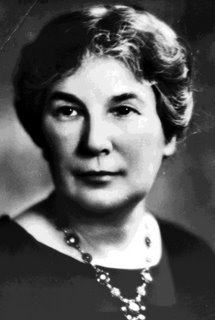 She believed, on the other hand, that study of Bible stories and the practice of church rituals was good for children, and that it would be wise for parents to participate with their children in church and Sunday School in order to know what the child was being taught and how it was affecting him. She wrote, "If the more spiritually developed people withdraw from the church, how may it ever hope to fulfill its high mission?"
She worried that adults might try to introduce specific religious concepts too soon, that is, before a child is able to grasp them, and create confusion and misguided application of religious tenets that would last a lifetime.
"Man is too apt to meddle; he is too anxious to make others do right. This, of course, is an egotistical self-consciousness, very far from a true religious spirit. In our zeal to 'save souls' we may be anything but religious. Too often our 'love of God' makes us quite intolerant and critical of our fellows."
In her ideal world, (and in her school), a child would be "allowed to live in such a simple, sincere way as eventually to develop the idea that his relation to God is expressed in his love for his fellow men and his relation to his fellow men indicates his relation to the Divine." Neat and simple. She wrote, "He grows in this thing called love, the essence of which is giving; his religion will be one of devoting himself utterly to causes and objects of his affection, and this affection will grow in confidence in himself, in his fellows, and in the universe."
We didn't have classes in religion at the Marietta Johnson School of Organic Education. We didn't have classes in self-confidence. We had a spirit of love for each other and our school that transcended the ability to articulate it. Mrs. Johnson felt strongly that mention of God -- the entity that might sit on a distant throne -- was not the way to imbue young children with such a spirit. She knew it would happen in a healthy, loving, unstated spiritual atmosphere.
It was not until the high school years that a prayer was introduced into our school life. At our morning assemblies we said it, a non-sectarian, humanist kind of prayer of reverence for the planet.
Nobody knows where the prayer came from, but I have always suspected that it was written by Marietta Johnson. I base this assumption on the knowledge that she insisted it be said often, and that she never acknowledged the writer. I think if someone else had written it she would have identified the person, and if she wrote it she would never have taken the credit. At any rate, if you mention "the school prayer" to anyone who went to the Organic School before the 1980's (and probably afterward), they will immediately crank it up and say it for you, reverently, as if for the first time.
Organic School Prayer
Give us thy harmony, O Lord,
That we may understand,
The beauty of the sky
The rhythm of the soft wind's lullaby,
The sun, the shadows, the woods in the spring,
And thy great love
That dwells in everything.
The Marietta Johnson Museum, at 10 S. School St. in Fairhope, republished the two books Mrs. Johnson wrote as one volume called Teaching Without Failure. To order a copy, visit the Museum's website via the link on this page, or you can buy one from the bookstore at the Alternative Education Resource Organization, which is also online. It's a great read, written by one of the unsung heroes of education reform.
In her theory of educating the child, Marietta Johnson always said the process should address the whole organism, body, mind and spirit. What she meant by “spirit” has always been something of a question. When Henry Ford considered endowing the school, he was bothered by a lack of religious instruction. Ultimately he decided to fund his own school, in which such instruction would be included.
Mrs. Johnson wrote very pointedly about spirituality and religion in the lives of children in her first book, Youth in a World of Men. In her discussion of religion and the child, she states that being taught to live a sincere, frank and open life is the best way to bring out a child's innate spiritual and moral sense, and that "a child's interpretation of so-called religious teaching" can lead to "the idea of an anthropomorphic god who is merely a big man off on a throne somewhere, who may or may not be good to him. This is probably the worse thing that can come to a child."
She went on to describe the use of such insecurity as a way to manipulate children into certain behavior out of fear.
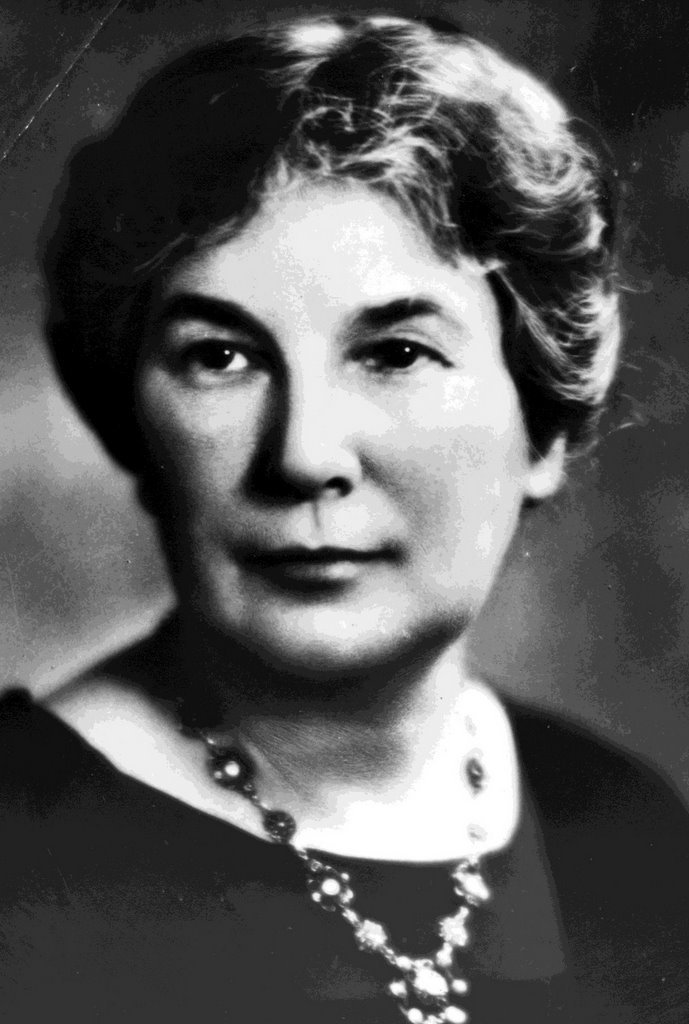 She believed, on the other hand, that study of Bible stories and the practice of church rituals was good for children, and that it would be wise for parents to participate with their children in church and Sunday School in order to know what the child was being taught and how it was affecting him. She wrote, "If the more spiritually developed people withdraw from the church, how may it ever hope to fulfill its high mission?"
She worried that adults might try to introduce specific religious concepts too soon, that is, before a child is able to grasp them, and create confusion and misguided application of religious tenets that would last a lifetime.
"Man is too apt to meddle; he is too anxious to make others do right. This, of course, is an egotistical self-consciousness, very far from a true religious spirit. In our zeal to 'save souls' we may be anything but religious. Too often our 'love of God' makes us quite intolerant and critical of our fellows."
In her ideal world, (and in her school), a child would be "allowed to live in such a simple, sincere way as eventually to develop the idea that his relation to God is expressed in his love for his fellow men and his relation to his fellow men indicates his relation to the Divine." Neat and simple. She wrote, "He grows in this thing called love, the essence of which is giving; his religion will be one of devoting himself utterly to causes and objects of his affection, and this affection will grow in confidence in himself, in his fellows, and in the universe."
We didn't have classes in religion at the Marietta Johnson School of Organic Education. We didn't have classes in self-confidence. We had a spirit of love for each other and our school that transcended the ability to articulate it. Mrs. Johnson felt strongly that mention of God -- the entity that might sit on a distant throne -- was not the way to imbue young children with such a spirit. She knew it would happen in a healthy, loving, unstated spiritual atmosphere.
It was not until the high school years that a prayer was introduced into our school life. At our morning assemblies we said it, a non-sectarian, humanist kind of prayer of reverence for the planet.
Nobody knows where the prayer came from, but I have always suspected that it was written by Marietta Johnson. I base this assumption on the knowledge that she insisted it be said often, and that she never acknowledged the writer. I think if someone else had written it she would have identified the person, and if she wrote it she would never have taken the credit. At any rate, if you mention "the school prayer" to anyone who went to the Organic School before the 1980's (and probably afterward), they will immediately crank it up and say it for you, reverently, as if for the first time.
Organic School Prayer
Give us thy harmony, O Lord,
That we may understand,
The beauty of the sky
The rhythm of the soft wind's lullaby,
The sun, the shadows, the woods in the spring,
And thy great love
That dwells in everything.
The Marietta Johnson Museum, at 10 S. School St. in Fairhope, republished the two books Mrs. Johnson wrote as one volume called Teaching Without Failure. To order a copy, visit the Museum's website via the link on this page, or you can buy one from the bookstore at the Alternative Education Resource Organization, which is also online. It's a great read, written by one of the unsung heroes of education reform.
Monday, July 17, 2006
Love, Dreams, and Movies
July 17
I’ve written recently about movies and dreams, so it’s time I wrote about love. I know all about it, and I’m sure my readers are interested.
Much of what we know of love we learned from movies and dreams. You can quote me on that.
However, I know about all three, or at least I have experienced all three on a visceral as well as an ephemeral level (sometimes all at the same time -- wait, that's not quite possible. It just seems like it is). Romantic love, spiritual love, platonic love; romantic movies, action movies, suspenseful movies spiritual movies, laughable movies, lovable movies; romantic dreams, waking dreams, nightmares, memory dreams, wishful dreams, action dreams. There is something about them all that is the same. Love, dreams and movies.
For one thing, they all engage us in another reality, something out of the ordinary. They require a leap of faith. With dreams, it is easy. The mind does it for us. In love, we are challenged to do it ourselves. And in movies, the studio does it to us, with lighting, sound tracks, special effects, and larger than life angels, as Colin McGinn calls them in The Power of Movies – the actors – to look at.
Here’s something I wrote about love several years ago:
Love is a word that has baffled those of us whose mother tongue is English ever since there was such a language. For one word to encompass all the meanings of love is probably as limiting to the emotion itself as it is to the attempt to define it. This impoverished vocabulary may have contributed to the emotional restraint of the English. Mother love, romantic love, love from a grandchild, love of life, love of God – are these things the same?
Love is not necessarily an emotion. It is more likely the substance of the heart, the source, the sustenance of the spirit, the food behind all that is positive in human existence. It is unquestioning sacrifice, unrequited mercy, unsolicited grace.
Pretty good, as far as it goes. It will have to suffice for today as I’ve got things to do, and it’s hard to do much when you’re in love – or even thinking about it.
I’ve written recently about movies and dreams, so it’s time I wrote about love. I know all about it, and I’m sure my readers are interested.
Much of what we know of love we learned from movies and dreams. You can quote me on that.
However, I know about all three, or at least I have experienced all three on a visceral as well as an ephemeral level (sometimes all at the same time -- wait, that's not quite possible. It just seems like it is). Romantic love, spiritual love, platonic love; romantic movies, action movies, suspenseful movies spiritual movies, laughable movies, lovable movies; romantic dreams, waking dreams, nightmares, memory dreams, wishful dreams, action dreams. There is something about them all that is the same. Love, dreams and movies.
For one thing, they all engage us in another reality, something out of the ordinary. They require a leap of faith. With dreams, it is easy. The mind does it for us. In love, we are challenged to do it ourselves. And in movies, the studio does it to us, with lighting, sound tracks, special effects, and larger than life angels, as Colin McGinn calls them in The Power of Movies – the actors – to look at.
Here’s something I wrote about love several years ago:
Love is a word that has baffled those of us whose mother tongue is English ever since there was such a language. For one word to encompass all the meanings of love is probably as limiting to the emotion itself as it is to the attempt to define it. This impoverished vocabulary may have contributed to the emotional restraint of the English. Mother love, romantic love, love from a grandchild, love of life, love of God – are these things the same?
Love is not necessarily an emotion. It is more likely the substance of the heart, the source, the sustenance of the spirit, the food behind all that is positive in human existence. It is unquestioning sacrifice, unrequited mercy, unsolicited grace.
Pretty good, as far as it goes. It will have to suffice for today as I’ve got things to do, and it’s hard to do much when you’re in love – or even thinking about it.
Sunday, July 16, 2006
A Beautiful Unconscious
July 15
A couple of years ago I was enthralled by the movie A Beautiful Mind, which explored schizophrenia through the medium of film in a way I'd never seen. I wondered why this particular movie was not used as an example of film presenting the unconscious in the book I'm reading, The Power of Movies.
When I reflected on A Beautiful Mind I felt as if I had lived a little piece of time in someone else's mind. I asked myself, how could a mind conjure up a whole universe of unreal people and believe wholly that it was simply part of reality? Then the answer came: I do it myself every night in dreams.
Last night, for instance, I dreamed I was visiting the Mobile library. I was in a place unfamiliar to me, a building with a lot of halls, not unlike the Metropolitan Museum in New York City, and was going through these halls introducing myself. I was treated very warmly, as if I were someone special, and I met a number of people I've never seen before. Two in particular were very vivid to me, and we seemed to be spending a lot of time getting acquainted. They were women; the head librarian and her assistant. They were extremely warm to me. I knew I was going to be working with them on some projects and we all liked each other immensely.
After some discussion with them I was taken to another room -- through the hall -- where I was introducing myself to some of the staff. They wanted to know all about me, and I related my life story as best I could, to good reviews. Then I suddenly said, "Oh, I did do something you'll be interested in -- I wrote a book that was published. It was about Fairhope!" They all looked at each other -- what could be said in a book about Fairhope? I said,"It's about how it used to be, memories from growing up there," and they nodded, sympathetic but clueless. Then I was taken back to the two head librarians, and I was thinking I would offer them some copies of my book that they could sell when they were doing fund-raising. I said, "I forgot to tell you that I wrote a book about Fairhope," and they looked crestfallen, "Oh, Fairhope, there's nothing in Fairhope." And I told them the title of my book and they were thrilled. They had both read it. "It's such a shame about Fairhope," they said, "There's absolutely nothing to do there." I grew defensive. "Nothing to do? Well, if you like to shop, there's all kinds of expensive little stores, and people who love to shop visit there all the time." They were totally puzzled, as if I were speaking a foreign tongue. I kept trying to explain to them that there are lots of people who just love to shop -- but I felt a secret pride that they didn't know what I was talking about. I loved those people.
It was hard for me to believe, as I woke up, that I had made those people up, and the building with the halls; and the attitude about Fairhope as well. Everybody thinks of Fairhope as a shopping mecca and a safe haven, and very few people have even heard of Meet Me at the Butterfly Tree. My waking mind could even identify the source of the dream -- a conversation at lunch with a newcomer to Fairhope whom I had met through this blog. He asked me if I felt that "Old Fairhope" was the same kind of town that Fairhope is today. My dream was at least in part an answer to that question.
The movie A Beautiful Mind peopled the character John Nash's conscious mind with his unconscious imaginings. I felt fortunate, and still do, that mine depart when I awaken, even though sometimes I can recall a certain dream vividly for years. It's my own little movie theater, this mind, in which I hold past dreams, memories, and what is called daydreams, sometimes known as plans for the future. Wherever this mind quality came from, I am very fortunate to have it.
A couple of years ago I was enthralled by the movie A Beautiful Mind, which explored schizophrenia through the medium of film in a way I'd never seen. I wondered why this particular movie was not used as an example of film presenting the unconscious in the book I'm reading, The Power of Movies.
When I reflected on A Beautiful Mind I felt as if I had lived a little piece of time in someone else's mind. I asked myself, how could a mind conjure up a whole universe of unreal people and believe wholly that it was simply part of reality? Then the answer came: I do it myself every night in dreams.
Last night, for instance, I dreamed I was visiting the Mobile library. I was in a place unfamiliar to me, a building with a lot of halls, not unlike the Metropolitan Museum in New York City, and was going through these halls introducing myself. I was treated very warmly, as if I were someone special, and I met a number of people I've never seen before. Two in particular were very vivid to me, and we seemed to be spending a lot of time getting acquainted. They were women; the head librarian and her assistant. They were extremely warm to me. I knew I was going to be working with them on some projects and we all liked each other immensely.
After some discussion with them I was taken to another room -- through the hall -- where I was introducing myself to some of the staff. They wanted to know all about me, and I related my life story as best I could, to good reviews. Then I suddenly said, "Oh, I did do something you'll be interested in -- I wrote a book that was published. It was about Fairhope!" They all looked at each other -- what could be said in a book about Fairhope? I said,"It's about how it used to be, memories from growing up there," and they nodded, sympathetic but clueless. Then I was taken back to the two head librarians, and I was thinking I would offer them some copies of my book that they could sell when they were doing fund-raising. I said, "I forgot to tell you that I wrote a book about Fairhope," and they looked crestfallen, "Oh, Fairhope, there's nothing in Fairhope." And I told them the title of my book and they were thrilled. They had both read it. "It's such a shame about Fairhope," they said, "There's absolutely nothing to do there." I grew defensive. "Nothing to do? Well, if you like to shop, there's all kinds of expensive little stores, and people who love to shop visit there all the time." They were totally puzzled, as if I were speaking a foreign tongue. I kept trying to explain to them that there are lots of people who just love to shop -- but I felt a secret pride that they didn't know what I was talking about. I loved those people.
It was hard for me to believe, as I woke up, that I had made those people up, and the building with the halls; and the attitude about Fairhope as well. Everybody thinks of Fairhope as a shopping mecca and a safe haven, and very few people have even heard of Meet Me at the Butterfly Tree. My waking mind could even identify the source of the dream -- a conversation at lunch with a newcomer to Fairhope whom I had met through this blog. He asked me if I felt that "Old Fairhope" was the same kind of town that Fairhope is today. My dream was at least in part an answer to that question.
The movie A Beautiful Mind peopled the character John Nash's conscious mind with his unconscious imaginings. I felt fortunate, and still do, that mine depart when I awaken, even though sometimes I can recall a certain dream vividly for years. It's my own little movie theater, this mind, in which I hold past dreams, memories, and what is called daydreams, sometimes known as plans for the future. Wherever this mind quality came from, I am very fortunate to have it.
Saturday, July 15, 2006
Dreaming the Movies
July 15
Colin McGinn's book The Power of Movies connects the experience of going to the movies with the experience of going to sleep and having a hell of a dream. That's an interesting way to look at it, and the book actually gives you -- or gave me, anyway -- a new way of thinking about the movies and even about waking life. I've alluded to The Power of Movies before, but now I'm further along into it, and finding that you might want to know about some of the things he says. You may take more away from the book than I do, or less; nevertheless it's got ideas in it that I don't think I ever would have come to on my own.
First off, the aspect of movies I referred to in an earlier post, of looking into a movie as you look into a mirror. Sure, a movie is light and shadow projected on a flat screen, but you become unaware of that screen as soon as the images come on it, just as when looking into a mirror you are not looking at the surface. In a movie, you inhabit the bodies you are looking into just as you are the principle character in your own dreams. Your mind does this for you, and McGinn asserts that the process is similar to what it does in sleep when those images come forth.
What happens when we are transported by a movie is that we are reading the actors' minds, we look into their eyes (being granted greater access by virtue of the close-up than we can ever be in life except in the most intimate moments) and reach another level of experience. The incidents in the film are happening to us, too. In a dream, this is automatic, it is internal and we are the author, but we are not working at it so much as functioning within it. It takes on the same semblance of reality that a movie does, and on some level we accept its inevitable outcome, just as we must when seeing a movie. In reading a book, we turn ourselves over to the writer; in dreaming, we are the writer, but also the protagonist. In a movie, we are being led, but we willingly go. We are injected into the experience rather than objectively observing it through the eyes and voice of the writer.
McGinn says, "The suspicion that there is some sort of connection or similarity between dreams and films has been around for a long time and has struck many theorists of film as well as filmmakers. Hollywood is sometimes described as a 'dream factory'; there is a film company expressly entitled Dreamworks; talk interrelating dreams and movies is rampant." He quotes Suzanne Langer, in Feeling and Form: "Cinema is like dream in the mode of its presentation: It creates a virtual present, an order of direct apparition. That is the mode of the dream," and Parker Tyler, "movies are dreamlike and fantastic," and "the movie theatre is a darkness, a kind of sleep in which we dream." (Myth and Magic of the Movies)
Movies are like dreams, perhaps, but McGinn says that dreams are not. They are like reality, at least at the time. "...during a dream there is nothing 'dreamlike' about it -- there is no sense that we are dwelling in a land of fantasy. On the contrary, even the most bizarre dream strikes us, while dreaming it, to be the purest reality.
He goes into the unreality of the characters on the screen, the floating shadows and light who resemble our vision of angels rather than the real-life animal qualities of actual human beings -- which to a degree explains our tendency to idolize the actors we see in movies. This is a side point which I found quite compelling.
There are many directions in his arguments, and it is so easy to dismiss any discussion of movies as trivial that one may wonder why a philosopher-scientist so respected would be concerned with defining the significance of the film image. To those of us whose lives have always been intertwined with the shimmer of images on a screen in the front of a dark room, surrounding by strangers sharing the experience, there is much to learn from this book and more like it.
And I found myself driving to Montrose the other day, thinking, "I'm looking at the road, but I could look into the road --" and mentally shifting the whole aspect as I headed toward Target. Who knows where this new perspective may lead?
Colin McGinn's book The Power of Movies connects the experience of going to the movies with the experience of going to sleep and having a hell of a dream. That's an interesting way to look at it, and the book actually gives you -- or gave me, anyway -- a new way of thinking about the movies and even about waking life. I've alluded to The Power of Movies before, but now I'm further along into it, and finding that you might want to know about some of the things he says. You may take more away from the book than I do, or less; nevertheless it's got ideas in it that I don't think I ever would have come to on my own.
First off, the aspect of movies I referred to in an earlier post, of looking into a movie as you look into a mirror. Sure, a movie is light and shadow projected on a flat screen, but you become unaware of that screen as soon as the images come on it, just as when looking into a mirror you are not looking at the surface. In a movie, you inhabit the bodies you are looking into just as you are the principle character in your own dreams. Your mind does this for you, and McGinn asserts that the process is similar to what it does in sleep when those images come forth.
What happens when we are transported by a movie is that we are reading the actors' minds, we look into their eyes (being granted greater access by virtue of the close-up than we can ever be in life except in the most intimate moments) and reach another level of experience. The incidents in the film are happening to us, too. In a dream, this is automatic, it is internal and we are the author, but we are not working at it so much as functioning within it. It takes on the same semblance of reality that a movie does, and on some level we accept its inevitable outcome, just as we must when seeing a movie. In reading a book, we turn ourselves over to the writer; in dreaming, we are the writer, but also the protagonist. In a movie, we are being led, but we willingly go. We are injected into the experience rather than objectively observing it through the eyes and voice of the writer.
McGinn says, "The suspicion that there is some sort of connection or similarity between dreams and films has been around for a long time and has struck many theorists of film as well as filmmakers. Hollywood is sometimes described as a 'dream factory'; there is a film company expressly entitled Dreamworks; talk interrelating dreams and movies is rampant." He quotes Suzanne Langer, in Feeling and Form: "Cinema is like dream in the mode of its presentation: It creates a virtual present, an order of direct apparition. That is the mode of the dream," and Parker Tyler, "movies are dreamlike and fantastic," and "the movie theatre is a darkness, a kind of sleep in which we dream." (Myth and Magic of the Movies)
Movies are like dreams, perhaps, but McGinn says that dreams are not. They are like reality, at least at the time. "...during a dream there is nothing 'dreamlike' about it -- there is no sense that we are dwelling in a land of fantasy. On the contrary, even the most bizarre dream strikes us, while dreaming it, to be the purest reality.
He goes into the unreality of the characters on the screen, the floating shadows and light who resemble our vision of angels rather than the real-life animal qualities of actual human beings -- which to a degree explains our tendency to idolize the actors we see in movies. This is a side point which I found quite compelling.
There are many directions in his arguments, and it is so easy to dismiss any discussion of movies as trivial that one may wonder why a philosopher-scientist so respected would be concerned with defining the significance of the film image. To those of us whose lives have always been intertwined with the shimmer of images on a screen in the front of a dark room, surrounding by strangers sharing the experience, there is much to learn from this book and more like it.
And I found myself driving to Montrose the other day, thinking, "I'm looking at the road, but I could look into the road --" and mentally shifting the whole aspect as I headed toward Target. Who knows where this new perspective may lead?
Friday, July 14, 2006
Clarence Darrow in Fairhope
July 14
Old Fairhope was a refuge for thinkers, iconoclasts, and others with big ideas and strong convictions. Take Clarence Darrow, for example.
Darrow’s connection with Fairhope may be somewhat tenuous, but there is no question he had good feelings about the place. He may have heard about it from Upton Sinclair – whom he knew in Chicago as one of the club called the Intercollegiate Socialists Society, along with Jack London and others in the association. There is the possibility that he learned of Fairhope from one of his law partners, David Tone, whose children attended the acclaimed Marietta Johnson School of Organic Education. However it was, and in spite of his bias against the region in general, Clarence Darrow, the great American champion of the underdog, discovered a sympathetic Northern enclave in the Deep South.
In Chicago, Darrow, an avowed atheist and political maverick, had become interested in the Single Tax movement, and, as a member of Chicago’s Single Tax Club, began to attend political meetings. Of the Single Taxers he knew in those days, Darrow says in his autobiography, “This club met regularly every week for several years. In due time I realized that at every meeting the same faces appeared and reappeared, week after week, and that none of them cared to hear anything but a gospel which they all believed. It did not take long for Single Tax to become a religious doctrine necessary to salvation.”
With Darrow’s aversion to anything resembling a religious doctrine, he became somewhat disenchanted with the Single Tax supporters as well. However, his attachment to this group turned out to be a big stepping stone on his path toward making a name for himself.
He was invited to speak at the closing session of an event called the Free Trade Convention, on the same program with Henry George. This was the very man who had formulated the economic theory of Single Tax and written the best-selling book Progress and Poverty – which in turn had inspired the Utopians to form the colony called Fairhope that was to find a home on the shores of Mobile Bay in Alabama.
George, at the height of his fame when addressing the Free Trade Convention that night, was a huge draw for audiences. As a molder of public opinion through speeches and philosophic writing, believe it or not, he was as close to a rock star as anyone in his day.
Darrow wrote in his autobiography that the speech he heard Henry George make that night was excellent. He went on to say that everybody who heard it was euphoric except for himself, a struggling young lawyer who knew a tough act to follow when he saw one. “I was disappointed,” Darrow said. “I was sorry that he was so good.”
Unabashed by being the second speaker on the bill, young Clarence urged the chairman to introduce him quickly. He saw that people were already beginning to leave when George finished; they had heard what they came to hear. To his eternal credit, Darrow called upon his growing skill as an orator and conjured up every felicitous phrase in his arsenal to drive home the points in his speech. He watched as the listeners, as they were filing out of the hall, slowed down and began to take their seats again, one by one. The newspapermen down front, already grabbing their pencils and pads to head back to the press rooms, also sat back down to listen, some of them writing down what they were hearing. At the end of the speech, there was rousing applause. Darrow reveled in his new-found eloquence, and in the reaction it received. Henry George himself was impressed and warmly shook his hand.
When Clarence Darrow read the papers the next morning, he saw his name on the front pages. His speech had indeed been a triumph! He wrote, “I went to my office earlier than usual…No customers were there. Some of my Single Tax friend and Socialist companions began coming in to congratulate me on my speech. This was pleasing but not profitable. Socialists never come for business; they come to use your telephone and tell you how the world should be organized so that everyone could have his own telephone.”
All this was long before Darrow’s visit to Fairhope in 1927, but it will serve to explain a little about how he got there. There are lots of stories about Clarence Darrow in Fairhope, and I shall tell you a few more when there’s time – and if there appears to be any interest. The above is an excerpt from my chapter in The Fair Hope of Heaven, and it reveals some of the myths and some of true stories of the Darrow's impact in Fairhope.
The book is available at amazon.com, Barnes and Noble.com, and at the Page and Palette bookstore in Fairhope, as well as on my website. If you are interested in stories of Fairhope's history, you'll love it.
Old Fairhope was a refuge for thinkers, iconoclasts, and others with big ideas and strong convictions. Take Clarence Darrow, for example.
Darrow’s connection with Fairhope may be somewhat tenuous, but there is no question he had good feelings about the place. He may have heard about it from Upton Sinclair – whom he knew in Chicago as one of the club called the Intercollegiate Socialists Society, along with Jack London and others in the association. There is the possibility that he learned of Fairhope from one of his law partners, David Tone, whose children attended the acclaimed Marietta Johnson School of Organic Education. However it was, and in spite of his bias against the region in general, Clarence Darrow, the great American champion of the underdog, discovered a sympathetic Northern enclave in the Deep South.
In Chicago, Darrow, an avowed atheist and political maverick, had become interested in the Single Tax movement, and, as a member of Chicago’s Single Tax Club, began to attend political meetings. Of the Single Taxers he knew in those days, Darrow says in his autobiography, “This club met regularly every week for several years. In due time I realized that at every meeting the same faces appeared and reappeared, week after week, and that none of them cared to hear anything but a gospel which they all believed. It did not take long for Single Tax to become a religious doctrine necessary to salvation.”
With Darrow’s aversion to anything resembling a religious doctrine, he became somewhat disenchanted with the Single Tax supporters as well. However, his attachment to this group turned out to be a big stepping stone on his path toward making a name for himself.
He was invited to speak at the closing session of an event called the Free Trade Convention, on the same program with Henry George. This was the very man who had formulated the economic theory of Single Tax and written the best-selling book Progress and Poverty – which in turn had inspired the Utopians to form the colony called Fairhope that was to find a home on the shores of Mobile Bay in Alabama.
George, at the height of his fame when addressing the Free Trade Convention that night, was a huge draw for audiences. As a molder of public opinion through speeches and philosophic writing, believe it or not, he was as close to a rock star as anyone in his day.
Darrow wrote in his autobiography that the speech he heard Henry George make that night was excellent. He went on to say that everybody who heard it was euphoric except for himself, a struggling young lawyer who knew a tough act to follow when he saw one. “I was disappointed,” Darrow said. “I was sorry that he was so good.”
Unabashed by being the second speaker on the bill, young Clarence urged the chairman to introduce him quickly. He saw that people were already beginning to leave when George finished; they had heard what they came to hear. To his eternal credit, Darrow called upon his growing skill as an orator and conjured up every felicitous phrase in his arsenal to drive home the points in his speech. He watched as the listeners, as they were filing out of the hall, slowed down and began to take their seats again, one by one. The newspapermen down front, already grabbing their pencils and pads to head back to the press rooms, also sat back down to listen, some of them writing down what they were hearing. At the end of the speech, there was rousing applause. Darrow reveled in his new-found eloquence, and in the reaction it received. Henry George himself was impressed and warmly shook his hand.
When Clarence Darrow read the papers the next morning, he saw his name on the front pages. His speech had indeed been a triumph! He wrote, “I went to my office earlier than usual…No customers were there. Some of my Single Tax friend and Socialist companions began coming in to congratulate me on my speech. This was pleasing but not profitable. Socialists never come for business; they come to use your telephone and tell you how the world should be organized so that everyone could have his own telephone.”
All this was long before Darrow’s visit to Fairhope in 1927, but it will serve to explain a little about how he got there. There are lots of stories about Clarence Darrow in Fairhope, and I shall tell you a few more when there’s time – and if there appears to be any interest. The above is an excerpt from my chapter in The Fair Hope of Heaven, and it reveals some of the myths and some of true stories of the Darrow's impact in Fairhope.
The book is available at amazon.com, Barnes and Noble.com, and at the Page and Palette bookstore in Fairhope, as well as on my website. If you are interested in stories of Fairhope's history, you'll love it.
Thursday, July 13, 2006
Revive Us Again
July 13
Every so often a venerable institution undergoes an upheaval followed by a revival of interest, a rebirth, and a reaffirmation of its reason for being. This is slated to happen very soon for a school that was once at the very heart of Fairhope.
The Marietta Johnson School of Organic Education, often referred to as the Organic School, was founded in Fairhope by the visionary educator whose name it bears in 1907. It's about to have a Centennial, and will definitely have a reunion in that year, and we may legitimately talk about a revival at that time.
New things are happening, and the first is a new website that you can reach by clicking on the link on this blog. I wrote all that stuff, so I won't write it again here, but it will tell you a bit about the school and Mrs. Johnson. What the website may not quite capture is the mysterious spirit that surrounds the school and its offspring. I think offspring is the right word here; you wouldn't say graduates, because many who love the school the most went there a year or two, sometimes just a semester.
The Organic School gave us the feeling that school itself may be just a kid's daily job -- but that some days miracles happened. And every day in school was thrilling to some degree. We didn't think about it consciously (unless we observed a miracle) but there was a process of osmosis called learning by doing that accompanied every textbook we read, every map we looked at, every project we worked on. In addition to that, which occurs in every school, was the unstated component in our school that we learned because we wanted to.
In high school, I remember, we put together a newspaper because we wanted to. The students before us had done it and we felt it was our turn. We didn't even have a faculty advisor. Someone showed us how to cut stencils and operate the mimeograph machine, some of us just naturally did the writing, and we had a newspaper. We would stay after school and work on it. Sometimes we came at night and worked until 8 or 9 P.M. to put the paper to bed. Nobody told us to do this; if we hadn't, nothing would have happened. We just never thought of not doing it.
Another example of what Marietta Johnson called "organic education" was when I was in Junior High, probably 7th grade. There was what was laughingly known as a library at the school, containing lots of decrepit old books left there by previous generations. I would read them sometimes just for their time-capsule quality. One I remember reading was about a young lady who was driving a roadster and it got stuck in the mud. I couldn't help thinking how funny it was to read about getting your roadster out of the mud -- and relating to the young people of the 1920's reading this book seriously and thinking of the life they must have had. (A lot of roadsters in Fairhope probably did get stuck in the mud; streets weren't fully paved until the 1960s.)
Anyway, back to the 1950's -- we're browsing around in this antiquated library and we see a bunch of copies of worn playscripts of the works of Shakespeare. There was As You Like It, I remember, and The Merchant of Venice.
It was not a big leap, seeing that there were copies enough for the whole class, to ask the English teacher if she thought we would get anything out of reading those plays. Sure, said the English teacher, and we set out to study them one by one. We wrestled with the verse, wrote essays about the plays, and nobody thought twice about what was in the Alabama Course of Study for 7th or 8th Grade. I remember years later coming on a theme I wrote at that time entitled "Why I Like Shylock." Wish I had saved it. I wonder why I liked Shylock. I think I was just trying to be shocking, but maybe I made a valid point or two in the process.
Now flash-forward again to the Organic Revival. A generous benefactor has donated money toward bringing the eminent systems designer Medard Gabel to the school for a project in 2007 as part of the Centennial celebration. Mr. Gabel, who once worked with Buckminster Fuller, understands the underlying principle of Organic Education as well as “organic” living – we are interconnected and our future depends on the ability of our children to think. He is fond of saying, “The best way to understand a system is to understand the system it fits into.” In this spirit, we have invited Fairhope’s City Council, members of the Single Tax Corp., members of Smart Growth, and parents, board members and teachers at the school to a meeting with Mr. Gabel Monday morning, to plan the event or project that will be featured in the school's Centennial year of celebrations. Mr. Gabel will help us to tie the school's mission to that of the town, in a spirit of revival and redirected growth, with hope for both for the community as well as the Marietta Johnson School.
We have a fair hope of success for the future, and a spirit and heritage of miracles from the past that cannot be ignored. If near-term coming events help boost a revival, hallelujah! We are saved, brother.
Every so often a venerable institution undergoes an upheaval followed by a revival of interest, a rebirth, and a reaffirmation of its reason for being. This is slated to happen very soon for a school that was once at the very heart of Fairhope.
The Marietta Johnson School of Organic Education, often referred to as the Organic School, was founded in Fairhope by the visionary educator whose name it bears in 1907. It's about to have a Centennial, and will definitely have a reunion in that year, and we may legitimately talk about a revival at that time.
New things are happening, and the first is a new website that you can reach by clicking on the link on this blog. I wrote all that stuff, so I won't write it again here, but it will tell you a bit about the school and Mrs. Johnson. What the website may not quite capture is the mysterious spirit that surrounds the school and its offspring. I think offspring is the right word here; you wouldn't say graduates, because many who love the school the most went there a year or two, sometimes just a semester.
The Organic School gave us the feeling that school itself may be just a kid's daily job -- but that some days miracles happened. And every day in school was thrilling to some degree. We didn't think about it consciously (unless we observed a miracle) but there was a process of osmosis called learning by doing that accompanied every textbook we read, every map we looked at, every project we worked on. In addition to that, which occurs in every school, was the unstated component in our school that we learned because we wanted to.
In high school, I remember, we put together a newspaper because we wanted to. The students before us had done it and we felt it was our turn. We didn't even have a faculty advisor. Someone showed us how to cut stencils and operate the mimeograph machine, some of us just naturally did the writing, and we had a newspaper. We would stay after school and work on it. Sometimes we came at night and worked until 8 or 9 P.M. to put the paper to bed. Nobody told us to do this; if we hadn't, nothing would have happened. We just never thought of not doing it.
Another example of what Marietta Johnson called "organic education" was when I was in Junior High, probably 7th grade. There was what was laughingly known as a library at the school, containing lots of decrepit old books left there by previous generations. I would read them sometimes just for their time-capsule quality. One I remember reading was about a young lady who was driving a roadster and it got stuck in the mud. I couldn't help thinking how funny it was to read about getting your roadster out of the mud -- and relating to the young people of the 1920's reading this book seriously and thinking of the life they must have had. (A lot of roadsters in Fairhope probably did get stuck in the mud; streets weren't fully paved until the 1960s.)
Anyway, back to the 1950's -- we're browsing around in this antiquated library and we see a bunch of copies of worn playscripts of the works of Shakespeare. There was As You Like It, I remember, and The Merchant of Venice.
It was not a big leap, seeing that there were copies enough for the whole class, to ask the English teacher if she thought we would get anything out of reading those plays. Sure, said the English teacher, and we set out to study them one by one. We wrestled with the verse, wrote essays about the plays, and nobody thought twice about what was in the Alabama Course of Study for 7th or 8th Grade. I remember years later coming on a theme I wrote at that time entitled "Why I Like Shylock." Wish I had saved it. I wonder why I liked Shylock. I think I was just trying to be shocking, but maybe I made a valid point or two in the process.
Now flash-forward again to the Organic Revival. A generous benefactor has donated money toward bringing the eminent systems designer Medard Gabel to the school for a project in 2007 as part of the Centennial celebration. Mr. Gabel, who once worked with Buckminster Fuller, understands the underlying principle of Organic Education as well as “organic” living – we are interconnected and our future depends on the ability of our children to think. He is fond of saying, “The best way to understand a system is to understand the system it fits into.” In this spirit, we have invited Fairhope’s City Council, members of the Single Tax Corp., members of Smart Growth, and parents, board members and teachers at the school to a meeting with Mr. Gabel Monday morning, to plan the event or project that will be featured in the school's Centennial year of celebrations. Mr. Gabel will help us to tie the school's mission to that of the town, in a spirit of revival and redirected growth, with hope for both for the community as well as the Marietta Johnson School.
We have a fair hope of success for the future, and a spirit and heritage of miracles from the past that cannot be ignored. If near-term coming events help boost a revival, hallelujah! We are saved, brother.
Wednesday, July 12, 2006
Watching for Devils
July 12
Attention pop culture lovers...I'm about to revive an old occupation with new players. It's called "Duende" and never mind that it was started on the old Merv Griffin show when he was doing daytime talk. It still can get you going.
Johnny Depp has it; Sean Penn doesn't. Meryl Streep has it; Glenn Close doesn't. Barbra Streisand has it; Celine Dion doesn't. Julia Roberts had it; Keira Knightly doesn't.
It's clear I'm not talking about talent. Nor good looks. Nor sex appeal. I'm talking about that certain something, a possession of "devils" that attract and hold an audience spellbound for no apparent reason. A guest on the old Griffin show, I don't remember who but some doctor of something, an erudite man of international fame, called the quality duende, the Italian word for devils. Talent and looks are part of it, but duende is the undefinable quality that goes beyond these things. It later became called charisma, but duende is a little different, or at least I like the word better because so many people have claimed charisma that it's become a cliché and duende never really caught on. I like the magical sound of it, like a supernatural haunting by the attractiveness gods visited on a person. It is that quality that compells the viewers' attention for no particular reason. It is the reason you will look at one single person in a crowd, even a crowd of two.
Dakota Fanning has it; Lindsay Lohan doesn't. Tiger Woods has it. Anderson Cooper has it.
Is this not totally subjective? Can I not be wrong in my choices? The answer is, I cannot be wrong because it is totally subjective. You will have your own list. It will be different from mine. In some cases it will be the opposite. However, I am right. If you think you are, then you are. There are a few absolutes, those possessed that everybody singles out, like it or not.
When asked what "star quality" was, Katharine Hepburn always said, "I don't know, but whatever it is, I have it." Duende was what she had.
Attention pop culture lovers...I'm about to revive an old occupation with new players. It's called "Duende" and never mind that it was started on the old Merv Griffin show when he was doing daytime talk. It still can get you going.
Johnny Depp has it; Sean Penn doesn't. Meryl Streep has it; Glenn Close doesn't. Barbra Streisand has it; Celine Dion doesn't. Julia Roberts had it; Keira Knightly doesn't.
It's clear I'm not talking about talent. Nor good looks. Nor sex appeal. I'm talking about that certain something, a possession of "devils" that attract and hold an audience spellbound for no apparent reason. A guest on the old Griffin show, I don't remember who but some doctor of something, an erudite man of international fame, called the quality duende, the Italian word for devils. Talent and looks are part of it, but duende is the undefinable quality that goes beyond these things. It later became called charisma, but duende is a little different, or at least I like the word better because so many people have claimed charisma that it's become a cliché and duende never really caught on. I like the magical sound of it, like a supernatural haunting by the attractiveness gods visited on a person. It is that quality that compells the viewers' attention for no particular reason. It is the reason you will look at one single person in a crowd, even a crowd of two.
Dakota Fanning has it; Lindsay Lohan doesn't. Tiger Woods has it. Anderson Cooper has it.
Is this not totally subjective? Can I not be wrong in my choices? The answer is, I cannot be wrong because it is totally subjective. You will have your own list. It will be different from mine. In some cases it will be the opposite. However, I am right. If you think you are, then you are. There are a few absolutes, those possessed that everybody singles out, like it or not.
When asked what "star quality" was, Katharine Hepburn always said, "I don't know, but whatever it is, I have it." Duende was what she had.
Tuesday, July 11, 2006
Writing Funny
July 11
I always wished I could write funny. I am pretty funny in person. In some company I am hilarious. There are things I say when talking to myself that make me laugh out loud. But on the list of people who can write funny, I'm way close to the bottom.
My friend Justin Kahn has a blog that is so funny I have linked this one to it. Justin is teaching his readers the concept of irony, which I have attempted to deal with on this very blog. I'm saying that I appreciate humor, but like many people, I am less proficient at producing it than I sometimes think I am.
I have a lot of friends who can whip off something funny with apparent ease. This is a portion of an email I received yesterday, and I reprint it for you sports fans since I so seldom deal with any sports and even less often do it with humor. You may be missing humor and sports, particularly if this blog is the only thing you ever read. And I included it so you don't think all I ever think about is Fairhope back when the earth was cooling.
In case you weren't aware, two major sporting events took place yesterday. At Wimbledon, Roger Federer, a Swiss and by far the best tennis player in world today, beat Rafael Nadal, a young left-hander-run-down-everything Spaniard, who did beat Federer in the final of the French Open a few weeks ago. Why win at Wimbledon and lose in Paris? Because the French Open is played on clay, where Federer's powerful game is neutralized by the slowness of clay, whereas at Wimbledon the surface is grass. Thought you'd be interested knowing that.
The other big event was the finals of the World Soccer Cup played in Germany. Sixty million TV viewers worldwide watched on. That's more than the Super Bowl. After regular time and an overtime period, and being tied a 1-1, Italy beat France in penalty shots 5 to 3. Host country Germany came in third after a win 3-1 over Portugal. Thought you'd be interested in that too.
There was the Appalachian doily knitting finals as well in Possum Hollow, West Virginia, but no winner was decided. It seems that one of the finalists accused the other of cheating -- I'm not sure how one can cheat in those contests, but maybe you can -- and since honor was at stake, the accused pulled out a crochet needle and thrust into the chest of the other. Rather than disqualify the stabber, which one would think would be the logical thing to do, the match was suspended. The judge ruled that impugning your opponent's honor was a grave offense and as is crochet needle stabbing, so the two offenses cancelled each other out, meaning there will be a knit-off at a later date. Thought you'd be interested in that as well. I was, that's why I was watching in the knitting channel.
It's not exactly irony, class, but it'll do if you're looking for a laugh, which I usually am. I am glad to share the sporting news too, and admit I detect a touch of irony in the "Thought you'd be interested in that."
I also recommend, if you're looking for a laugh, a trip via the new link to Justin's blog. After all, he's the only reader of this blog who has knowingly ordered an autographed copy of Meet Me at the Butterfly Tree. For more information on the writer of the sports news, you'll just have to take a guess, but I assure you it wasn't me.
I always wished I could write funny. I am pretty funny in person. In some company I am hilarious. There are things I say when talking to myself that make me laugh out loud. But on the list of people who can write funny, I'm way close to the bottom.
My friend Justin Kahn has a blog that is so funny I have linked this one to it. Justin is teaching his readers the concept of irony, which I have attempted to deal with on this very blog. I'm saying that I appreciate humor, but like many people, I am less proficient at producing it than I sometimes think I am.
I have a lot of friends who can whip off something funny with apparent ease. This is a portion of an email I received yesterday, and I reprint it for you sports fans since I so seldom deal with any sports and even less often do it with humor. You may be missing humor and sports, particularly if this blog is the only thing you ever read. And I included it so you don't think all I ever think about is Fairhope back when the earth was cooling.
In case you weren't aware, two major sporting events took place yesterday. At Wimbledon, Roger Federer, a Swiss and by far the best tennis player in world today, beat Rafael Nadal, a young left-hander-run-down-everything Spaniard, who did beat Federer in the final of the French Open a few weeks ago. Why win at Wimbledon and lose in Paris? Because the French Open is played on clay, where Federer's powerful game is neutralized by the slowness of clay, whereas at Wimbledon the surface is grass. Thought you'd be interested knowing that.
The other big event was the finals of the World Soccer Cup played in Germany. Sixty million TV viewers worldwide watched on. That's more than the Super Bowl. After regular time and an overtime period, and being tied a 1-1, Italy beat France in penalty shots 5 to 3. Host country Germany came in third after a win 3-1 over Portugal. Thought you'd be interested in that too.
There was the Appalachian doily knitting finals as well in Possum Hollow, West Virginia, but no winner was decided. It seems that one of the finalists accused the other of cheating -- I'm not sure how one can cheat in those contests, but maybe you can -- and since honor was at stake, the accused pulled out a crochet needle and thrust into the chest of the other. Rather than disqualify the stabber, which one would think would be the logical thing to do, the match was suspended. The judge ruled that impugning your opponent's honor was a grave offense and as is crochet needle stabbing, so the two offenses cancelled each other out, meaning there will be a knit-off at a later date. Thought you'd be interested in that as well. I was, that's why I was watching in the knitting channel.
It's not exactly irony, class, but it'll do if you're looking for a laugh, which I usually am. I am glad to share the sporting news too, and admit I detect a touch of irony in the "Thought you'd be interested in that."
I also recommend, if you're looking for a laugh, a trip via the new link to Justin's blog. After all, he's the only reader of this blog who has knowingly ordered an autographed copy of Meet Me at the Butterfly Tree. For more information on the writer of the sports news, you'll just have to take a guess, but I assure you it wasn't me.
Monday, July 10, 2006
Robert E. Bell and Mary Lois Timbes
July 10
Robert E. Bell, my collaborator on Meet Me at the Butterfly Tree became a close friend even though we never met. We began a correspondence discussing the town we both remembered and we spoke on the telephone once.
He had written a novel called The Butterfly Tree, which was set in Fairhope, and it was published by Lippincott in 1959. Like just about everybody in Fairhope, I read it with relish at that time. For some reason my mother chose to "lend" my copy to a friend of hers and I never saw it again, but years later I was able to find a first edition in a Montgomery bookstore.
This excerpt begins the book Meet Me at the Butterfly Tree.
"This was it, then, the end for roads in Moss Bayou, not-quite-forgotten place, not-quite-remembered road. He turned onto an avenue of magnolias and old heavy houses brooding a thousand mysteries, not-telling houses almost hidden...a breeze unsettled the tree-caught afternoon, shifting the day to new meanings. Then by a simple intuition, Peter knew he had arrived."
The "Moss Bayou" of young Bob Bell's novel was a fictionalized Fairhope. He perceived it as a lazy, lovely Alabama town with special magic bestowed by Mobile Bay glistening at its side. It was that, yet it was more. Fairhope in the 1950's was offbeat, artistic, writerly, unusually varied for a village of about three thousand in the Deep South.
The "more" became the mystery for Bell, whose novel spun a tale of people who sought a magical answer to life's meaning, symbolized by a butterfly tree. The "more" is the spirit of Fairhope, which lies just beneath the town's casual charm. Fairhope barely conceals its paradoxical Northern orientation within genteel Southern surroundings.
This spirit was my reality as I grew from a ten-year-old child into a young woman, nurtured by this enlightened little enclave. Fairhope fostered a different way of looking at things, whether one was a Single Taxer, an educator, a writer, a scientist, an artist, or simply an ordinary person looking for an extraordinary life.
Fairhope's history provided a backdrop for a complex cast of characters. Founded by 19-Century idealists who were committed to the institutionalization of social economist Henry George's principles of Single Tax, the town Fairhope was planned as a project to change the world and contribute to the betterment of mankind in the century to come. George's book Progress and Poverty inspired Progressives in the late 1800's including Iowa newspaperman named Ernest B. Gaston. He led a group that felt that George's philosophy deserved a demonstration -- a Utopia. The club formally incorporated at the Fairhope Industrial Association before they moved here from Des Moines in 1894. The association's name, based on a remark that such an experiment has "a fair hope of success" became the name they chose for the new settlement.
All that is from the Introduction chapter of Meet Me at the Butterfly Tree. First published in 2001, the book had as a side mission the restoration of at least some of the idealism that had made Fairhope unique. In the ensuing five years, unfortunately, both the idealism and the uniqueness of Fairhope have eroded to the point that the town is almost unrecognizable. Growth of unimaginable proportions is predicted, precisely because Fairhope has chosen to cast aside its heritage and supplant it with a phony, Disney-inspired charm that could happen anywhere. New people have flocked in to bring to Fairhope the very things they left behind them, and the residents, overwhelmed with serious infrastructure issues, think they can control the growth by anticipating it.
My second book and my daily posts here attempt to recapture some of the deeper reasons for the change and reflect on some of the more substantial causes and possible cures for the agony of sudden growth. I just felt like reminding you about my collaboration with the special man, Bob Bell, who died before Meet Me at the Butterfly Tree was finished.
Robert E. Bell, my collaborator on Meet Me at the Butterfly Tree became a close friend even though we never met. We began a correspondence discussing the town we both remembered and we spoke on the telephone once.
He had written a novel called The Butterfly Tree, which was set in Fairhope, and it was published by Lippincott in 1959. Like just about everybody in Fairhope, I read it with relish at that time. For some reason my mother chose to "lend" my copy to a friend of hers and I never saw it again, but years later I was able to find a first edition in a Montgomery bookstore.
This excerpt begins the book Meet Me at the Butterfly Tree.
"This was it, then, the end for roads in Moss Bayou, not-quite-forgotten place, not-quite-remembered road. He turned onto an avenue of magnolias and old heavy houses brooding a thousand mysteries, not-telling houses almost hidden...a breeze unsettled the tree-caught afternoon, shifting the day to new meanings. Then by a simple intuition, Peter knew he had arrived."
The "Moss Bayou" of young Bob Bell's novel was a fictionalized Fairhope. He perceived it as a lazy, lovely Alabama town with special magic bestowed by Mobile Bay glistening at its side. It was that, yet it was more. Fairhope in the 1950's was offbeat, artistic, writerly, unusually varied for a village of about three thousand in the Deep South.
The "more" became the mystery for Bell, whose novel spun a tale of people who sought a magical answer to life's meaning, symbolized by a butterfly tree. The "more" is the spirit of Fairhope, which lies just beneath the town's casual charm. Fairhope barely conceals its paradoxical Northern orientation within genteel Southern surroundings.
This spirit was my reality as I grew from a ten-year-old child into a young woman, nurtured by this enlightened little enclave. Fairhope fostered a different way of looking at things, whether one was a Single Taxer, an educator, a writer, a scientist, an artist, or simply an ordinary person looking for an extraordinary life.
Fairhope's history provided a backdrop for a complex cast of characters. Founded by 19-Century idealists who were committed to the institutionalization of social economist Henry George's principles of Single Tax, the town Fairhope was planned as a project to change the world and contribute to the betterment of mankind in the century to come. George's book Progress and Poverty inspired Progressives in the late 1800's including Iowa newspaperman named Ernest B. Gaston. He led a group that felt that George's philosophy deserved a demonstration -- a Utopia. The club formally incorporated at the Fairhope Industrial Association before they moved here from Des Moines in 1894. The association's name, based on a remark that such an experiment has "a fair hope of success" became the name they chose for the new settlement.
All that is from the Introduction chapter of Meet Me at the Butterfly Tree. First published in 2001, the book had as a side mission the restoration of at least some of the idealism that had made Fairhope unique. In the ensuing five years, unfortunately, both the idealism and the uniqueness of Fairhope have eroded to the point that the town is almost unrecognizable. Growth of unimaginable proportions is predicted, precisely because Fairhope has chosen to cast aside its heritage and supplant it with a phony, Disney-inspired charm that could happen anywhere. New people have flocked in to bring to Fairhope the very things they left behind them, and the residents, overwhelmed with serious infrastructure issues, think they can control the growth by anticipating it.
My second book and my daily posts here attempt to recapture some of the deeper reasons for the change and reflect on some of the more substantial causes and possible cures for the agony of sudden growth. I just felt like reminding you about my collaboration with the special man, Bob Bell, who died before Meet Me at the Butterfly Tree was finished.
Sunday, July 09, 2006
Dorothy Parker and Fair Hope
July 9
I was aware of Dorothy Parker when I went down to the Fairhope High auditorium to hear a local young actor on his way to the big time read some poems and monologues. The actor was Clayton Corzatte, then working at the fledgling Cleveland Playhouse, and later to work in New York with Ellis Rabb and the Phoenix Theatre company.
Back to the 1950's in Fairhope, me as a teenager, in total rapt attention to Clayton reading, among other things, the works of Dorothy Parker. I'm not just being nostalgic when I remember his performance. He read such works as "The Waltz" and "Just a Little One" as a woman, and he was convincing and downright brilliantly funny as well. I had never seen a man playing a woman -- and it wasn't a drag show. He did this without benefit of costumes or props. He simply became a woman. He even performed the agony of "The Telephone Call," about a woman obsessed with getting that all-important call (that is not going to come) from a man who has loved and left her.
I think all women can relate to Dorothy Parker. Women as sophisticated and accomplished as Nora Ephron and Linda Ellerbe have laid claim to wanting to be as good as Mrs. Parker. There is even a Wyatt Cooper connection which his son Anderson may not even know about -- Mr. Cooper found Mrs. Parker living alone in a hotel in the 1960's, old and somewhat lonely, and befriended her. Of course she was quite taken with him, and his admiration meant a lot to her. He even sent her copies of Women's Wear Daily, thinking she would enjoy its coverage of society -- but she saw it as fawning over the rich rather than lampooning it as she and her friends had so enjoyed doing in the 1920's.
Born Dorothy Rothschild in 1893, she had grown up in New York. Her father had been in the garment industry. In 1916 she took an editorial position on Vogue Magazine , and within a year was promoted to a far better post on Vanity Fair. She became its drama critic. Here, in a review she was able to take aim at moving targets; she wrote of young Katharine Hepburn, "She runs the gamut of emotions from A to B." For a forgettable play, she came up with a priceless one-line review, "The House Beautiful is the play lousy."
One thing her generation of writers were famous for was drinking. With some publishing cronies she frequented all the watering holes of Manhattan (even when doing so was illegal). They loved the speakeasies, and they all went over to Neysa McMein's loft where she held what was known as a salon every Wednesday to wax wise and get smashed all afternoon and night.
According to her version of the story, one afternoon she, humorist Robert Benchley and playwright Robert E. Sherwood were walking down Sixth Avenue in the neighborhood of the Hippodrome when a swarm of midgets -- performers appearing at that huge coliseum -- tried to gang up on them. (Parker was about 5' tall, Benchley medium height, and Sherwood extremely tall, gangly and languid. Parker claimed it was Sherwood they were after.) The ambush drove the three into the first bar they found, which happened to be in the Algonquin, a pleasant if unremarkable old hotel.
Thus, the Algonquin became a haunt for the smart literati set in Manhattan of that day -- led by the above trio and including George S. Kaufman, Alexander Woollcott, Edna Ferber, Harpo Marx (he could talk), and Tallulah Bankhead, among others. They were known for their acerbic barbs and heartless wit, and as time went on, their regular gatherings at the Algonquin, awash in a sea of alcohol, came to supplant some of their theatrical and literary careers. They were known as "The Vicious Circle," or "The Algonquin Round Table," and the round table became its own reason for being. Eventually the management of the Algonquin recognized them as an attraction, and provided the group with an actual round table.
Some members of the Round Table had a Fairhope connection. Heywood Broun and his wife Nancy Hale had a son they wanted to find the right kind of Progressive boarding school for so they shipped him to various such places around the country. He was probably in Junior High (7th or 8th grade) when they sent him to board at Marietta Johnson's school in Fairhope. Not much is remembered about the young Heywood Hale Broun except that he slept a lot -- and was allowed to. He does not note this in his autobiography, so he probably was not alert enough to have made much out of the experience.
I would like to share a few of Mrs. Parker's poems here, for some of you who may not know her work and for those who do but don't give them much thought. I want to change that. Buy her collected works in paperback, and think about the lady who never knew how good she was.
Unfortunate Coincidence
By the time you swear you're his,
Shivering and sighing,
And he vows his passion is
Infinite, undying --
Lady, make a note of this:
One of you is lying.
Inventory
Four be the things I am wiser to know:
Idleness, sorrow, a friend and a foe.
Four be the things I'd been better without:
Love, curiosity, freckles and doubt.
Three be the things I shall never attain:
Envy, content, and sufficient champagne.
Three be the things I shall have till I die:
Laughter and hope and a sock in the eye.
Comment
Oh, life if a glorious cycle of song,
A medley of extemporanea.
And love is a thing that can never go wrong,
And I am Marie of Roumania.
By the way, that last one is ironical. Really ironical. Linda Ellerbe once hung a sign on her office door, "Marie of Roumania." I wonder how many got it.
I was aware of Dorothy Parker when I went down to the Fairhope High auditorium to hear a local young actor on his way to the big time read some poems and monologues. The actor was Clayton Corzatte, then working at the fledgling Cleveland Playhouse, and later to work in New York with Ellis Rabb and the Phoenix Theatre company.
Back to the 1950's in Fairhope, me as a teenager, in total rapt attention to Clayton reading, among other things, the works of Dorothy Parker. I'm not just being nostalgic when I remember his performance. He read such works as "The Waltz" and "Just a Little One" as a woman, and he was convincing and downright brilliantly funny as well. I had never seen a man playing a woman -- and it wasn't a drag show. He did this without benefit of costumes or props. He simply became a woman. He even performed the agony of "The Telephone Call," about a woman obsessed with getting that all-important call (that is not going to come) from a man who has loved and left her.
I think all women can relate to Dorothy Parker. Women as sophisticated and accomplished as Nora Ephron and Linda Ellerbe have laid claim to wanting to be as good as Mrs. Parker. There is even a Wyatt Cooper connection which his son Anderson may not even know about -- Mr. Cooper found Mrs. Parker living alone in a hotel in the 1960's, old and somewhat lonely, and befriended her. Of course she was quite taken with him, and his admiration meant a lot to her. He even sent her copies of Women's Wear Daily, thinking she would enjoy its coverage of society -- but she saw it as fawning over the rich rather than lampooning it as she and her friends had so enjoyed doing in the 1920's.
Born Dorothy Rothschild in 1893, she had grown up in New York. Her father had been in the garment industry. In 1916 she took an editorial position on Vogue Magazine , and within a year was promoted to a far better post on Vanity Fair. She became its drama critic. Here, in a review she was able to take aim at moving targets; she wrote of young Katharine Hepburn, "She runs the gamut of emotions from A to B." For a forgettable play, she came up with a priceless one-line review, "The House Beautiful is the play lousy."
One thing her generation of writers were famous for was drinking. With some publishing cronies she frequented all the watering holes of Manhattan (even when doing so was illegal). They loved the speakeasies, and they all went over to Neysa McMein's loft where she held what was known as a salon every Wednesday to wax wise and get smashed all afternoon and night.
According to her version of the story, one afternoon she, humorist Robert Benchley and playwright Robert E. Sherwood were walking down Sixth Avenue in the neighborhood of the Hippodrome when a swarm of midgets -- performers appearing at that huge coliseum -- tried to gang up on them. (Parker was about 5' tall, Benchley medium height, and Sherwood extremely tall, gangly and languid. Parker claimed it was Sherwood they were after.) The ambush drove the three into the first bar they found, which happened to be in the Algonquin, a pleasant if unremarkable old hotel.
Thus, the Algonquin became a haunt for the smart literati set in Manhattan of that day -- led by the above trio and including George S. Kaufman, Alexander Woollcott, Edna Ferber, Harpo Marx (he could talk), and Tallulah Bankhead, among others. They were known for their acerbic barbs and heartless wit, and as time went on, their regular gatherings at the Algonquin, awash in a sea of alcohol, came to supplant some of their theatrical and literary careers. They were known as "The Vicious Circle," or "The Algonquin Round Table," and the round table became its own reason for being. Eventually the management of the Algonquin recognized them as an attraction, and provided the group with an actual round table.
Some members of the Round Table had a Fairhope connection. Heywood Broun and his wife Nancy Hale had a son they wanted to find the right kind of Progressive boarding school for so they shipped him to various such places around the country. He was probably in Junior High (7th or 8th grade) when they sent him to board at Marietta Johnson's school in Fairhope. Not much is remembered about the young Heywood Hale Broun except that he slept a lot -- and was allowed to. He does not note this in his autobiography, so he probably was not alert enough to have made much out of the experience.
I would like to share a few of Mrs. Parker's poems here, for some of you who may not know her work and for those who do but don't give them much thought. I want to change that. Buy her collected works in paperback, and think about the lady who never knew how good she was.
Unfortunate Coincidence
By the time you swear you're his,
Shivering and sighing,
And he vows his passion is
Infinite, undying --
Lady, make a note of this:
One of you is lying.
Inventory
Four be the things I am wiser to know:
Idleness, sorrow, a friend and a foe.
Four be the things I'd been better without:
Love, curiosity, freckles and doubt.
Three be the things I shall never attain:
Envy, content, and sufficient champagne.
Three be the things I shall have till I die:
Laughter and hope and a sock in the eye.
Comment
Oh, life if a glorious cycle of song,
A medley of extemporanea.
And love is a thing that can never go wrong,
And I am Marie of Roumania.
By the way, that last one is ironical. Really ironical. Linda Ellerbe once hung a sign on her office door, "Marie of Roumania." I wonder how many got it.
Saturday, July 08, 2006
Seeking Irony
July 8
I want to say something ironical today in case Justin or some of his many followers from The Concept of Irony drop by. I’ve been sharpening my ironical skills by reading his blog and trying to think of a clever post that will appeal to his readers so that they will follow me over here like rats nipping at the heels of a piper.
I once took an acting class with an English actor, Simon Williams, who said, among other things, that Americans lacked a sense of irony. When he explained exactly what he meant, I came to see he was right about that. The Brits think it quite clever to make somewhat insulting statements in jest but with perfectly straight faces – upper lips quite stiff, chins forward ever so slightly. They are so used to putting a good face on that they just keep that face and don’t react. Americans tend to demand an emotional reaction, and just a whiff of an insult can send us into a snit. That will never do if one is being ironical. One must be ironical back.
Simon was appearing in a play with an actor he had grown to like, so he and his wife invited the actor and his current mate to dinner at their home. They turned out to be a congenial foursome, and the next evening backstage Simon remarked on how pleasant it had been, and said they really should all get together again soon. The new friend said disdainfully, “Yes, the evening wasn’t half as boring as I expected it to be.” This was a intended as a charming thing to say, and Simon laughed, totally won over by his new friend. He pointed out that an American might not have had this reaction.
The insight opened up a great deal about English dramaturgy to us in the class. We were studying Oscar Wilde’s An Ideal Husband, one of the playwright’s many excursions into comedy of ironical manners. In an early scene the young man is having a bit of a scrap with his father, and the father seems – on the page at least – distraught about his son’s lack of character. Then I saw the scene in the film with C. Aubrey Smith playing the father and it was clearly a love scene between father and son. Only the Brits would have carried that off so naturally – and had I not seen it played I would never have understood that subtext.
I don’t seem to be being ironical so much as telling you that I know what it is. While I’m at it I’ll use another example of the use of the word, also a reference to something I read. This time it’s Ernest Hemingway’s The Sun Also Rises, when Jake Barnes is visited by Bill Gorton, a decidedly New York –type American. Bill is urging Jake to play what he calls the latest game, “Irony and Pity.” First, you say something ironical. Then, you say something pitiful. “Don’t you know about Irony and Pity?” he asks Jake.
“No. Who got it up?”
“Everybody. They’re mad about it in New York. It’s just like the Fratellinis used to be.”
This cracked me up. I was living in Geneva at the time that I read the book, removed from the world of instant fads, trends, and attempts to be clever by batting the same joke or phrase about – the world I’d left behind in New York. And here was Hemingway reminding me that such things had been going on in the 1920’s and long before that, and would be going on after I’d come and gone in New York again. And so, surely, they have.
More from the book:
The girl came in with the coffee and buttered toast. Or rather it was bread toasted and buttered.
“Ask her if she’s got any jam,” Bill said. “Be ironical with her.”
“Have you got any jam?”
“That’s not ironical. I wish I could talk Spanish.”
The coffee was good and we drank it out of big bowls. The girl brought in a glass dish of raspberry jam.
“Thank you.”
“Hey! That’s not the way,” Bill said. “Say something ironical. Make some crack about Primo de Rivera.”
“I could ask her what kind of a jam they think they’ve gotten into in the Riff.”
“Poor,” said Bill. “Very poor. You can’t do it. That’s all. You don’t understand irony. You have no pity. Say something pitiful.”
“Robert Cohn.”
“Not so bad. That’s better. Now why is Cohn pitiful? Be ironic.”
He took a big gulp of coffee.
“Aw, hell!” I said. “It’s too early in the morning.”
“There you go. And you claim you want to be a writer, too. You’re only a newspaper man. An expatriated newspaper man. You ought to be ironical the minute you get out of bed. You ought to wake up with your mouth full of pity.”
“Go on,” I said. “Who did you get this stuff from?”
“Everybody. Don’t you read? Don’t you ever see anybody? You know what you are? You’re an expatriate. Why don’t you live in New York? Then you’d know these things. What do you want me to do? Come over here and tell you every year?”
Ah, the irony of the New York sophisticate of 1926! Can I achieve this in Fairhope in 2006? Follow this blog. Not only will I seek irony, perhaps I'll find fair hope.
I want to say something ironical today in case Justin or some of his many followers from The Concept of Irony drop by. I’ve been sharpening my ironical skills by reading his blog and trying to think of a clever post that will appeal to his readers so that they will follow me over here like rats nipping at the heels of a piper.
I once took an acting class with an English actor, Simon Williams, who said, among other things, that Americans lacked a sense of irony. When he explained exactly what he meant, I came to see he was right about that. The Brits think it quite clever to make somewhat insulting statements in jest but with perfectly straight faces – upper lips quite stiff, chins forward ever so slightly. They are so used to putting a good face on that they just keep that face and don’t react. Americans tend to demand an emotional reaction, and just a whiff of an insult can send us into a snit. That will never do if one is being ironical. One must be ironical back.
Simon was appearing in a play with an actor he had grown to like, so he and his wife invited the actor and his current mate to dinner at their home. They turned out to be a congenial foursome, and the next evening backstage Simon remarked on how pleasant it had been, and said they really should all get together again soon. The new friend said disdainfully, “Yes, the evening wasn’t half as boring as I expected it to be.” This was a intended as a charming thing to say, and Simon laughed, totally won over by his new friend. He pointed out that an American might not have had this reaction.
The insight opened up a great deal about English dramaturgy to us in the class. We were studying Oscar Wilde’s An Ideal Husband, one of the playwright’s many excursions into comedy of ironical manners. In an early scene the young man is having a bit of a scrap with his father, and the father seems – on the page at least – distraught about his son’s lack of character. Then I saw the scene in the film with C. Aubrey Smith playing the father and it was clearly a love scene between father and son. Only the Brits would have carried that off so naturally – and had I not seen it played I would never have understood that subtext.
I don’t seem to be being ironical so much as telling you that I know what it is. While I’m at it I’ll use another example of the use of the word, also a reference to something I read. This time it’s Ernest Hemingway’s The Sun Also Rises, when Jake Barnes is visited by Bill Gorton, a decidedly New York –type American. Bill is urging Jake to play what he calls the latest game, “Irony and Pity.” First, you say something ironical. Then, you say something pitiful. “Don’t you know about Irony and Pity?” he asks Jake.
“No. Who got it up?”
“Everybody. They’re mad about it in New York. It’s just like the Fratellinis used to be.”
This cracked me up. I was living in Geneva at the time that I read the book, removed from the world of instant fads, trends, and attempts to be clever by batting the same joke or phrase about – the world I’d left behind in New York. And here was Hemingway reminding me that such things had been going on in the 1920’s and long before that, and would be going on after I’d come and gone in New York again. And so, surely, they have.
More from the book:
The girl came in with the coffee and buttered toast. Or rather it was bread toasted and buttered.
“Ask her if she’s got any jam,” Bill said. “Be ironical with her.”
“Have you got any jam?”
“That’s not ironical. I wish I could talk Spanish.”
The coffee was good and we drank it out of big bowls. The girl brought in a glass dish of raspberry jam.
“Thank you.”
“Hey! That’s not the way,” Bill said. “Say something ironical. Make some crack about Primo de Rivera.”
“I could ask her what kind of a jam they think they’ve gotten into in the Riff.”
“Poor,” said Bill. “Very poor. You can’t do it. That’s all. You don’t understand irony. You have no pity. Say something pitiful.”
“Robert Cohn.”
“Not so bad. That’s better. Now why is Cohn pitiful? Be ironic.”
He took a big gulp of coffee.
“Aw, hell!” I said. “It’s too early in the morning.”
“There you go. And you claim you want to be a writer, too. You’re only a newspaper man. An expatriated newspaper man. You ought to be ironical the minute you get out of bed. You ought to wake up with your mouth full of pity.”
“Go on,” I said. “Who did you get this stuff from?”
“Everybody. Don’t you read? Don’t you ever see anybody? You know what you are? You’re an expatriate. Why don’t you live in New York? Then you’d know these things. What do you want me to do? Come over here and tell you every year?”
Ah, the irony of the New York sophisticate of 1926! Can I achieve this in Fairhope in 2006? Follow this blog. Not only will I seek irony, perhaps I'll find fair hope.
Friday, July 07, 2006
Dry Spell Followed by Showers
July 7
Probably have to change that title; I have an oafish friend who takes things literally and will assume this one is nothing but a weather report from Lower Alabama. Sometimes I think he doesn't read beyond the first line anyway; but I shouldn't complain because he's a faithful reader, and I do appreciate those.
Looks like I'm a little dry today, no real inspiration, and here it is a rather sleep-deprived morning so I just thought I'd sit down and see what I could come up with. If you don't post on your blog daily, you might as well not post at all. But things are beginning to happen here in this little parched corner of the South; I met a new lady a couple day before yesterday when sharing a glass of wine with some friends who moved here about a year ago from California. I've said before that the old Fairho's are moving out in droves and I'm coming up short on friends these days. Also that I'm going to have to occupy myself with projects aside from the revival of my old school. I never was a one-trick pony...got to learn a few new tricks.
These new friends have a son who is totally disabled, in a wheelchair observing life very sweetly and requiring constant care. Actually he's her son; the couple have not been married that long; but the husband is very attentive and helpful with the boy.
Well, I'm sitting there with my glass of red wine while Terri is helping Danny to eat and the new lady comes in. Somehow the topic of amateur theatre comes up and I find out that she used to be a choreographer and director of plays at the university level. She is very sophisticated and has a wonderful personality. The four of us start talking about getting involved in theatre and I tell her about my days as founder of the Little Theatre of Geneva and later as the founder of the Equity theatre, Jubilee Fish, locally. I tell her that I hear Theatre 98 will do Hamlet next season and maybe I'll audition for Gertrude. It's all very heady stuff; you get excited when you think about the theatre and you find friends who want to put on a show. I must call my friend Jon and get the three of us together; he's technical and we're not. Her husband, who died just a few months ago, was a set designer.
As I leave I am invited to return Saturday night for Danny's birthday party. He will be 16. I am trying to think of something to bring him.
Then when I get home there is an email from a new reader of the blog asking me if I would be interested in ghost-writing a book for a friend of his who is 88 years old and has a lot of great stories to tell. I email him back yes.
I'm still awaiting response on my second book and it's time to do something different. When We Had the Sky has been submitted to the University of Alabama Press and to River City Publishing in Montgomery. Both wrote nice rejection letters, saying it was an entertaining read, but that its specific focus on Fairhope meant it was not marketable for a commercial or academic publisher. Stuff like that, I don't know exactly why. A rejection is a rejection. Then I called Randall Williams of New South Books, a third publisher in the state. He knew who I was and said he would be interested in reading it, but there was a long line ahead of me. He promised to get to it in "two months or two years." It's been over two months, and since my expectations are low I don't mind him holding onto it while I hold onto hope. If it is rejected a third time I'll have the option of continuing to submit it to other publishers and biding my time with a cat on my head while I wait for an answer -- or publishing it myself for about $5,000. It is money I would probably never make back. I only had to pay about $1,000 for the reprint of Meet Me at the Butterfly Tree, and haven't made that back in the six months it's been in print.
I'm still surprised that my books are just about Fairhope. I thought they were universal social commentaries on the changes in the mid to late 20th Century, reflections on the small town individuality that has been replaced by a corporate, homogenized sterility. I thought that by telling stories of local characters and ideals, I had put my finger on some part of the big picture.
Soon I'll hear about the acceptance or rejection of When We Had the Sky. In the meantime, maybe I'll be in a play or two, or start a new theatre company, or write a book for someone else. The 88-year-old guy called me yesterday and we had a ripping good time on the phone.
You may have heard that we're experiencing a drought in this part of the country. There have been some rumors that it was breaking and that we'd get those famous widely scattered afternoon thunderstorms of Lower Alabama dog days next. Rain has been predicted every day for a week, but all we've had in Fairhope is clouds and one or two droplets. But everything has a way of changing.
Probably have to change that title; I have an oafish friend who takes things literally and will assume this one is nothing but a weather report from Lower Alabama. Sometimes I think he doesn't read beyond the first line anyway; but I shouldn't complain because he's a faithful reader, and I do appreciate those.
Looks like I'm a little dry today, no real inspiration, and here it is a rather sleep-deprived morning so I just thought I'd sit down and see what I could come up with. If you don't post on your blog daily, you might as well not post at all. But things are beginning to happen here in this little parched corner of the South; I met a new lady a couple day before yesterday when sharing a glass of wine with some friends who moved here about a year ago from California. I've said before that the old Fairho's are moving out in droves and I'm coming up short on friends these days. Also that I'm going to have to occupy myself with projects aside from the revival of my old school. I never was a one-trick pony...got to learn a few new tricks.
These new friends have a son who is totally disabled, in a wheelchair observing life very sweetly and requiring constant care. Actually he's her son; the couple have not been married that long; but the husband is very attentive and helpful with the boy.
Well, I'm sitting there with my glass of red wine while Terri is helping Danny to eat and the new lady comes in. Somehow the topic of amateur theatre comes up and I find out that she used to be a choreographer and director of plays at the university level. She is very sophisticated and has a wonderful personality. The four of us start talking about getting involved in theatre and I tell her about my days as founder of the Little Theatre of Geneva and later as the founder of the Equity theatre, Jubilee Fish, locally. I tell her that I hear Theatre 98 will do Hamlet next season and maybe I'll audition for Gertrude. It's all very heady stuff; you get excited when you think about the theatre and you find friends who want to put on a show. I must call my friend Jon and get the three of us together; he's technical and we're not. Her husband, who died just a few months ago, was a set designer.
As I leave I am invited to return Saturday night for Danny's birthday party. He will be 16. I am trying to think of something to bring him.
Then when I get home there is an email from a new reader of the blog asking me if I would be interested in ghost-writing a book for a friend of his who is 88 years old and has a lot of great stories to tell. I email him back yes.
I'm still awaiting response on my second book and it's time to do something different. When We Had the Sky has been submitted to the University of Alabama Press and to River City Publishing in Montgomery. Both wrote nice rejection letters, saying it was an entertaining read, but that its specific focus on Fairhope meant it was not marketable for a commercial or academic publisher. Stuff like that, I don't know exactly why. A rejection is a rejection. Then I called Randall Williams of New South Books, a third publisher in the state. He knew who I was and said he would be interested in reading it, but there was a long line ahead of me. He promised to get to it in "two months or two years." It's been over two months, and since my expectations are low I don't mind him holding onto it while I hold onto hope. If it is rejected a third time I'll have the option of continuing to submit it to other publishers and biding my time with a cat on my head while I wait for an answer -- or publishing it myself for about $5,000. It is money I would probably never make back. I only had to pay about $1,000 for the reprint of Meet Me at the Butterfly Tree, and haven't made that back in the six months it's been in print.
I'm still surprised that my books are just about Fairhope. I thought they were universal social commentaries on the changes in the mid to late 20th Century, reflections on the small town individuality that has been replaced by a corporate, homogenized sterility. I thought that by telling stories of local characters and ideals, I had put my finger on some part of the big picture.
Soon I'll hear about the acceptance or rejection of When We Had the Sky. In the meantime, maybe I'll be in a play or two, or start a new theatre company, or write a book for someone else. The 88-year-old guy called me yesterday and we had a ripping good time on the phone.
You may have heard that we're experiencing a drought in this part of the country. There have been some rumors that it was breaking and that we'd get those famous widely scattered afternoon thunderstorms of Lower Alabama dog days next. Rain has been predicted every day for a week, but all we've had in Fairhope is clouds and one or two droplets. But everything has a way of changing.
Wednesday, July 05, 2006
Was de Vere Da Bard?
July 6
This is a post I accidentally deleted when I was having problems with the technicalities of the blog. I want it out there, so I’m re-posting.
I’ve finished reading "Shakespeare" By Another Name, the biography of Edward de Vere. Even though no one who reads this blog seems to care much about either the book or the controversy about the works of Shakespeare -- and it’s unlikely I'll have any converts -- I’m going to write a review.
Edward de Vere lived a life worth reading about. An aristocrat in Elizabethan England, he was a child prodigy, a poet courtier, an adventurer, and an all-around son of a bitch who made a ton of mistakes in his life. He was profligate with money, a great drinker and storyteller, a juror in such trials as that of Mary Queen of Scots, Robert Devereaux, the earl of Essex; and Philip Howard, who was found guilty of treason in plotting the victory of the Spanish Armada against England in 1589.
As a child, de Vere was the ward of William Cecil, principal advisor to Queen Elizabeth. He was tutored by the best educators in England of that day, having the following curriculum:
7-7:30 Dancing
7:30-8 Breakfast
8-9:00 French
9-10 Latin
10-10:30 Writing and Drawing
1-2:00 Cosmography
2-3:00 Latin
3-4:00 French
4-4:30 Exercises with his Pen
A rather impressive course of study for a boy, isn’t it? What is “cosmography,” you might well ask. As a matter of fact it was geography, history, physical science, astronomy, sociology, English, comparative literature, linguistics, and more. Basically it was everything known in the Elizabethan world. And de Vere had the finest teachers in England as his private tutors. On holy days (holidays) he was expected to “read before dinner the Epistle and Gospel in his own tongue and the other tongue [Greek] after dinner. All the rest of the day to be spent in riding, shooting, dancing, walking, and other commendable exercises, saving the time for prayer."
His intense education included the reading of Beowulf and Ovid’s Metamorphoses and detailed study of the Bible, as noted. That he was surrounded by the greatest personal libraries in England was a boon to him all his life, as he was a voracious reader and could write beautiful prose and poetry. He read the law and received a Master of Arts degree from St. John’s College at Cambridge.
De Vere grew up from a prodigy to be a brilliant if contentious and conflicted man. He was expert at squandering the funds and lands he’d inherited, and he was never entirely comfortable with William Cecil, his guardian. Cecil was an eminent Elizabethan favored as a trusted advisor to the Queen herself.
In one of the few missteps of his life, William Cecil arranged a marriage between his daughter Anne and de Vere in 1571. In 1575, de Vere took off for Italy for a year, claiming that his marriage had never been consummated. He spent some time in Venice, Florence, Sienna. On his journey he traveled to Greece, Croatia – then known as Illyria – and back to England to meet his first daughter and reconcile with his wife. Although he accepted the marriage he never really participated in it. He was rumored to have had an affair with Queen Elizabeth, and he fathered a child by his mistress Anna Vavasour. He got into many a scrap, including political ones. He was known as a poet and writer, a dandy, a great drinker and storyteller and a tempestuous poet possessed of a tormented soul.
He had a sister who may have been cut of the same cloth. When she set out to marry she would have none of the suitors William Cecil had chosen for her, preferring the hothead Peregrine Bertie. De Vere despised Peregrine Bertie and did what he could to block the marriage, but after it happened he accepted the couple and even became a good friend to his volatile brother in law. The couple provided quite a display of temperament and the constant drama of power struggles as they settled into married life.
This is only a fraction of the story, but even in this brief, partial re-telling, one can see not only the makings of an extraordinary life in one of the most compelling times and places in the history of the world but also quite possibly the seeds of some of the greatest theatrical writing ever to have been produced. Where many have doubted the possibility that the isolated actor-turned-merchant of remote Stratford could have had the education and the grace to have written the monumental works of Shakespeare, no one has come up with a better candidate for the real author than Edward de Vere.
Whether or not you think it is possible that the man whose name was always signed Shakspeare (who is not known for certain to have been able to write, and signed his documents with a "X") actually didn't write the plays, it is interesting to study the biography of the aristocrat whose life is related in Mark Anderson's book "Shakespeare" by Another Name. It reveals a great deal about the historical period, explaining that, for one thing, unlike today, playwrights weren't celebrities – and the theatre itself was more of a platform for veiled political statements than a source of a night's diversion.
I can't say that I am positive that de Vere was da Bard, but I know there's a T-shirt I could buy proclaiming that on Anderson's website. Whether or not you buy the premise (or the premium), I suggest you read da book.
This is a post I accidentally deleted when I was having problems with the technicalities of the blog. I want it out there, so I’m re-posting.
I’ve finished reading "Shakespeare" By Another Name, the biography of Edward de Vere. Even though no one who reads this blog seems to care much about either the book or the controversy about the works of Shakespeare -- and it’s unlikely I'll have any converts -- I’m going to write a review.
Edward de Vere lived a life worth reading about. An aristocrat in Elizabethan England, he was a child prodigy, a poet courtier, an adventurer, and an all-around son of a bitch who made a ton of mistakes in his life. He was profligate with money, a great drinker and storyteller, a juror in such trials as that of Mary Queen of Scots, Robert Devereaux, the earl of Essex; and Philip Howard, who was found guilty of treason in plotting the victory of the Spanish Armada against England in 1589.
As a child, de Vere was the ward of William Cecil, principal advisor to Queen Elizabeth. He was tutored by the best educators in England of that day, having the following curriculum:
7-7:30 Dancing
7:30-8 Breakfast
8-9:00 French
9-10 Latin
10-10:30 Writing and Drawing
1-2:00 Cosmography
2-3:00 Latin
3-4:00 French
4-4:30 Exercises with his Pen
A rather impressive course of study for a boy, isn’t it? What is “cosmography,” you might well ask. As a matter of fact it was geography, history, physical science, astronomy, sociology, English, comparative literature, linguistics, and more. Basically it was everything known in the Elizabethan world. And de Vere had the finest teachers in England as his private tutors. On holy days (holidays) he was expected to “read before dinner the Epistle and Gospel in his own tongue and the other tongue [Greek] after dinner. All the rest of the day to be spent in riding, shooting, dancing, walking, and other commendable exercises, saving the time for prayer."
His intense education included the reading of Beowulf and Ovid’s Metamorphoses and detailed study of the Bible, as noted. That he was surrounded by the greatest personal libraries in England was a boon to him all his life, as he was a voracious reader and could write beautiful prose and poetry. He read the law and received a Master of Arts degree from St. John’s College at Cambridge.
De Vere grew up from a prodigy to be a brilliant if contentious and conflicted man. He was expert at squandering the funds and lands he’d inherited, and he was never entirely comfortable with William Cecil, his guardian. Cecil was an eminent Elizabethan favored as a trusted advisor to the Queen herself.
In one of the few missteps of his life, William Cecil arranged a marriage between his daughter Anne and de Vere in 1571. In 1575, de Vere took off for Italy for a year, claiming that his marriage had never been consummated. He spent some time in Venice, Florence, Sienna. On his journey he traveled to Greece, Croatia – then known as Illyria – and back to England to meet his first daughter and reconcile with his wife. Although he accepted the marriage he never really participated in it. He was rumored to have had an affair with Queen Elizabeth, and he fathered a child by his mistress Anna Vavasour. He got into many a scrap, including political ones. He was known as a poet and writer, a dandy, a great drinker and storyteller and a tempestuous poet possessed of a tormented soul.
He had a sister who may have been cut of the same cloth. When she set out to marry she would have none of the suitors William Cecil had chosen for her, preferring the hothead Peregrine Bertie. De Vere despised Peregrine Bertie and did what he could to block the marriage, but after it happened he accepted the couple and even became a good friend to his volatile brother in law. The couple provided quite a display of temperament and the constant drama of power struggles as they settled into married life.
This is only a fraction of the story, but even in this brief, partial re-telling, one can see not only the makings of an extraordinary life in one of the most compelling times and places in the history of the world but also quite possibly the seeds of some of the greatest theatrical writing ever to have been produced. Where many have doubted the possibility that the isolated actor-turned-merchant of remote Stratford could have had the education and the grace to have written the monumental works of Shakespeare, no one has come up with a better candidate for the real author than Edward de Vere.
Whether or not you think it is possible that the man whose name was always signed Shakspeare (who is not known for certain to have been able to write, and signed his documents with a "X") actually didn't write the plays, it is interesting to study the biography of the aristocrat whose life is related in Mark Anderson's book "Shakespeare" by Another Name. It reveals a great deal about the historical period, explaining that, for one thing, unlike today, playwrights weren't celebrities – and the theatre itself was more of a platform for veiled political statements than a source of a night's diversion.
I can't say that I am positive that de Vere was da Bard, but I know there's a T-shirt I could buy proclaiming that on Anderson's website. Whether or not you buy the premise (or the premium), I suggest you read da book.
Tuesday, July 04, 2006
Shakespeare and Me
July 5
Shakespeare and I go back a long way. He goes back farther than I do, of course, but I have had a nodding acquaintance with the Bard since my Aunt Gladys drove me to witness the graduation of her son Adair from Bob Jones College when I was about four and the school did a scene from Macbeth as part of the graduation exercise. I was in awe of it, I remember that, but I'm pretty sure I missed the point. Get this: I do remember that it was the scene with Lady Macduff and the children when they find out that daddy is in big trouble.
Maybe that vignette scarred me for life. But for some reason I have been dancing with the works of Shakespeare on and off ever since. Maybe everybody who speaks English has, but I feel a more compelling connection than most.
I was always taken with the fact that from 1920 until 1929 Fairhope had had a Shakespeare Festival. In those days there was a woman from Chicago named Sarah Willard Hiestand, a scholar of some note, living here. She founded the yearly festival, using townspeople in the roles, rehearsing them in her front yard on Bay View, and producing the plays on the beach with the gully as backdrop. When a cub reporter for the Mobile Press Register, I did some research talking to old-timers who had participated in the productions, and wrote a story for the Sunday edition of the paper. Then in college I had Walter Coppedge, just back from studies in Oxford, for Freshman English, and we did the most thorough study of Romeo and Juliet I have ever known of. Mr. Coppedge also brought the exquisite Henry V of Laurence Olivier to the local Strand Theater for our delectation, after the class had pored over its poetry and imagery.
When I moved back to Fairhope I watched a PBS Special -- Frontline, I believe it was, entitled something like "Who Wrote Shakespeare?" which posited the name of Edward de Vere as a possible author of the works known as Shakespeare's plays. For centuries it has been debated whether a bland tradesman and sometime poacher of game could actually have written the oeuvre of the greatest poet in the English language. On the face of it, it just isn't logical. I had taken a course in acting Shakespeare in Oxford several years before, when the "new" sonnet had been discovered, and English scholars were proud to disclaim it as "not Shakespeare."
But the PBS piece convinced me of what most Shakespeare fans surely suspect. Whoever wrote those plays and poems had to be classically educated, well traveled, at home in court, and an extraordinary, larger than life man who had had numerous adventures and was friendly with the riff-raff as well as the mighty. This does not seem possible for the little small-time businessman living in the isolated town of Stratford, days away from London. Try as the Stratfordians might to link their man Shakspeare [sic] to the works of this Mr. Shakespeare of London, nobody in his lifetime ever commented on the Stratford man's writing talent.
I did some research on this when an article appeared in Harper's Magazine a few years ago, and made a talk at the Fairhope library debunking the old myth that the writer of the plays was Shakspeare of Stratford. I all but stated as fact my belief, based on the research, that the man known as Shakespeare was actually Edward de Vere, the earl of Oxford.
Edward de Vere lived the life the writer of the plays would have almost had to have lived. He spent some time in Italy, had been on a boat that was attacked by pirates, had a good friend said to have been the model for Falstaff, was a cousin to Queen Elizabeth, and had practiced law. I will have to go back to my notes for the speech for other details, except that now I don't have to rehash my own work. Mark Anderson has written a book called "Shakespeare" By Another Name which may do the job for me. I can't wait to read it, although clearly I am already convinced. I'm just happy that this is at last coming to light and hope that before I die the case will be settled.
It won't be easy convincing the English. It will be rather like Patricia Cornwell finding DNA to prove that Walter Sickert was Jack the Ripper. You'd have to exhume the bodies and get them to answer the questions to convince his countrymen that history had not been served up to now.
Anderson and I have a lot of talking to do. In the meantime, go to his website and read what you can find there -- and buy his book if you need further corroboration. The time has come to set the record straight.
Shakespeare and I go back a long way. He goes back farther than I do, of course, but I have had a nodding acquaintance with the Bard since my Aunt Gladys drove me to witness the graduation of her son Adair from Bob Jones College when I was about four and the school did a scene from Macbeth as part of the graduation exercise. I was in awe of it, I remember that, but I'm pretty sure I missed the point. Get this: I do remember that it was the scene with Lady Macduff and the children when they find out that daddy is in big trouble.
Maybe that vignette scarred me for life. But for some reason I have been dancing with the works of Shakespeare on and off ever since. Maybe everybody who speaks English has, but I feel a more compelling connection than most.
I was always taken with the fact that from 1920 until 1929 Fairhope had had a Shakespeare Festival. In those days there was a woman from Chicago named Sarah Willard Hiestand, a scholar of some note, living here. She founded the yearly festival, using townspeople in the roles, rehearsing them in her front yard on Bay View, and producing the plays on the beach with the gully as backdrop. When a cub reporter for the Mobile Press Register, I did some research talking to old-timers who had participated in the productions, and wrote a story for the Sunday edition of the paper. Then in college I had Walter Coppedge, just back from studies in Oxford, for Freshman English, and we did the most thorough study of Romeo and Juliet I have ever known of. Mr. Coppedge also brought the exquisite Henry V of Laurence Olivier to the local Strand Theater for our delectation, after the class had pored over its poetry and imagery.
When I moved back to Fairhope I watched a PBS Special -- Frontline, I believe it was, entitled something like "Who Wrote Shakespeare?" which posited the name of Edward de Vere as a possible author of the works known as Shakespeare's plays. For centuries it has been debated whether a bland tradesman and sometime poacher of game could actually have written the oeuvre of the greatest poet in the English language. On the face of it, it just isn't logical. I had taken a course in acting Shakespeare in Oxford several years before, when the "new" sonnet had been discovered, and English scholars were proud to disclaim it as "not Shakespeare."
But the PBS piece convinced me of what most Shakespeare fans surely suspect. Whoever wrote those plays and poems had to be classically educated, well traveled, at home in court, and an extraordinary, larger than life man who had had numerous adventures and was friendly with the riff-raff as well as the mighty. This does not seem possible for the little small-time businessman living in the isolated town of Stratford, days away from London. Try as the Stratfordians might to link their man Shakspeare [sic] to the works of this Mr. Shakespeare of London, nobody in his lifetime ever commented on the Stratford man's writing talent.
I did some research on this when an article appeared in Harper's Magazine a few years ago, and made a talk at the Fairhope library debunking the old myth that the writer of the plays was Shakspeare of Stratford. I all but stated as fact my belief, based on the research, that the man known as Shakespeare was actually Edward de Vere, the earl of Oxford.
Edward de Vere lived the life the writer of the plays would have almost had to have lived. He spent some time in Italy, had been on a boat that was attacked by pirates, had a good friend said to have been the model for Falstaff, was a cousin to Queen Elizabeth, and had practiced law. I will have to go back to my notes for the speech for other details, except that now I don't have to rehash my own work. Mark Anderson has written a book called "Shakespeare" By Another Name which may do the job for me. I can't wait to read it, although clearly I am already convinced. I'm just happy that this is at last coming to light and hope that before I die the case will be settled.
It won't be easy convincing the English. It will be rather like Patricia Cornwell finding DNA to prove that Walter Sickert was Jack the Ripper. You'd have to exhume the bodies and get them to answer the questions to convince his countrymen that history had not been served up to now.
Anderson and I have a lot of talking to do. In the meantime, go to his website and read what you can find there -- and buy his book if you need further corroboration. The time has come to set the record straight.
Independence and All That
July 4
Fairhope was always pretty famous for its fireworks display on the 4th of July. It enjoys an ideal location for it -- the heart of the town is a long pier, which used to be the center of summer activity, with steamers plying the bay, filled with daytrippers and people moving their families to their summer homes. There was a huge bath house, the Fairhope Casino (no gambling, of course), with changing rooms, showers, and a big dance floor.
The fireworks display would emanate from the end of the pier, and people could see them from the beach, the bluff, and their own piers if they were lucky enough to have them. The town celebration of Independence Day was the high point of the year. Some things have changed in Fairhope, as you have noted if you read this blog regularly, but there is still a display of fireworks on the 4th. The boats were eliminated when the causeway was completed in 1929 and the casino was condemned and demolished in the early 1950's. But the atmosphere of the 4th will always rely on a fireworks display.
This part of the state has always been vacationland. If you didn't live in Fairhope you drove through it on your way to the gulf beaches, and on your way home you'd bring the family to see the fireworks. My father used to have a barbecue pit, and there'd be some family members and friends from Mobile over every year on the 4th for food and fun with the Timbes kids -- and then we'd pile into cars and drive into town to await the fireworks. Daddy made a "thing" about how the display would always be late in starting, but that milling around in the crowd, seeing people you knew, anticipating, was part of the party. There was something about those old displays that seems to be fading now, if not completely gone -- the sound of the crowd. Each skyrocket would take a little time to assemble, apparently, and there would be a longish pause between shots. After each burst a sound would automatically come from the crowd, a gasp, followed by a sigh of appreciation. It was an intrinsic part of the event.
I've experienced the 4th in many places, in many ways. I was in New York City with the Tall Ships display in 1976; with my sister and friends we viewed it from a rooftop at Westbeth. I lived in Geneva, which has as big a celebration of the 4th of July as anywhere in Europe (and maybe the world), and for six years I watched hang gliders jump off the Salève, ate hot dogs made of Swiss sausage stuffed into rolls pierced on the spot with a special appliance just for the purpose, and met vacationing backpackers from the States who had come to the event because they read about it in Let's Go Europe. All kinds of unorthodox things happened at that fireworks display.
Whenever the day rolls around, I think of my country and what has become of it. I love to acknowledge what it was, and what it was meant to be, and I am proud to have that as a part of my own history. I even think of old Fairhope, really a young town, built as our country was, on an ideal. Never mind that both are pretty much a shambles now, overrun by the same marauders: Personal greed and immorality of the heart. I cannot dwell on the negative today, because it's a celebration of what we should be; but in order to make things better I must be able to see what I know they can be and remember what they have been.
So I think I'll go back to John Adams, who predicted the future 4ths of July in a rather nice letter to his wife: "I believe that it will be celebrated by succeeding generations as the great anniversary festival," he wrote, "It ought to be celebrated by pomp and parade, with shows, games, sports, guns, bells, bonfires, and illuminations from one end of this continent to the other..."
It is that and more, Mr. Adams. And in Fairhope, there will be a fireworks display tonight.
Fairhope was always pretty famous for its fireworks display on the 4th of July. It enjoys an ideal location for it -- the heart of the town is a long pier, which used to be the center of summer activity, with steamers plying the bay, filled with daytrippers and people moving their families to their summer homes. There was a huge bath house, the Fairhope Casino (no gambling, of course), with changing rooms, showers, and a big dance floor.
The fireworks display would emanate from the end of the pier, and people could see them from the beach, the bluff, and their own piers if they were lucky enough to have them. The town celebration of Independence Day was the high point of the year. Some things have changed in Fairhope, as you have noted if you read this blog regularly, but there is still a display of fireworks on the 4th. The boats were eliminated when the causeway was completed in 1929 and the casino was condemned and demolished in the early 1950's. But the atmosphere of the 4th will always rely on a fireworks display.
This part of the state has always been vacationland. If you didn't live in Fairhope you drove through it on your way to the gulf beaches, and on your way home you'd bring the family to see the fireworks. My father used to have a barbecue pit, and there'd be some family members and friends from Mobile over every year on the 4th for food and fun with the Timbes kids -- and then we'd pile into cars and drive into town to await the fireworks. Daddy made a "thing" about how the display would always be late in starting, but that milling around in the crowd, seeing people you knew, anticipating, was part of the party. There was something about those old displays that seems to be fading now, if not completely gone -- the sound of the crowd. Each skyrocket would take a little time to assemble, apparently, and there would be a longish pause between shots. After each burst a sound would automatically come from the crowd, a gasp, followed by a sigh of appreciation. It was an intrinsic part of the event.
I've experienced the 4th in many places, in many ways. I was in New York City with the Tall Ships display in 1976; with my sister and friends we viewed it from a rooftop at Westbeth. I lived in Geneva, which has as big a celebration of the 4th of July as anywhere in Europe (and maybe the world), and for six years I watched hang gliders jump off the Salève, ate hot dogs made of Swiss sausage stuffed into rolls pierced on the spot with a special appliance just for the purpose, and met vacationing backpackers from the States who had come to the event because they read about it in Let's Go Europe. All kinds of unorthodox things happened at that fireworks display.
Whenever the day rolls around, I think of my country and what has become of it. I love to acknowledge what it was, and what it was meant to be, and I am proud to have that as a part of my own history. I even think of old Fairhope, really a young town, built as our country was, on an ideal. Never mind that both are pretty much a shambles now, overrun by the same marauders: Personal greed and immorality of the heart. I cannot dwell on the negative today, because it's a celebration of what we should be; but in order to make things better I must be able to see what I know they can be and remember what they have been.
So I think I'll go back to John Adams, who predicted the future 4ths of July in a rather nice letter to his wife: "I believe that it will be celebrated by succeeding generations as the great anniversary festival," he wrote, "It ought to be celebrated by pomp and parade, with shows, games, sports, guns, bells, bonfires, and illuminations from one end of this continent to the other..."
It is that and more, Mr. Adams. And in Fairhope, there will be a fireworks display tonight.
Monday, July 03, 2006
Born To Blog
July 3
As soon as I learned there was a site called Blogspot that allowed people to post their own opinion columns on the Internet as often as they liked, I knew it was for me. Blogging is my life.
Not quite. But I never found it difficult to come up with something to place on the information superhighway every morning, first thing. My idea was that it would be a way to boost sales of my book, Meet Me at the Butterfly Tree, and maybe establish myself as a writer so that the second book would be published. Neither goal has been accomplished, but I don't consider them out of the question. Butterfly Tree has not sold one copy in the month of April, and only about four in the month of May, which is the last reporting period. Chances are if you are reading this, you already have your copy, so there is little you can do. I did peddle the Upton Sinclair chapter of When We Had the Sky to Alabama Heritage and they are considering it. So one of my goals, that of establishing myself as a writer, is at least still a possibility, although writing the blog probably has little to do with it. I've sold stuff to that periodical before.
And I've written compulsively all my life. Letters, journals, and God knows emails, stories, books, essays. The land of blogs was just another step. What does it all mean? Is it progress? If I wrote a weekly column in the Fairhope Courier I would have a larger readership. My average is about 34 readers a day, and that doesn't account for the few who check in more than once a day. Now that John Sweden writes that he's going on an enforced vacation, away from his keyboard, my numbers will drop noticeably. I know of five people, and I know them personally, who drop by my blog, some more than once a day to troll for old treasures in the archive. Ten people happen on the blog by accident and don't stay long enough to read one post. Three or four a day come through a search engine, looking for a specific mention, say Wyatt Cooper or Upton Sinclair or Henry George. Once someone at a search engine typed in "Swedish is a beautiful language" and was sent to my blog, because I had used that sentence ironically in my post about John's May Day experience.
Some posts draw a lot of comments, some none. I had labored over the one I posted for Father's Day, and it didn't get any response. By emailing people privately I was told that it was so good it stood alone and required no comment, and one person felt it was so personal that there was nothing anyone could say even if they wanted to. Not what I expected, but strangely gratifying. After that I tend to assume that the ones that don't draw comments may be my best. Where at one point I wanted to stir up a lot of comments, generally when I do it's the same two people batting the ball back and forth over the net with an occasional holler from me on the sidelines.
The "alpha male" comment I originated in the comment section of the post on Fair Politics was deliberately placed there in order to get a response from a certain reader. Being an alpha male, he didn't respond because he didn't need to, but two other readers took it very personally and the discussion grew to lively proportions in subsequent comment sections and a post of its own. It's off message for the blog, but very much a part of the action here -- because a blog is anything its writer wants it to be.
The really big shews are the political blogs, with new posts appearing often during one day. They can have hundreds of thousands of readers every day. What would I want with that? I like the idea that someone might just happen here and like what he or she finds, rather like Salomé Jones, and come back time after time. She tells me that one way to build readership is to troll other blogs and introduce yourself. I've tried that and it works to some degree. But the blogs I enjoy reading aren't much like this one, so when they come by they don't necessarily revisit.
This, from a regular reader:
You probably have noticed that when you write something controversial you get commentaries. Fluff sometimes doesn't even arouse John Sweden and Benedict to write. It all really doesn't matter. What matters is that you enjoy it and it is a useful mechanism to get the brain focused. In the pre-computer days of your mother , a cup of coffee used to do the same. Of course, after the coffee was gone, nothing remained but a focused mind; now you have a written copy of the transition between blur and sharpness.
I don't know what I've ever written that was controversial, but I have been known to provoke a little dialogue, even with myself writing as the commenters Tangerine and Oldphilosopher. Now that could be a sign that I'm losing perspective on my blog and my life. But it's harmless enough. Or is it? Better focus by going to have a cup of Joe.
As soon as I learned there was a site called Blogspot that allowed people to post their own opinion columns on the Internet as often as they liked, I knew it was for me. Blogging is my life.
Not quite. But I never found it difficult to come up with something to place on the information superhighway every morning, first thing. My idea was that it would be a way to boost sales of my book, Meet Me at the Butterfly Tree, and maybe establish myself as a writer so that the second book would be published.
 Neither goal has been accomplished, but I don't consider them out of the question. Butterfly Tree has not sold one copy in the month of April, and only about four in the month of May, which is the last reporting period. Chances are if you are reading this, you already have your copy, so there is little you can do. I did peddle the Upton Sinclair chapter of When We Had the Sky to Alabama Heritage and they are considering it. So one of my goals, that of establishing myself as a writer, is at least still a possibility, although writing the blog probably has little to do with it. I've sold stuff to that periodical before.
And I've written compulsively all my life. Letters, journals, and God knows emails, stories, books, essays. The land of blogs was just another step. What does it all mean? Is it progress? If I wrote a weekly column in the Fairhope Courier I would have a larger readership. My average is about 34 readers a day, and that doesn't account for the few who check in more than once a day. Now that John Sweden writes that he's going on an enforced vacation, away from his keyboard, my numbers will drop noticeably. I know of five people, and I know them personally, who drop by my blog, some more than once a day to troll for old treasures in the archive. Ten people happen on the blog by accident and don't stay long enough to read one post. Three or four a day come through a search engine, looking for a specific mention, say Wyatt Cooper or Upton Sinclair or Henry George. Once someone at a search engine typed in "Swedish is a beautiful language" and was sent to my blog, because I had used that sentence ironically in my post about John's May Day experience.
Some posts draw a lot of comments, some none. I had labored over the one I posted for Father's Day, and it didn't get any response. By emailing people privately I was told that it was so good it stood alone and required no comment, and one person felt it was so personal that there was nothing anyone could say even if they wanted to. Not what I expected, but strangely gratifying. After that I tend to assume that the ones that don't draw comments may be my best. Where at one point I wanted to stir up a lot of comments, generally when I do it's the same two people batting the ball back and forth over the net with an occasional holler from me on the sidelines.
The "alpha male" comment I originated in the comment section of the post on Fair Politics was deliberately placed there in order to get a response from a certain reader. Being an alpha male, he didn't respond because he didn't need to, but two other readers took it very personally and the discussion grew to lively proportions in subsequent comment sections and a post of its own. It's off message for the blog, but very much a part of the action here -- because a blog is anything its writer wants it to be.
The really big shews are the political blogs, with new posts appearing often during one day. They can have hundreds of thousands of readers every day. What would I want with that? I like the idea that someone might just happen here and like what he or she finds, rather like Salomé Jones, and come back time after time. She tells me that one way to build readership is to troll other blogs and introduce yourself. I've tried that and it works to some degree. But the blogs I enjoy reading aren't much like this one, so when they come by they don't necessarily revisit.
This, from a regular reader:
You probably have noticed that when you write something controversial you get commentaries. Fluff sometimes doesn't even arouse John Sweden and Benedict to write. It all really doesn't matter. What matters is that you enjoy it and it is a useful mechanism to get the brain focused. In the pre-computer days of your mother , a cup of coffee used to do the same. Of course, after the coffee was gone, nothing remained but a focused mind; now you have a written copy of the transition between blur and sharpness.
I don't know what I've ever written that was controversial, but I have been known to provoke a little dialogue, even with myself writing as the commenters Tangerine and Oldphilosopher. Now that could be a sign that I'm losing perspective on my blog and my life. But it's harmless enough. Or is it? Better focus by going to have a cup of Joe.
Sunday, July 02, 2006
Looking Into Movies
July 2
I'm reading a book called The Power of Movies by British philosophy professor Colin McGinn. The subtitle is "How Screen and Mind Interact," and I think it's high time somebody explained this to me. As a somewhat compulsive moviegoer since childhood, I have long been aware that something was going on here that I didn't quite understand.
The book equates viewing movies to the dream state, and, although I haven't gotten to that part yet, I can see it. McGinn says that when a movie is shown, the audience looks into it, rather like looking into a window, or a hole, a roaring fire, a mirror -- or into someone's eyes. We don't just look at a screen with pictures moving across it. We don't just watch actors playing roles, we are absorbed into the story in a way that is unique to the art of film.
Often after seeing a particularly effective film, I will have difficulty going to sleep, and sometimes I will dream myself into the story of the movie. I'll let you know how the book comes out when I finish it, but at this point, I'm expecting to have this phenomenon cleared up, or at least I know someone brilliant has put his mind to making this connection.
Yesterday I went with a couple of women friends to see the new chick flick The Devil Wears Prada. We noted that the theatre was much fuller than it was for the type of film we usually attended (which in Lower Alabama almost amounts to a private screening at times), and that it was a predominately female crowd. I would say there were about 100 people there, of which two were male, and they did not appear to be alphas. The movie was about working women in New York, and it features what looks like another Oscar-winning performance by Meryl Streep as the all-powerful editor of the most powerful fashion magazine in the world. Having worked on the fringes of that world thirty years ago, I expected, and got, a trip back to locales and situations I had long put behind me. The New York of the movie is glittering, glamorous, peopled with the beautiful and chic -- and there is a side trip to Paris, romantic, eternal and astonishing. At the beginning, a neophyte journalist is hired as the assistant to the assistant to the all-powerful Streep; she is not unlike I was in the halls of Fairchild Publications in the mid-1960's. However, she is transformed into a fashionista herself, and becomes embroiled in the behind-the-scenes politics in ways I never did.
Not to give a review of the movie here -- I enjoyed it for its ability to transport, more than anything, and the spot-on character work by Streep -- but I found it likable on several levels even though I had expected it to be more of a satire of the world it portrayed. (Let's just say I would have enjoyed a more of a romp through that space where fashion is taken so seriously, with laughs at the expense of the clearly villianous. But maybe that's just me; the movie works pretty well on its own terms.)
I went back to read a review -- I never do that until after I've seen a film -- and I recommend reading this one, because I think he nails the film beautifully. It's by Stephen Whitty of Newhouse News Service, and I'm sure you can find it online. When I'm deciding whether to go to a movie, wait to rent it, or skip it altogether, I'll first skim a review to see it the movie is recommended, press the mute button on tv when they're showing clips, and rent if I know and admire the actors and the case cover says "Two Thumbs Up!" In general I agree more with Ebert than Roeper, but for this movie, Ebert gave surprisingly thumbs down, and Roeper, thumbs up. Now I think I'll go read what Ebert said in his written review.
Then, after the Sunday papers, I'll get back to my book about how watching movies engages the conscious as well and the unconscious, and looking into a movie has the power to touch the soul.
I'm reading a book called The Power of Movies by British philosophy professor Colin McGinn. The subtitle is "How Screen and Mind Interact," and I think it's high time somebody explained this to me. As a somewhat compulsive moviegoer since childhood, I have long been aware that something was going on here that I didn't quite understand.
The book equates viewing movies to the dream state, and, although I haven't gotten to that part yet, I can see it. McGinn says that when a movie is shown, the audience looks into it, rather like looking into a window, or a hole, a roaring fire, a mirror -- or into someone's eyes. We don't just look at a screen with pictures moving across it. We don't just watch actors playing roles, we are absorbed into the story in a way that is unique to the art of film.
Often after seeing a particularly effective film, I will have difficulty going to sleep, and sometimes I will dream myself into the story of the movie. I'll let you know how the book comes out when I finish it, but at this point, I'm expecting to have this phenomenon cleared up, or at least I know someone brilliant has put his mind to making this connection.
Yesterday I went with a couple of women friends to see the new chick flick The Devil Wears Prada. We noted that the theatre was much fuller than it was for the type of film we usually attended (which in Lower Alabama almost amounts to a private screening at times), and that it was a predominately female crowd. I would say there were about 100 people there, of which two were male, and they did not appear to be alphas. The movie was about working women in New York, and it features what looks like another Oscar-winning performance by Meryl Streep as the all-powerful editor of the most powerful fashion magazine in the world. Having worked on the fringes of that world thirty years ago, I expected, and got, a trip back to locales and situations I had long put behind me. The New York of the movie is glittering, glamorous, peopled with the beautiful and chic -- and there is a side trip to Paris, romantic, eternal and astonishing. At the beginning, a neophyte journalist is hired as the assistant to the assistant to the all-powerful Streep; she is not unlike I was in the halls of Fairchild Publications in the mid-1960's. However, she is transformed into a fashionista herself, and becomes embroiled in the behind-the-scenes politics in ways I never did.
Not to give a review of the movie here -- I enjoyed it for its ability to transport, more than anything, and the spot-on character work by Streep -- but I found it likable on several levels even though I had expected it to be more of a satire of the world it portrayed. (Let's just say I would have enjoyed a more of a romp through that space where fashion is taken so seriously, with laughs at the expense of the clearly villianous. But maybe that's just me; the movie works pretty well on its own terms.)
I went back to read a review -- I never do that until after I've seen a film -- and I recommend reading this one, because I think he nails the film beautifully. It's by Stephen Whitty of Newhouse News Service, and I'm sure you can find it online. When I'm deciding whether to go to a movie, wait to rent it, or skip it altogether, I'll first skim a review to see it the movie is recommended, press the mute button on tv when they're showing clips, and rent if I know and admire the actors and the case cover says "Two Thumbs Up!" In general I agree more with Ebert than Roeper, but for this movie, Ebert gave surprisingly thumbs down, and Roeper, thumbs up. Now I think I'll go read what Ebert said in his written review.
Then, after the Sunday papers, I'll get back to my book about how watching movies engages the conscious as well and the unconscious, and looking into a movie has the power to touch the soul.
Saturday, July 01, 2006
Homage to Old Libraries
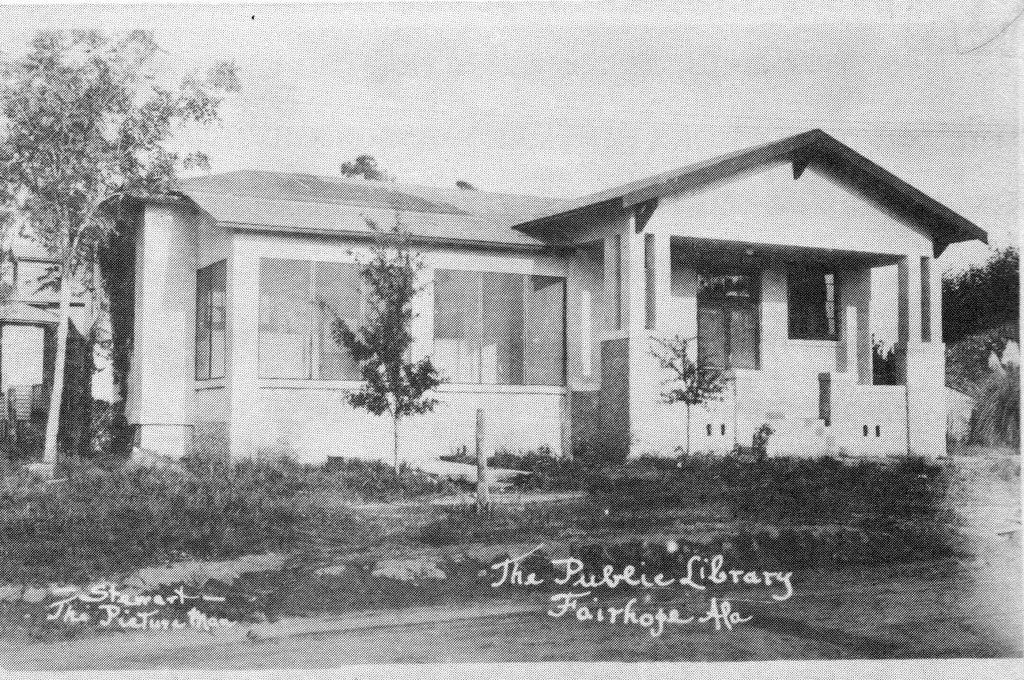
July 1
I have wonderful memories of libraries. As a child in Mobile -- we moved over the bay when I was nine -- my sister and I went every Saturday to hear Miss Kertsiek read to the assembled children of Mobile. We called her "Miss Curtsey;" I never knew that wasn't her name until Bob Bell, who was probably dating her at the time she was doing those readings, wrote about her in a letter to me. Miss Curtsey was lovely (in my memory most of the young women were pretty) and had that elegant, expository style of reading to children, stopping to explain or ask questions from time to time, that we found riveting.
I loved going to the library and exploring the shelves, picking out a book just for myself. The smell of a roomful of books was intoxicating. (It still is, in the right environment, not only a refreshing glimpse of the past but also a promise of excitement to be had being transported to another time and place through the act of reading.)
The big library in Mobile was a ticket to the whole world. The little library in Fairhope, on the other hand, was woefully ill-equipped for children, with old first editions and out of print books and very few of the shiny new books designed for beginning readers and rugrats of the day. But it had something else -- a librarian even more wonderful that Miss Curtsey, the gentle and brilliant if sometimes caustic Anna Braune. Miss Braune was naturally as quiet as a library herself, and as full of knowledge and promise. She was somebody you aspired to know better.
All the bookish kids in Fairhope, including my older sister, adored Miss Braune. She knew how to relate to them and to provide them with the kind of books that would inspire them. She once said that she related best to bad children. Found them congenial, she said. My sister once encountered a young man who was definitely in that category, one of her contemporaries whom we would identify today as an at-risk kid because he smoked and had a reputation as delinquent (if not actively, at least potentially). They were both walking in Fairhope and she asked him where he was going. "To visit Anna," he said.
"Anna Braune?"
"Yeah. She's a friend of mine."
This was a shock. Jealousy and outrage bubbled up as my sister huffily declared, "She's a friend of mine too!"
The atmosphere of the little Fairhope library was homey and musty. There was a fireplace in the front room, with a circle of chairs in front of it. There was an odd "museum" in one room off to the left, with glass cases of arrowheads and artifacts, and stuffed natural-history items such as owls. All this was dismantled later when a new librarian took over, and it was years before another Fairhope Museum was established.
And when a new library went up where Delchamps had built a modern building in the 1970's, there was tremendous controversy that this new librarian had had the bad judgment to put a copy of The Joy of Sex on the shelves. The librarian was fired and the mayor refused from then on to put any city funds into the maintenance of the library. Calvin Trillin came to Fairhope to write an article about the incident for The New Yorker. Our local library lost its innocence.
We are about to get a new library, over where the nut processing plant used to be. It is overwhelmingly huge; in fact, it will be considered a media center, and is said to fill a need for meeting spaces, a concert hall (I think) and all kinds of technological geegaws so necessary for modern life. I'm sure you knew this was coming: I'll miss the old wooden card catalog.
Even at the library today, if you're looking for an old book, you're apt to find it's been what they call deleted because it hasn't been checked out for its proscribed number of times. Not popular enough. There are just so many new books out there we have to make room for. Never mind those old first editions that earlier Fairhope women purchased to enrich the life of the townspeople.
My sister recently checked out a novel by Ellen Glasgow. She saw in it an inscription, "Presented by Marietta Johnson, Ada Womble, Shelby Holbrook." I told her this is a book that would be deleted soon because it isn't likely to be checked out often in the future, and that whoever works at the library wouldn't know the significance of the donors. I felt certain that the book should go to the local Marietta Johnson Museum.
That book never made it back to the library. The necessary fee of $10 was paid. I have it in my possession. It will soon be at the Museum.
Subscribe to:
Posts (Atom)